Rio Tinto slows Quebec lithium plant build, timeline intact
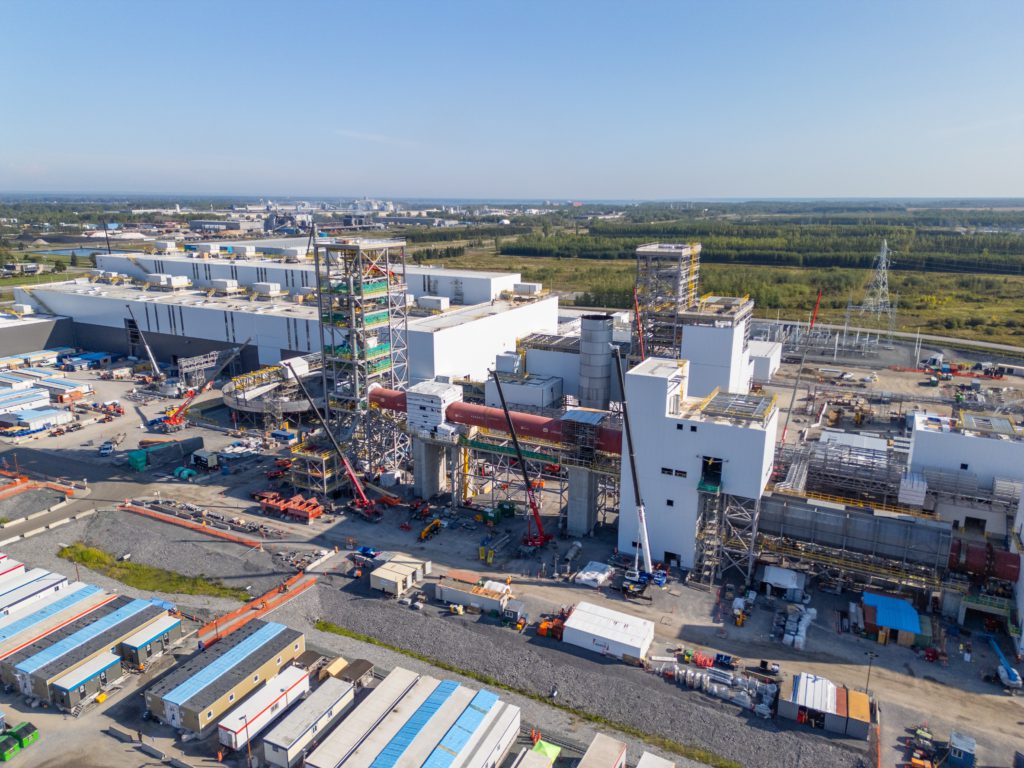
Rio Tinto (ASX, LSE: RIO) will slow the construction of its Nemaska lithium processing plant in Quebec due to rising costs, but sees no major changes to the timeline to production.
In the coming months, the company plans to slow the pace of plant build to allow the project team to complete the optimization work, the Australian miner said in a statement on Friday. During that period, its contractual workforce is expected to be reduced.
In an emailed statement to MINING.COM, Rio Tinto said while its contractual workforce will be reduced by half, the company will still have several hundred workers to continue work on the project.
The update comes just weeks after the Australian miner gained control over Nemaska — which includes the proposed lithium hydroxide conversion plant in Bécancour — in a bid to expand its battery materials business.
The facility is currently about 70% complete and is projected to have an annual production capacity of 32,000 tonnes.
In mid-February, Rio Tinto increased its ownership of Nemaska to 53.9% — thus becoming its majority owner — and said it plans to invest $300 million on the Quebec lithium operation. The Quebec government, which holds the remaining 46.1%, also pledged to invest $200 million in Nemaska.
Commissioning of the Bécancour plant was initially planned for this year, with first production expected in 2028.
Timeline intact
According to Rio Tinto, the reduction in workforce is not expected to cause a major change in the project’s timeline. Some activities at the Bécancour site will continue, while others will be paused or deferred.
“Rio Tinto remains fully committed to the Bécancour project and to Québec, which is a critical hub for its global lithium growth strategy,” it stated.
Earlier, a source cited by Bloomberg said that building of the lithium facility is expected to fully restart in 2027.
The Bécancour site is part of Nemaska’s fully integrated spodumene-to-lithium project in Québec, anchored by the Whabouchi deposit in the James Bay region. It is designed to be a 26-year, open-pit and underground operation producing 200,000 tonnes of concentrates annually.
Rio Tinto, which entered the project through its acquisition of Arcadium a year ago, is currently reviewing whether the Whabouchi deposit presents the optimal spodumene supply strategy for Bécancour in comparison to its Galaxy hard rock lithium project, also in James Bay.
The evaluation is expected to be completed in the second half of 2026, it noted. Bloomberg said earlier that the company is leaning towards the Galaxy project.
More News
{{ commodity.name }}
{{ post.title }}
{{ post.date }}
Comments