Congo to approve Chemaf sale to US-backed Virtus
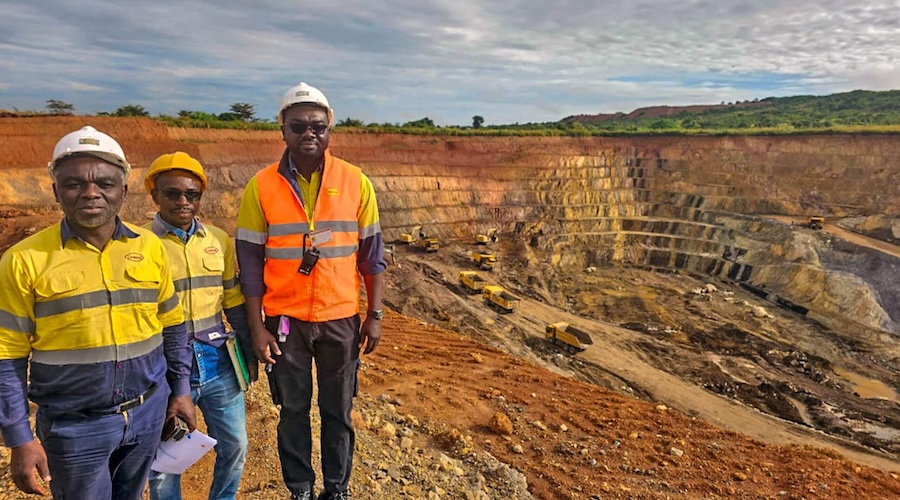
The Democratic Republic of Congo is reportedly ready to approve the sale of Chemaf to US-based Virtus Minerals, advancing a strategic minerals partnership between Washington and the African nation.
Congo’s mines minister, Louis Watum, notified Virtus last week that the government intends to clear the takeover, according to sources cited by Bloomberg News, marking a key step in a deal involving one of the country’s most contested mining assets.
Chemaf, owner of the Mutoshi copper and cobalt project, put itself up for sale in 2023 after financial strain stalled development of what was planned as one of the world’s largest cobalt mines.
The transaction tests a broader US–Congo minerals agreement signed in December alongside a Washington-brokered peace deal between Congo and Rwanda, as the US seeks to reduce reliance on China for critical minerals. Congo has become central to that strategy given its vast reserves of copper, cobalt, lithium and tantalum, with the Chemaf process emerging as an early signal of how preferential access for US investors will work in practice.
Virtus agreed to acquire Chemaf’s equity for $30 million and plans to invest about $750 million to complete stalled projects, while assuming debts owed to creditors including Trafigura Group, whose $600 million loan in 2022 funded construction at Mutoshi and expansion at the Etoile operation. The company signed the purchase agreement in February with trustees representing roughly 95% of Chemaf’s shares, though Congolese law requires state approval for changes of control over mining permit holders.
Congo has wielded significant influence over the sale through state miner Gecamines, which holds a key permit leased by Chemaf for Mutoshi, after previously blocking a proposed deal with a Chinese state-backed firm.
The acquisition is one of several projects underpinning the US–Congo pact, alongside Orion CMC’s preliminary deal to acquire stakes in Glencore’s (LON: GLEN) Congolese copper-cobalt mines and a proposed railway by Portugal’s Mota Engil SGPS linking the copperbelt to Angola’s Atlantic coast, highlighting a broader push to reshape supply chains for critical metals.
More News

{{ commodity.name }}
{{ post.title }}
{{ post.date }}
Comments
William Mario Joseph Wellen
I have acquired a High Court Order Writ of Execution no:1912/2018, against Bucklands Community Development Trust no IT94/97, their Mining Right NC 30/5/1/2/2/10114 MR, is situated on Title Deed Land T2293/2007, T 516/2008, and is approved to mine for diamonds and process sand.
2.)
All these Title Deed Land is alongside the banks of the Orange River. I shall appreciate it if US back Virtus may consider to buy equity of thirty million dollars into this Mining Asset.
3.)
I have prospect on Prospecting Right NC 30/5/1/1/2/12427 PR, approved for Sand Gold and Aggregate, situated on Title Deed Land T 4415/1996, T 12202/1912, and found that their are also iron Lithium, Neoydinium, graphite and roebies on these areas.
4.)
I shall appreciate it if you may please forward my request to this company to consider my request to buy into these business opportunities.
5.)
That is situated near the confluence of Vaal and Orange, River in our Northern Cape Province RSA