Will Iran war fuel nuclear reactor construction?
The war in Iran could usher in a wave of nuclear reactor construction similar to the one that followed the 1970s energy crisis, Cameco (TSX: CCO; NYSE: CCJ) president and chief operating officer Grant Isaac says.
More than 40% of today’s operating nuclear power plants were built in response to the 1973 oil embargo by the Organization of Petroleum Exporting Countries, according to the International Energy Agency. France, Japan, South Korea and the United Kingdom were among the western countries that began a multiyear push to build nuclear reactors in the wake of the crisis.
“I’ve never been more excited about the prospects for nuclear new builds globally and in particular in the West,” Isaac, a 16-year industry veteran who previously served as Cameco’s chief financial officer, told The Northern Miner in an interview.
The company, which mines uranium and builds nuclear reactors through its 49%-owned Westinghouse Electric joint venture, has multiple irons in the fire as renewable power demand climbs.
“I’m reminded the last time the West built out fleet-scale gigawatt reactors was during a Middle East energy crisis, and here we are in the grips of a Middle East energy crisis again,” Isaac said.
“Now we’re worried about climate security, worried about where our alternative energy is coming from, and in the grips of a national security conversation around the need for 24-hour, carbon-free electrons for things like the data race and the onshoring of supply chains. That combination of climate, energy and national security is a great backdrop for strengthening the tailwinds to nuclear new build.”
Second largest
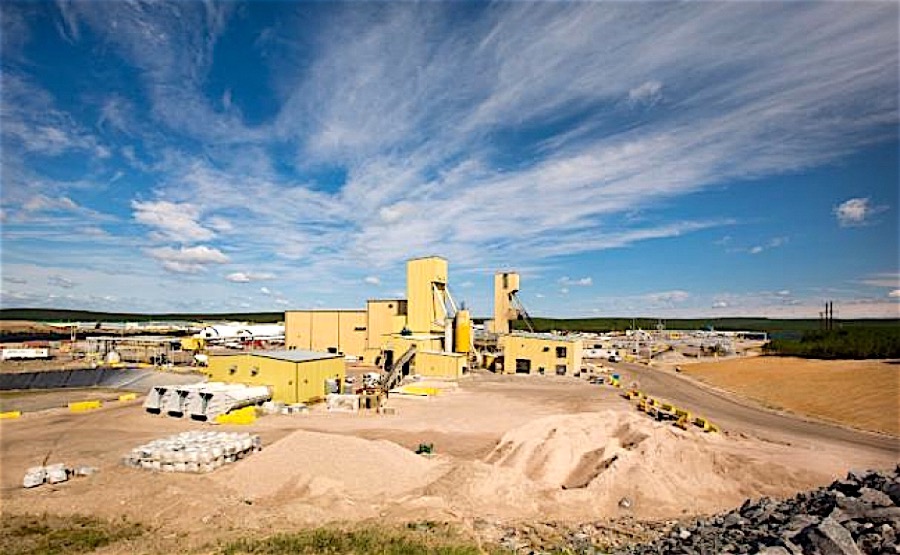
Cameco – the operator of Saskatchewan’s McArthur River, the world’s biggest high-grade uranium mine – produces 15% of uranium globally. the Saskatoon-based firm is the world’s second largest uranium miner, after Kazakhstan state-owned producer Kazatomprom (LSE: KAP), which accounts for about 20% of supply. Both companies are partners in the Inkai joint venture, which is projected to produce 10.5 million lb. of uranium this year.
Uranium is expected to face a widening long‑term supply deficit over the coming decades due to rising demand, more challenging primary supply and uncertainty around new mine developments, analysts say.
That’s not to say uranium’s prospects are shock-proof. A nuclear accident such as the 2011 Fukushima disaster in Japan would undoubtedly weigh on global sentiment and uranium prices, possibly leading to policy reversals. Escalating conflicts such as the Iran war could also affect energy consumption – especially if the global economy enters a recession.
For now, worldwide demand for uranium is projected to triple by 2040, showing the need to develop mines. It already outpaces production by 50 million to 60 million lb. a year, according to World Nuclear Association data.
“Uranium market fundamentals remain tight,” RBC Capital Markets mining analyst Andrew Wong wrote in a recent note. He predicted “accelerating momentum in nuclear new builds.”
Tech demand
Demand for nuclear energy was on the rise even before the US and Israel began bombing Iran – the result of technology companies moving to build more power-hungry data centres for AI applications. The US government has also been working to accelerate nuclear’s rebound through various supports and fast-tracking uranium projects in the country’s Southwest.
That increased demand has also led to reactor life extensions. Nuclear regulatory authorities in the US last month approved a 20-year licence renewal for the two pressurized water reactors at California’s Diablo Canyon nuclear power plant – the 100th such extension in several years.
The decisions come on the heels of a May 2025 executive order from US President Donald Trump that aimed to quadruple the country’s nuclear energy capacity to about 400 gigawatts by 2050.
Cameco stands to be a beneficiary of this push – as evidenced by Westinghouse’s October partnership with the US government. Washington envisions that at least $80 billion of new nuclear reactors will be built across the country, using Westinghouse nuclear reactor technology.
India inroads
Westinghouse could also allow Cameco to make inroads in India as Asia’s most populous country embarks on ambitious plan to beef up nuclear capacity.
Cameco agreed in March to supply almost 22 million lb. of uranium ore concentrate to India over nine years on market-related price terms in an estimated $1.9 billion deal.
The agreement, which is based on a uranium price of $86.95 per lb., calls for deliveries to start in 2027 and run through 2035. Cameco had previously supplied uranium to India under a five-year contract that began in 2015.
“The opportunities in India go far beyond just selling the uranium or the yellowcake,” Isaac said.
India “effectively has its own reactor model. They have taken the Candu reactor technology and they have modified it for indigenous purposes. They are building more of those types of reactors, and Cameco is fully integrated in pressurized heavy water reactors. We can sell right through to fabricated fuel bundles, all the fuel services steps in-between. We can even sell key reactor parts to India. And of course, India is also building light water reactors.”
New Delhi’s decision to buy uranium from Cameco and Kazatomprom “sends a very bullish signal,” Sprott Asset Management CEO John Ciampaglia, who runs the world’s biggest physical uranium fund, said in an interview posted on the firm’s website.
“This should signal to the market that everybody needs to get in line to lock down their own supply because these big state-owned entities are doing exactly that.”
New reactors
India, which has 24 operating reactors and a current generating capacity of about 8 gigawatts, is planning to deploy dozens more to reach 100 gigawatts by 2047.
New Delhi has already selected six Westinghouse-made AP1000 reactors as part of its strategy, and other orders are likely, Isaac said.
“When you’re building reactors that are going to run for 80 to 100 years, they require 80 to 100 years of reactor services and fuel fabrication opportunities.”
The India uranium contract shows “just how much sovereign demand is actually out there for big national programs,” Isaac added. “They see that the demand is growing in a more durable and stronger way than the supply stack is growing. These are first-mover countries.”
Rising energy consumption in nations such as India and China is just one of the reasons why Isaac and other industry watchers are bullish about uranium’s long-term prospects.
Uncovered requirements for global utilities are estimated at about 3.1 million lb. of uranium concentrate through 2045, according to data compiled by Cameco. The shortfall “is bigger than it’s ever been in the history of the uranium market,” Isaac says.
Rising prices
That dynamic has started to affect prices. Spot uranium was selling for around $86 per lb. as of press time, about one-third higher than a year earlier. Term uranium prices, which are used in contracts between miners and utilities, were hovering in the $90 range.
“Some utilities already have their head around paying three-digit prices for uranium, because that’s effectively the midpoint of the market-related contracts today,” Isaac said. “We like that dynamic as an incumbent producer.”
Although it has about 30% of its existing mine capacity idle, the India contract won’t be enough to push Cameco to boost output, Isaac stressed.
“In order for us to contemplate running our tier-one assets like McArthur River at a higher level of production, we need to see more demand coming to the market,” he said.
“The key is we don’t know exactly when the utilities are bringing the demand. We have to be patient and wait for that demand to come.”
{{ commodity.name }}
{{ post.title }}
{{ post.date }}
Comments