Sasquatch Resources eyes Mount Sicker waste rock to unlock gold and clean up legacy pollution
A junior mining explorer is betting that the future of resource extraction in British Columbia may lie not in digging new mines, but in cleaning up the past.
Thousands of legacy mine sites across Canada and the US pre-date modern environmental regulation, and many contain sulphide-bearing waste rock left exposed at surface — material that now represents both an environmental liability and a potential source of critical minerals.
Sasquatch Resources (CSE: SASQ) is advancing a project at the historic Mount Sicker mine on Vancouver Island that aims to recover valuable metals from century-old waste rock piles, while simultaneously addressing longstanding environmental damage.
The approach, if successful, could establish a new model for dealing with the province’s thousands of legacy mine sites.
Turning waste into resource
Mount Sicker, which operated from the late 1890s to around 1910, was mined at a time when cutoff grades were exceptionally high — around 8% copper. Material that fell below that threshold was discarded into waste piles, despite still containing significant mineralization.
Mount Sicker, a former copper-gold district on Vancouver Island in British Columbia accumulated more than 300,000 tonnes of sulphide-bearing waste rock during mining from 1897 to 1915.
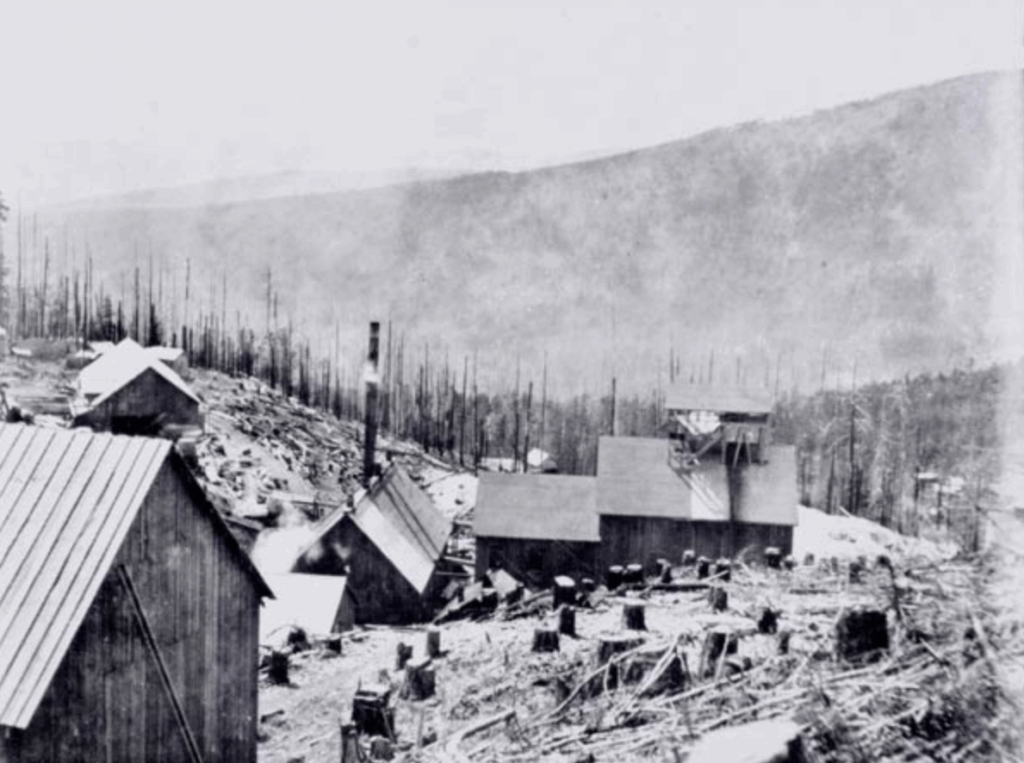
Discovered in 1897 and managed by Clermont Livingston, it peaked around 1905 as a top coastal producer before closing due to depletion. Following a forest fire that revealed outcrops, prospectors Harry Smith and others staked the Lenora and later the Tyee claim, which was located higher up the mountain, according to historical records.
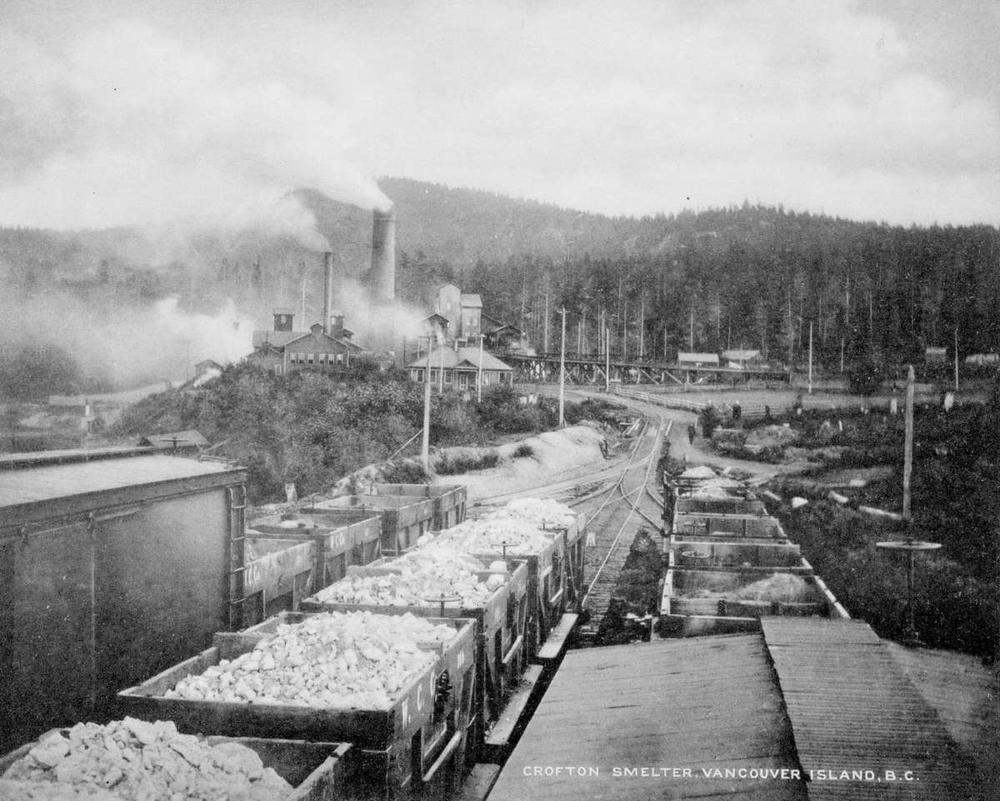
The Tyee Copper Company of London acquired the property in 1900. Underground development included a 1,250-foot main shaft by 1906. The site featured a 1,250-foot shaft and utilized a smelter in Ladysmith.
Independent testing shows the raw waste rock scored 0.2 on the neutralization scale, indicating strong acid-generation potential. Recent sampling also confirms residual copper, gold, silver and zinc remain in the surface piles.
Modern sampling suggests those historic decisions left behind considerable value. According to Sasquatch Resources, testing of the waste rock has returned average grades of roughly 2 grams per tonne gold, along with other potentially recoverable elements.
Rather than reopening the mine, the company is focused solely on processing these surface waste piles.
“We realized we didn’t need to mine at all,” CEO Peter Smith told MINING.COM in an interview. “We could take this low-hanging fruit, clean up the environment, and get valuable material into the supply chain at the same time.”
Environmental liability meets opportunity
The environmental case for the project is as central as the economics.
Unlike modern tailings facilities, the Mount Sicker waste rock was deposited without containment. Today, those piles continue to generate acidic runoff and leach contaminants into the surrounding ecosystem, Smith said.
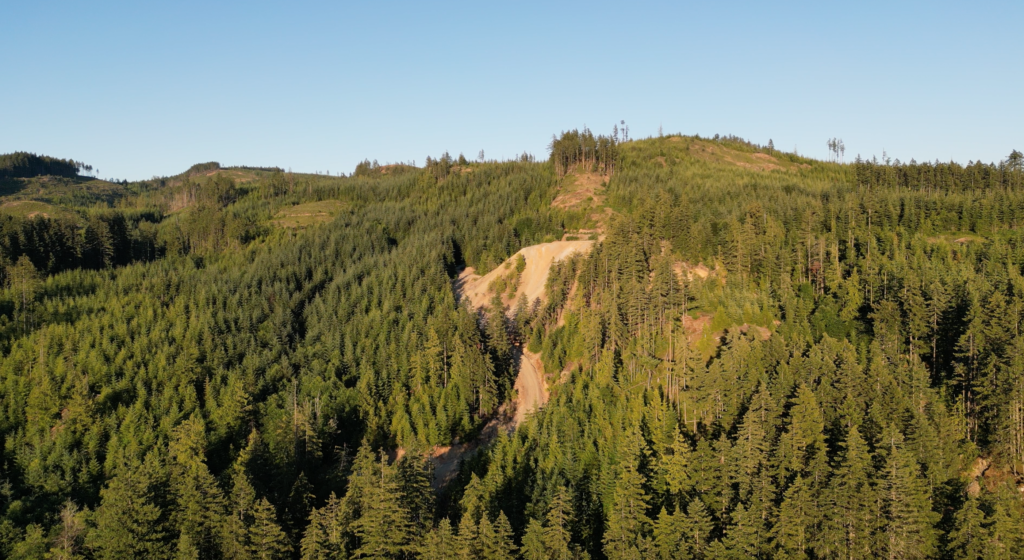
The site also presents physical hazards, including open mine shafts up to 200 feet deep — remnants of an era before reclamation standards existed. Now located just minutes from the town of Duncan, the area is frequented by hikers and mountain bikers. In an otherwise forested landscape, the mine site remains starkly barren more than a century later.
“It’s essentially a wasteland,” Smith said. “Nature hasn’t been able to reclaim it in over 100 years.”
To process the material, Sasquatch plans to use conventional ore-sorting technology rather than chemical-intensive methods. The process involves crushing the waste rock and passing it through sorting systems that use density and X-ray fluorescence (XRT) to separate sulfide-rich material from inert rock.
From an estimated 300,000 tonnes of waste, the company expects to produce a smaller volume of higher-grade concentrate, while isolating clean material that can be safely returned to site.
The system operates as a closed loop and does not rely on chemical reagents, minimizing environmental impact, Smith said.
Navigating a regulatory grey zone
One of the biggest challenges facing the project is regulatory.
Because Sasquatch is not proposing new mining, but is handling volumes far larger than typical bulk sampling programs, the project falls between existing permitting frameworks.
The company is currently working with regulators to define an appropriate pathway — one that ensures environmental protection without imposing the full burden of a conventional mining permit.
The outcome could have broader implications. With an estimated 2,000 legacy mine sites in British Columbia alone, a clear regulatory framework for remediation-focused resource recovery could unlock a new segment of the industry.
A scalable model
Mount Sicker is just the starting point, Smith points out.
Sasquatch has already identified additional nearby targets, including the historic Blue Grouse mine, and says similar opportunities are widespread across the province.
“These sites are everywhere,” he said. “We could work on them for decades and not run out.”
By focusing on existing waste rather than new extraction, the company believes it can offer a faster, lower-cost, and more environmentally responsible path to supplying critical minerals.
As governments and industry grapple with how to secure critical mineral supply while reducing environmental impact, projects like Mount Sicker may represent a shift in how mining is approached.
Instead of expanding the industry’s footprint, Sasquatch is looking to shrink its legacy.
“We want to be able to point to that mountain and say — we fixed that,” Smith said.
More News
{{ commodity.name }}
{{ post.title }}
{{ post.date }}
2 Comments
Rich whitt
Your artical takes me back to when my Dad was involved with a company doing the exact same thing, remineing the piles of “ore”. He leased part of his office to one of the directors and did invest in the mine. Over time things changed and he became a security guard at the site. End result, lost a lot of money. So I would be very skeptical you would make good.
Kheas
Hopefully this demonstrates to mining advocates that new mining is not essential