Op-Ed: The copper supply crisis is a sulfur management crisis
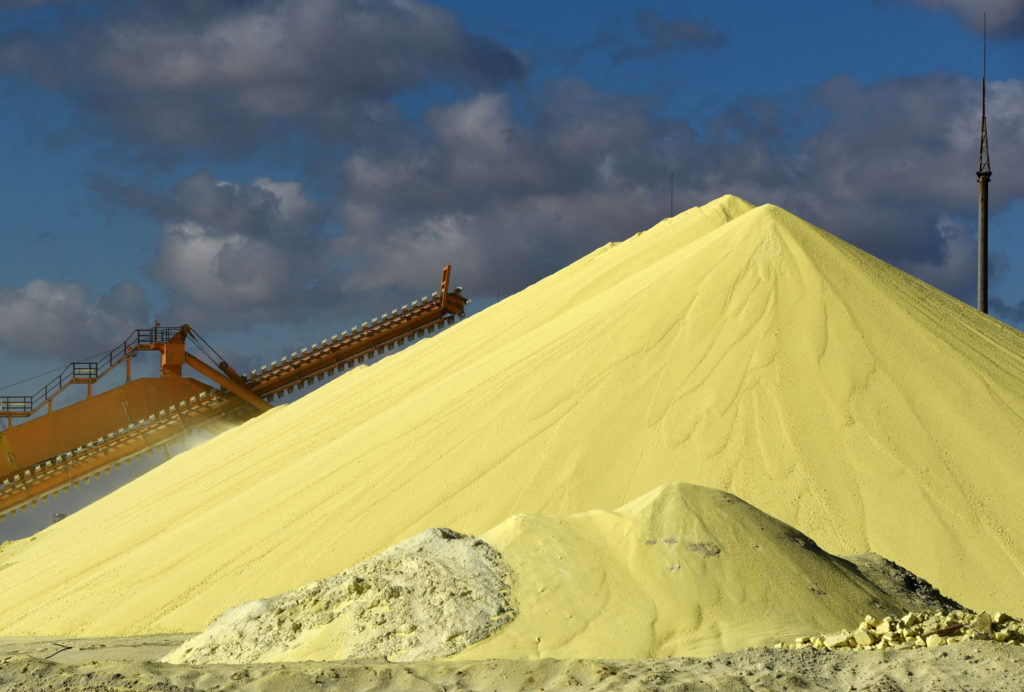
On May 1, China halted exports of sulfuric acid. The reaction across commodity markets has been immediate and severe. But the deeper significance of this moment extends far beyond a single trade restriction. It reveals something the mining industry has been slow to acknowledge: sulfur is not waste. It is one of the most strategically important materials on Earth. And the inability to manage it is the binding constraint on copper production today. Geologists have been remarkably successful at finding copper deposits; the challenge has never been locating the ore but processing it without the sulfur becoming a liability.
The chemical that underpins everything
“The king of chemicals” is what sulfuric acid is called, and for good reason. Global production exceeds 260 million metric tonnes annually. Roughly 60% feeds fertilizer manufacturing: without sulfuric acid, there are no phosphate fertilizers, and without phosphate fertilizers, global crop yields collapse. The remainder is essential for copper and nickel extraction, uranium processing, semiconductor fabrication, steel pickling, and petroleum refining. No industrial economy on Earth functions without it.
This is where mining and agriculture share a deep, often invisible dependency. Copper ore processing can produce the sulfuric acid and ferrous sulfate that the agricultural sector needs for fertilizers and soil amendments. When that processing happens domestically, both industries benefit. When it happens on the other side of the world, both are exposed.
China has been the world’s largest exporter of sulfuric acid. In 2025, Chinese exports surged 73% to 4.65 million tonnes. Much of that acid is a byproduct of copper smelting: about 40% of these exports stem from metal smelting. Over the past two decades, China built nearly half the world’s copper smelting capacity. Those smelters feed not just global copper supply but China’s fertilizer industry, rare earth processing, and downstream chemical manufacturing. The acid is not a side effect. It is an economic engine.
Now consider what has happened in a matter of weeks. The closure of the Strait of Hormuz has blocked seaborne sulfur from the Persian Gulf. Russia has extended its own export ban through June 2026. Turkey has announced restrictions. The DRC has cut volumes. And China, facing a domestic deficit, has halted sulfuric acid exports entirely to protect fertilizer production. From record exports to a near-total ban in less than a year. Chile imports more than a million tonnes of
Chinese sulfuric acid annually for the heap-leach operations that produce roughly a fifth of global copper. Spot prices for acid delivered to Chile have doubled since February. The same squeeze is hitting miners in the DRC and Zambia.
The fundamental problem with sulfur
Sulfur is usually not seen as valuable. We recoil from the stench it brings to rotten eggs, flatulence, and feces. It has also been the waste product that the copper industry actively manages perpetually. The main method for processing copper sulfides has been concentration and then combustion: enrich the copper while pushing most sulfur to waste piles, smelt the enriched ore at extreme temperatures while capturing whatever sulfur dioxide you can. The industry has invested heavily in mitigation. Scrubbers, lined tailings facilities, water treatment systems, and systems to convert sulfur dioxide to sulfuric acid are fortunately all standard with modern processing.
Billions of dollars have gone into trying to contain the consequences. But the fundamental chemistry of smelting makes complete sulfur containment extraordinarily difficult. The consequences persist: acid mine drainage poisoning watersheds for decades, fugitive emissions degrading air quality near smelting operations, tailings facilities storing sulfide-laden waste that remains a liability for generations. These are not abstract environmental concerns. They are the reason mining companies face organized community opposition, permitting delays measured in decades, and the erosion of social license that EY has identified as the industry’s number one business risk. When a community has watched sulfur contaminate its water for a generation, no amount of economic argument will earn permission for the next project.
The analogy I keep returning to is cooking over an open flame indoors. You can install the most sophisticated ventilation money can buy, but combustion will always produce smoke. The question is not whether you can build a better exhaust hood. The question is whether there is a fundamentally different way to cook.
When sulfur becomes a revenue stream
The economics of this reframe are striking. For every tonne of copper produced from sulfide concentrates, roughly 3 to 3.5 tonnes of sulfuric acid are generated via smelting or select hydrometallurgical alternatives. That acid has a market. The potential is even greater for operations that can convert co-located pyrite to sulfuric acid and iron-based co-products like ferrous sulfate for agriculture and iron oxide pigments for construction. An orebody that was valued solely for its copper content becomes a polymetallic operation with multiple revenue streams: copper cathode, sulfuric acid, elemental sulfur, ferrous sulfate, precious metals. The sulfur that was once a cost center becomes the economic instrument that makes the project viable.
From dependency to self-sufficiency
The path forward is not to find a new supplier of sulfuric acid. It is to stop needing one. Copper-producing nations can process their own sulfide ores at or near the mine site, capturing copper, sulfuric acid, and every co-product domestically. In Chile, locally produced acid could feed directly into leaching operations. In Arizona, it could supply the semiconductor fabs of TSMC, Intel, Onsemi, and Amkor, alongside agricultural operations and existing leaching facilities. These are not hypothetical markets. They are existing industries exposed to a supply chain that just proved its fragility.
Emerging hydrometallurgical approaches are making this possible. Pressure oxidation and electrochemical reductive leaching can both capture copper while converting sulfides into valuable products without combustion. These approaches build on decades of hydrometallurgical development while capitalizing on the relatively low electricity costs in many copper-producing regions. The throughline is converting sulfur to value instead of to waste: every output stream becomes a revenue stream. Achieving the full promise of no sulfur dioxide emissions and no acid mine drainage requires upstream adjustments and collaboration across the value chain, but the direction is clear.
The industry that figures out how to manage sulfur completely will be the industry that unlocks the copper the world needs. Not by fighting communities for permission to pollute. Not by depending on a single nation’s willingness to export a critical chemical. But by treating every element in the orebody as what it actually is: a resource with value, deserving of technology equal to the challenge.
The wake-up call
As a father of two young boys, I am not only highly familiar with the stench of sulfur, but also constantly thinking about the future and what industrial inheritance we are building. I want to make sure we are actively enabling a future that makes communities wealthier, not sicker. Where the sulfur in the ore leads to feeding crops rather than poisoning rivers. Where resource-rich nations retain the full value of what lies beneath their land.
China’s export ban is a wake-up call. The copper the world needs is bound to sulfur, but that sulfur is not a curse. It is an asset waiting for the right technology. That technology is here. The question is whether the industry seizes this moment or waits for the next disruption to make the same point.
Ranulfo (Randy) Allen, PhD, MBA, is the co-founder and CEO of Still Bright, a seed-stage deep-tech company leveraging proprietary electrochemical reductive leaching of rougher concentrates to recover copper locally without the typical risks to the local community.
More News
Bomb attack damages Ecuador mining agency probing illegal gold
It’s the second blast in recent weeks affecting Arcom offices.
June 29, 2026 | 12:28 pm
{{ commodity.name }}
{{ post.title }}
{{ post.date }}
Comments