Trump courts Brazil in rare earth supply push
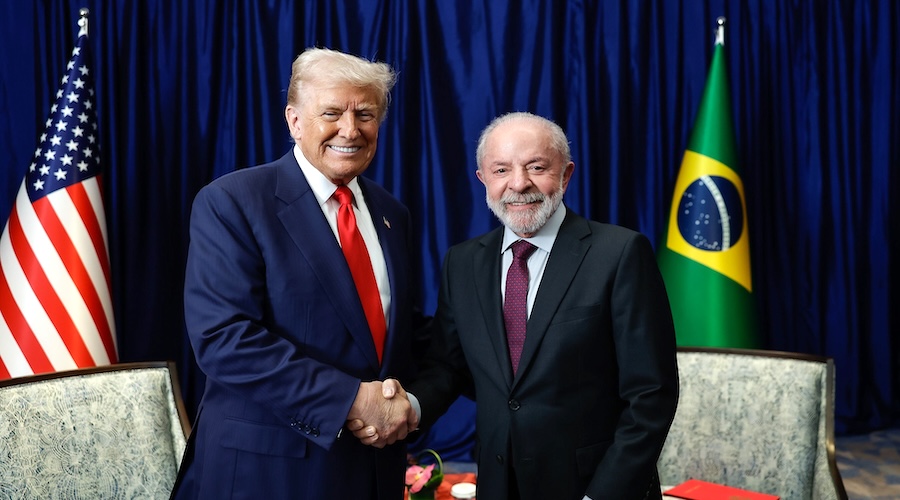
US President Donald Trump and his Brazilian counterpart Luiz Inácio Lula da Silva are forging an unlikely partnership around rare earths as Washington races to loosen China’s grip on critical mineral supply chains.
Their improvised White House meeting last week underscored how geopolitical competition over strategic minerals is reshaping alliances, with Brazil emerging as one of the few countries capable of helping the US diversify supply away from China.
Lula told Trump that Brazil’s vast rare-earth reserves are open to investment from any country willing to process minerals domestically, while Trump sought to signal renewed US engagement in Latin America ahead of a key China trip. The April agreement by Oklahoma-based USA Rare Earth to acquire Serra Verde Group for $2.8 billion highlighted the scale of the opportunity.
“The Lula-Trump meeting was less a bilateral reset than a bid to keep a politicised relationship manageable,” Mariano Machado, principal Americas analyst at Verisk Maplecroft, said in a note. “Among the items discussed, critical minerals emerged as the one topic where both leaders can claim a win without resolving deeper political tension.”
Reality-check
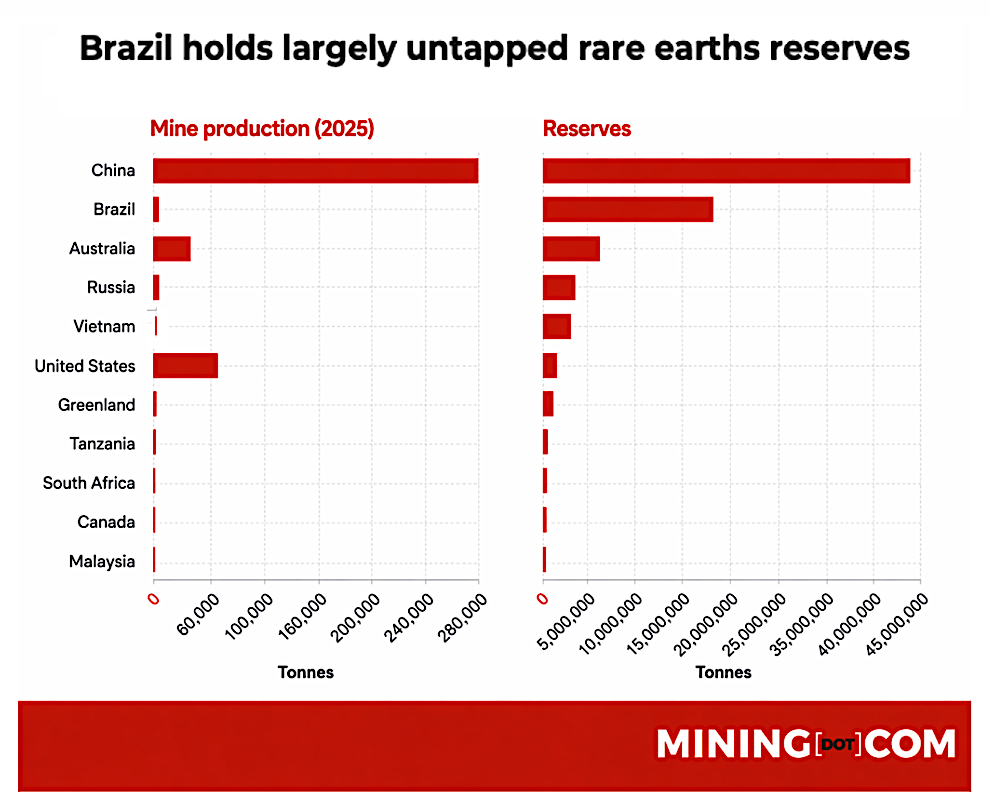
Yet Brazil’s long history with rare earths suggests the geopolitical enthusiasm may far exceed the industry’s near-term reality. Despite holding the world’s second-largest rare-earth reserves, the country has struggled for decades to turn geological potential into sustained production. Environmental licensing delays, bureaucratic hurdles, volatile commodity prices and periodic waves of resource nationalism have repeatedly stalled projects.
Mining companies can spend five to 10 years securing permits, while growing public opposition following deadly tailings dam disasters in Minas Gerais has hardened scrutiny of new developments.
The tensions expose a broader disconnect between global ambitions for critical minerals and local resistance to mining expansion. Rare earths are increasingly viewed as essential for semiconductors, AI infrastructure, electric vehicles and military technologies, but communities near prospective projects often see limited benefits and mounting environmental risks. Machado said the Serra Verde transaction illustrates both the opportunity and the constraints facing the two countries.
“The concrete test is Serra Verde in Goiás, Brazil’s only commercial-scale rare earths operation,” he said. “USA Rare Earth’s proposed $2.8 billion acquisition gives Washington a route into Brazilian production. But Lula’s message after meeting Trump was clear: Brazil has ‘no veto’ over US participation, yet also no intention to offer preferential access.”
Brazil’s Congress is advancing legislation that includes a $2 billion guarantee fund and $5 billion in tax credits to encourage domestic processing of critical minerals. Lula told Trump the country wants investment and technology transfer while ensuring more value-added processing remains domestic. Machado said that balancing act risks turning commercial development into a sovereignty debate that could slow approvals and delay investment.
“Critical minerals are not the simplest part of the bilateral agenda, even if they are the most practical,” he said. “Washington is going all-in on alternatives to China across rare earths, niobium, graphite, lithium, nickel and copper; while Brasília wants investment, technology transfer and domestic processing, without surrendering control over strategic resources.”
Second only to China
Brazil holds roughly 21 million tonnes of rare-earth reserves, second only to China and the Brazilian Mining Association projects $2.4 billion in rare-earth investment by 2030 as part of a broader $21.3 billion critical minerals pipeline.
But execution remains the central challenge. Licensing delays, land disputes, environmental scrutiny and limited processing capacity continue to cloud timelines for new developments.
“The risk for both sides is a development opportunity shifting into a de facto sovereignty debate, slowing approvals and dragging out business timelines,” Machado said. “This means Brazil can become a strategic rare earths supplier to the US — but not quickly nor on US terms alone.”
{{ commodity.name }}
{{ post.title }}
{{ post.date }}
Comments