B2Gold’s new CEO gets his Goose test
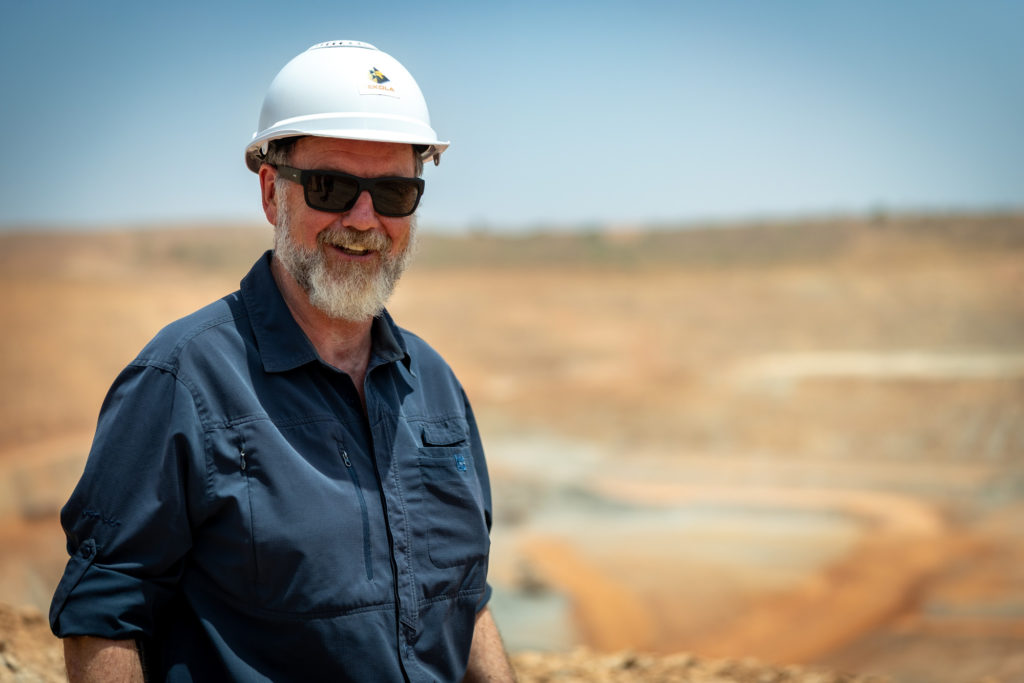
B2Gold (TSX: BTO)(NYSE-A: BTG)(NSX: B2G) has handed Mike Cinnamond a Far North test in his first weeks as CEO: finish the Goose mine ramp-up in Nunavut to restore the Vancouver major’s million-ounce-per-year status.
Goose, about 1,400 km west of Iqaluit, Nunavut’s capital, is expected to produce 170,000 to 230,000 oz. this year even after an April crusher fire cut expected second-quarter output by about 10,000 ounces. B2Gold expects the mine to average about 300,000 oz. a year from mid-2027, once it finishes repairs and upgrades the crusher to 4,000 tonnes per day.
“Someone said to me, when you stepped in, instead of drawing the short straw, you drew the long straw,” Cinnamond told MINING.COM‘s sister publication The Northern Miner. “We’re just coming out of that investment phase and into the cash-flow phase. Right now, you’ve got to execute and we need to demonstrate capital discipline.”
Analysts say the market still wants proof that Goose can run at design rate. Haywood Securities analyst Jamie Spratt on May 7 raised his target on B2Gold to C$10.50 from C$8.75 after first-quarter production and costs beat estimates. But he said the company’s rerating depends on “the ramp up of crushing and full run rate production at Goose and the receipt of regional exploitation permits at Fekola” in Mali.
B2Gold’s Toronto-listed shares are up 20% over the past 12 months, trading at C$6.08 apiece near press time. It has a market capitalization of C$8.1 billion ($5.7 billion).
Make a mark
Cinnamond became president and CEO on June 4, succeeding Clive Johnson, B2Gold’s founder and long-time chief executive. Johnson moved into a chair emeritus role after leading the company through mine builds and acquisitions in Nicaragua, Namibia, Mali, the Philippines and Canada.
The new CEO came up through finance. He trained in the United Kingdom, moved to Canada in 1997 and spent two decades in public practice with Coopers & Lybrand and PwC before joining B2Gold, where he was chief financial officer before taking the top job.
“Clive and all the execs that were here as the company grew built a great culture right at the sites. It is part of our DNA and we want to preserve that,” Cinnamond said. “But we need to recognize that we’ve grown as a company and a bigger company needs a bit more structure.”
Fire baptism
The April 16 Goose fire caused no injuries and did not damage the mill or power plant, but it hit the crushing circuit at the wrong time. B2Gold shifted to mobile crushers to feed the fine ore stockpile. Repairs are expected to cost about C$7 million and finish in the third quarter.
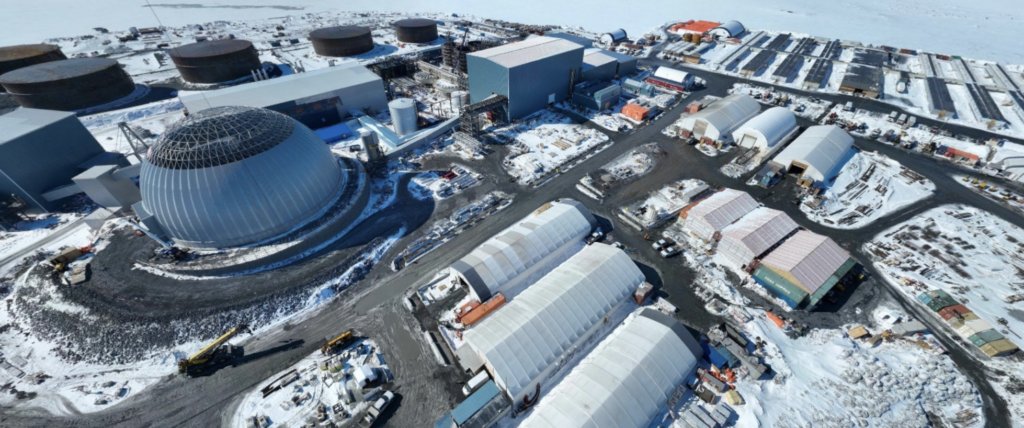
The repair work overlaps the first stage of a crusher upgrade that should lift capacity to about 3,200 tonnes per day by the end of September. A second stage, expected to cost C$20-C$30 million, is planned for the first half of next year to take the circuit to its 4,000-tonne-per-day design rate.
Goose gives B2Gold grade that few new open-pit gold mines can match. Probable reserves total 10.9 million tonnes grading 6.79 grams gold per tonne for 2.38 million oz. gold. Indicated resources at Goose and George total 17.6 million tonnes grading 7.45 grams for 4.21 million oz., while inferred resources total 13.5 million tonnes at 8.05 grams for 3.49 million ounces.
B2Gold bought Goose through its 2023 takeover of Sabina Gold & Silver, poured first gold last June and declared commercial production in October. The mine is the most advanced asset in the Back River gold district, an 80-km belt of 11 claim blocks in the remote Kitikmeot region.
Exploration push
B2Gold has budgeted C$51 million for exploration at Back River this year, with much of the regional work aimed at George, about 50 km northwest of Goose. George already holds 1.66 million indicated tonnes grading 7.89 grams gold per tonne for 420,000 oz. and 4.19 million inferred tonnes at 8.98 grams for 1.21 million ounces.
“The primary focus first is to get Goose up and fully running at steady state,” Cinnamond said. The company is drilling George and other Back River targets over the next couple of years to chart a path for the district’s next phase, whether that means expanding Goose or developing satellite deposits separately.
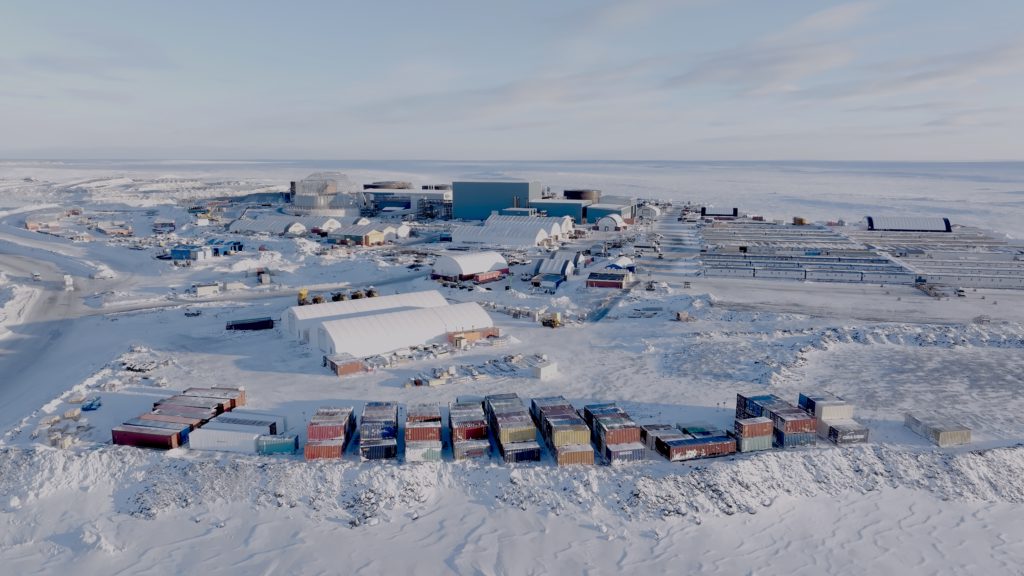
The company is also studying whether to add a semi-autogenous grinding mill that could lift Goose processing capacity to 6,000 tonnes per day.
Partnership
B2Gold is also working to make Arctic logistics less lonely. In April, B2Gold sold its 70% interest in Fingold Ventures in northern Finland to Agnico Eagle Mines (TSX: AEM; NYSE: AEM) for C$325 million and signed a Nunavut collaboration agreement with Agnico. The agreement lets the companies share operating and logistics knowledge in the North but does not merge assets or transfer ownership.
The northern plan also depends on local relationships. B2Gold says the Kitikmeot Inuit Association is a landowner and shareholder at Back River, with Inuit impact and benefit and 20-year land-use agreements in place. The company said 240 Inuit personnel, including contractors, worked on the project at the end of last year.

Other priorities
Cinnamond – whose main escape is golf, a game he picked up on his native Ireland’s links courses and still plays on trips to Scotland and around Canada – says his growth strategies beyond Goose starts with the same rule: earn the next move before spending on it.
Fekola Regional in Mali is the company’s other near-term growth opportunity. B2Gold expects the satellite ore to add 60,000 to 80,000 oz. this year once Mali grants an exploitation permit and the company starts trucking ore to the Fekola mill.
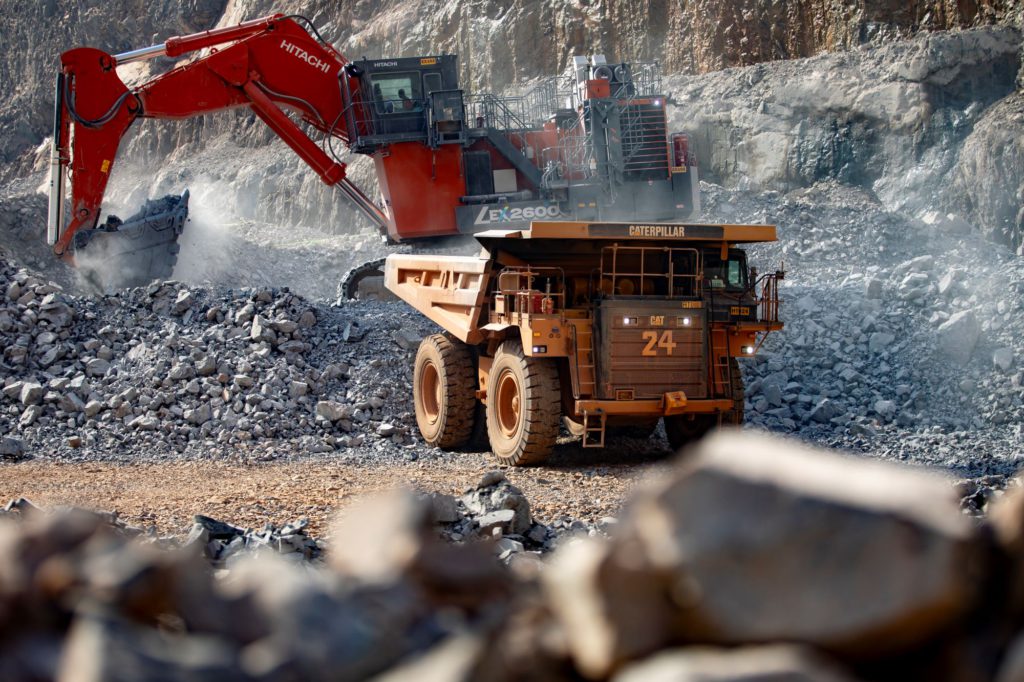
He also wants B2Gold to squeeze more life from mines it already runs. Higher gold prices could support open-pit pushbacks at Masbate in the Philippines and Otjikoto in Namibia, while exploration keeps feeding the company’s longer pipeline in Nunavut, Mali, Namibia, the Philippines and early-stage targets elsewhere.
Gramalote in Colombia is the largest development option outside Canada. B2Gold has redesigned the project around a smaller mill and is working through permit changes it expects to take into early 2027 before deciding whether to build. The project gives Cinnamond another growth lever, but not one he has to pull before Goose and Fekola Regional are running the way investors expect.
B2Gold expects to produce 820,000-970,000 oz. gold this year at all-in sustaining costs of $2,400-$2,580 per oz. sold. Its global probable reserve base totals 199.4 million tonnes grading 1.4 grams gold per tonne for 8.99 million oz. of metal. It’s held in 496.7 million indicated tonnes grading 1.09 grams gold per tonne for 17.4 million ounces. Inferred resources total 263.6 million tonnes grading 1.23 grams gold for 10.5 million ounces.
Consolidation player?
B2Gold has a strong balance sheet. It produced 237,763 oz. gold in the first quarter, generated C$362 million in free cash flow and had C$479 million in cash as of March 31. It also repaid the remaining C$75 million on its revolving credit facility after quarter-end, leaving the full C$800 million available.
Cinnamond said B2Gold’s liquidity does not mean a takeover is next. B2Gold has repurchased C$98 million of shares this year, sold non-core assets, kept its dividend steady and put its largest exploration budget into Back River. Deals can wait until the company proves it can again run as a steady million-ounce producer, he said.
“We’re not there yet,” Cinnamond said. “We need to do those execution things first.”
More News
Op-Ed: The copper the world needs is already above ground
July 06, 2026 | 08:38 am
Canada unleashes wave of oil drilling permits in next big play
July 06, 2026 | 08:19 am
{{ commodity.name }}
{{ post.title }}
{{ post.date }}
Comments