Op-Ed: The copper the world needs is already above ground
The mining industry has a habit of looking down when it should be looking around. With global demand for copper skyrocketing, the industry’s default response to this is to build more mines. Meanwhile, one of the solutions is already sitting above the ground. With much shorter production timelines compared to primary mines, copper tailings processing should be taken seriously as a response to the global supply deficit.
S&P Global estimates that copper demand will increase from 28 million metric tonnes in 2025 to 42 million metric tonnes by 2040 – a 50% increase. Several factors are driving this boom in demand. The first is the growing trend towards electrification and decarbonization. Electric vehicles, renewables and grid upgrades are all highly copper-intensive.
The other major factor is the AI revolution. With AI now reshaping virtually every industry across the world, data centres are being built at an unprecedented scale to accommodate this.
BHP estimates that copper used in data centres will increase sixfold by 2050, and a single hyperscale AI data centre can consume up to 50,000 tonnes of copper, compared with 5,000 – 15,000 tonnes for a conventional facility.
The need for copper is not a long-term problem to be solved at some point in the future, it is a very real and immediate need. Supply cannot wait. New mines will be part of the answer, but they come with a significant constraint that should not be underestimated. New copper mines take many years to come into production.
According to S&P Global, the average is 17.9 years for mines coming online in 2020–23. By 2035 production from existing and planned copper mines is on track to meet only 70% of global demand and the 30 largest undeveloped greenfield projects globally will contribute to just 14% of total copper supply by that date. This will simply not meet the scale of demand in the short to medium term. Other solutions are desperately needed.
This is where copper tailings can come in and where, in my view, the industry has been too slow to act. For those unfamiliar with the term, copper tailings consist of historic mining waste containing residual copper, processed decades ago using less efficient technology. Modern extraction methods make this material far more viable to recover than in the past, and tailings projects possess several advantages over traditional mines.
The first is lower capex: extraction is often less capital-intensive, and tailings deposits are frequently located near existing infrastructure close to primary mines. Most significantly, development timelines are far shorter than for greenfield primary mines. Tailings are above ground and often contained in known, previously permitted sites, meaning no exploration is required, an important advantage given the urgency of the supply gap.
There are sceptics, of course, who point to lower grades, harder extraction and higher costs. Much of the time these concerns are not justified. Technology has advanced significantly, particularly in flotation, leaching and fine-particle recovery. Copper prices now support the economics of lower-grade material, although it is worth noting that new copper mines often contain grades similar to many tailings deposits. Yet, those primary mines still require the most energy-intensive steps of mining: blasting, extraction and crushing. With tailings, those steps are already done.
There are also significant environmental benefits of copper tailings processing over primary mining. When copper deposits are extracted through conventional methods, they can be highly damaging to the local environment generating toxic byproducts including high arsenic content that leaches into surrounding land and water systems. Meanwhile, copper tailings projects offer the opportunity to reverse decades of historical harm, not simply minimise new damage.
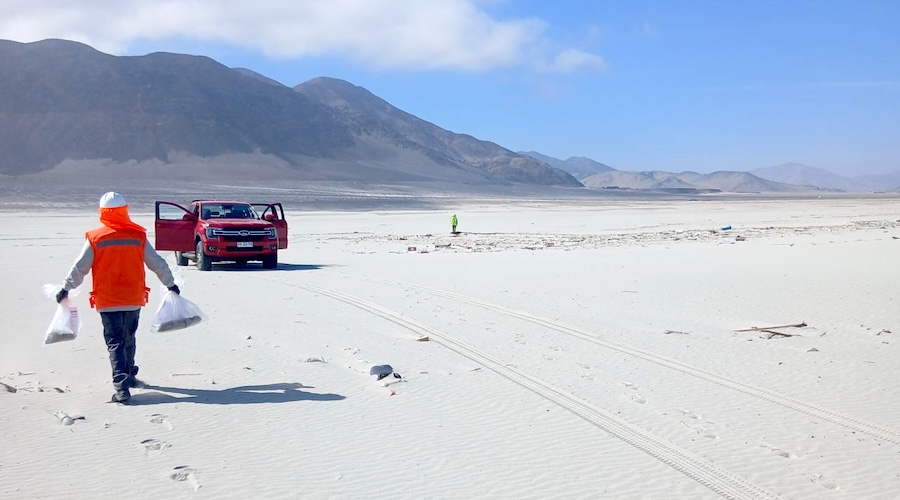
Halo Minerals’ Playa Verde project in Chile, where the UN described the surrounding area as one of the Pacific’s most serious cases of pollution, is a case in point. Between 1938 and 1978, the Potrerillos and El Salvador mines discharged around 250 million tonnes of tailings into the Salado River, which carried the material downstream to form the beach deposit that exists at Chañaral today. Reprocessing that material today means returning a coastline to the local community that has lived with the consequences of that pollution for generations.
The copper industry is good at identifying problems. It is less good at accepting that the solutions to those problems might look different from what has come before. With an estimated 282 billion tonnes of tailings existing globally, copper tailings present a credible, near-term solution to the mounting copper supply deficit. Of course, new mines will be part of the answer, but copper tailings have a vital role within that mix too.
* Andrew Dennan is CEO of Halo Minerals
More News
Op-Ed: The copper the world needs is already above ground
July 06, 2026 | 08:38 am

Canada unleashes wave of oil drilling permits in next big play
July 06, 2026 | 08:19 am
{{ commodity.name }}
{{ post.title }}
{{ post.date }}
Comments