Op-Ed: Molybdenum and the geopolitics of substitution
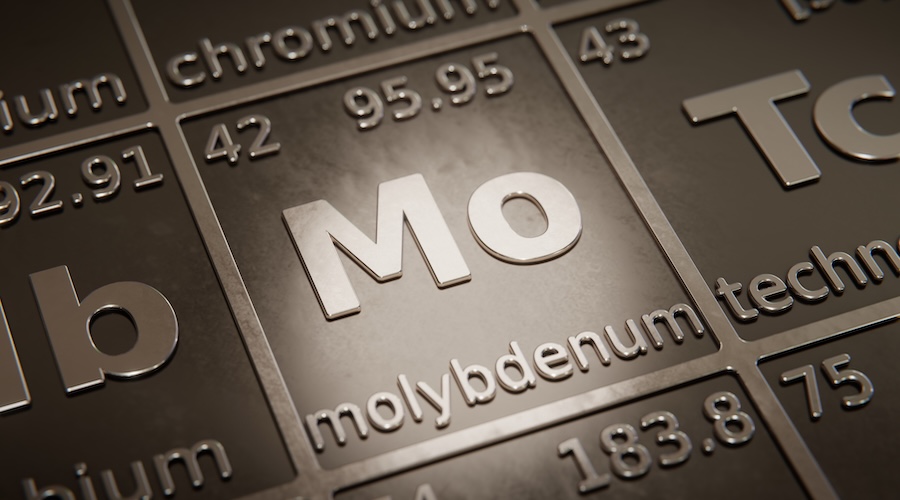
Molybdenum’s recent price strength should not be read simply as another by-product rally linked to the steel cycle. It signals how critical minerals stress is spreading across adjacent materials with overlapping industrial functions.
The price move is material. The IMF molybdenum spot series reached $65,503/t in May 2026, up 48.9% year over year, broadly a shift from about $20/lb to nearly $30/lb. This is not just a demand story. It reflects a security premium around alloying metals used in high-performance manufacturing.
The link with tungsten is central. Tungsten’s hardness, density and heat resistance make it difficult to replace in cemented carbides, cutting tools, drilling, defence, aerospace, penetrators and high-temperature applications. But tungsten is also one of the most geopolitically concentrated industrial metals because China dominates mine supply, processing and export availability. For Western users, the risk is no longer only price but permissioned access.
That risk became explicit in February 2025, when China imposed export controls on items related to tungsten, tellurium, bismuth, indium and molybdenum. For downstream consumers, this creates licensing risk, longer lead times and procurement uncertainty across defence, electronics, aerospace, mining equipment and clean energy supply chains.
Molybdenum is not a universal substitute. In many hard-metal and defence applications, tungsten carbide’s hardness, wear resistance, density and thermal stability are not easily replicated. The mechanism is instead metallurgical re-optimization, including reducing tungsten intensity, redesigning alloys, qualifying alternative carbides and changing specifications to preserve performance under supply stress.
In that process, molybdenum becomes strategically more valuable. Molybdenum carbide can substitute for part of the functionality of cemented tungsten carbides in selected applications, while molybdenum-bearing steels and superalloys improve hardenability, creep resistance, high-temperature strength and corrosion performance. The substitution channel is therefore not binary but a spectrum of partial replacement and functional complementarity.
Demand creation
This matters for market sizing. The better question is not how many tonnes of tungsten can be directly replaced but how much molybdenum demand is created when users redesign materials to reduce exposure to a restricted metal.
In a global molybdenum market of roughly 300,000 tonnes per year, an additional 5,000 to 10,000 tonnes from substitution, inventory rebuilding and requalification would represent only a few percentage points of demand. In specialty applications, however, that can be enough to tighten availability and reprice high-purity material.
The effect is amplified by molybdenum’s supply structure. Much of it is produced as a by-product of copper mining, especially in porphyry systems. Supply is therefore not highly elastic to molybdenum prices. Output depends on copper mine plans, ore grades, recovery circuits and by-product processing capacity.
Chile and Peru illustrate the point. In both countries, molybdenum is a secondary product of copper mining, yet it is already a significant export. Chilean molybdenum exports reached around US$2.48 billion in 2025, ranking as the country’s eighth-largest export product. Peru exported about US$1.65 billion of molybdenum ore in 2025, making it its thirteenth-largest export product. In both cases, higher prices improve by-product credits, reduce net copper costs and support margins for operations with molybdenum recovery.
For miners, by-products are no longer peripheral. Molybdenum, rhenium, vanadium, niobium, tellurium, bismuth and indium may be small relative to copper, iron ore or lithium by volume, but they can be decisive within industrial systems. Their value depends on where they sit in high-performance materials, whether they reduce exposure to controlled supply chains and how difficult they are to qualify.
This is the emerging geopolitics of substitution. China’s export controls do not need to shut off supply completely to change the market. They need only make access uncertain enough for manufacturers to redesign their materials strategies. Once requalification begins, the effects can persist even if the immediate shock later eases.
Molybdenum’s rally is therefore not only a price event but also a symptom of a shift from mineral scarcity to functionality scarcity. The strategic winners will be those who understand how materials interact within real industrial systems, and how substitution can turn a once-overlooked by-product into a critical supply-chain asset.
* Juan Carlos Guajardo is the executive director of Plusmining consultancy.
More News

Mine operators face worsening wildfire seasons
July 06, 2026 | 11:15 am
Op-Ed: Molybdenum and the geopolitics of substitution
July 06, 2026 | 10:09 am

{{ commodity.name }}
{{ post.title }}
{{ post.date }}
Comments