Boroo’s bid to buy former Eagle gold site raises questions among miners
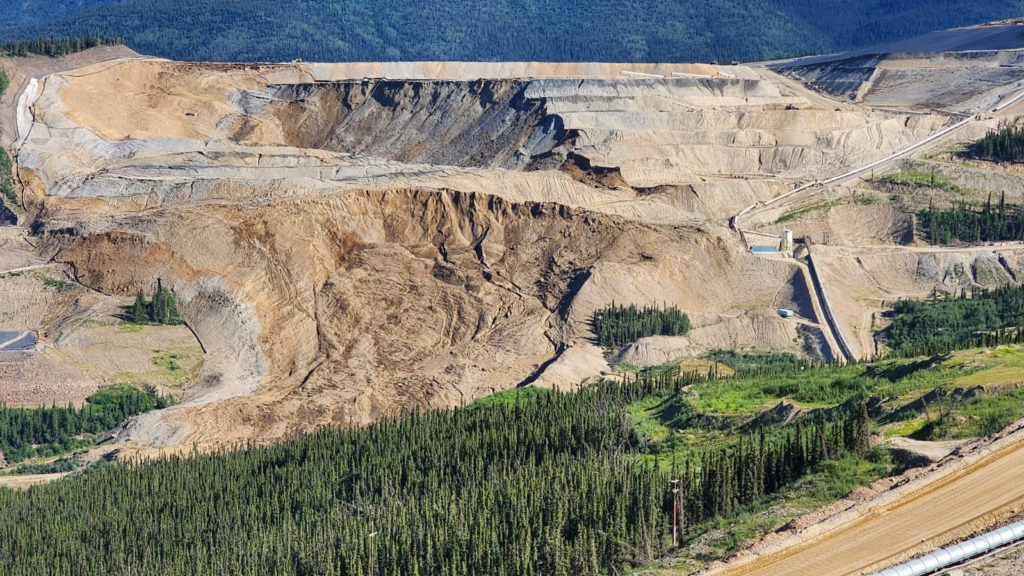
Private investment company Boroo is considering whether to buy the former landslide-devastated Eagle Mine site in Yukon, raising hopes it can revive the mine and help the territory press ahead.
The Singapore-based firm with a focus on troubled assets has entered an exclusivity agreement until July 22 with PricewaterhouseCoopers (PwC), the receiver of Eagle’s former owner, Victoria Gold. Boroo is the sole party negotiating a potential purchase of the site about 375 km north of Whitehorse.
“How is there no Canadian [company] in this?” Nico Harvey, former chief of technical services at Victoria Gold told The Northern Miner. Harvey is now vice-president of project development at Silverco Mining (TSXV: SICO).
“We have a great mining industry in Canada with a lot of top shelf names that would have had the ability and resources and experience in Yukon to take this on. But it would be great for Yukon to have this project again.”
The potential deal with Boroo comes almost one year after PwC put the mine site up for sale. PwC accepted bids until last December. Boroo, with assets in Peru and Mongolia, produced 265,424 oz. gold last year.
Clean up
An extensive clean-up period at Eagle followed a landslide at the mine’s heap leach pad. It released millions of tonnes of ore and at least 280,000 cubic metres of cyanide-containing solution beyond containment on June 24, 2024.
A court placed Victoria Gold into receivership two months later. There were no significant injuries in the accident. Yukon authorized PwC to spend C$220 million ($160 million) on the cleanup.
An Independent Review Board investigating the accident concluded last July that a lack of surveillance over the leach pad, poor drainage and too much pressure and weight caused the leach pad to collapse. Boroo hasn’t disclosed how much it might pay or what PwC is asking for the asset. Boroo, PwC and former Victoria Gold CEO John McConnell didn’t respond to requests for comment by press time.
“At this time, there is no offer in place,” Yukon government spokesperson Saskrita Shrestha said in an emailed response to questions. “Should an offer be made, it would be subject to court approval, and more information will be available at that time.”
Value
A PwC report from 2024 estimated the total value of Eagle’s assets at nearly C$825 million, however, a separate document that year listed about C$458 million in liabilities related to the accident, including C$109 million in reclamation and remediation costs. PwC has cautioned that the ultimate cost of the heap leach failure was uncertain and could be higher.
“There has been no updated estimate for the value of the Eagle Gold Mine and its assets,” Shrestha said.
In June 2025, PwC restarted Eagle’s adsorption, desorption and recovery plant, which has been intermittently recovering and producing gold in a closed loop system. The landslide didn’t significantly damage the plant.
In addition to those gold sales, PwC sold royalty assets to Franco-Nevada (TSX, NYSE: FNV) in February for about C$55 million to raise cash towards the remediation work.
Under the terms of the 90-day exclusivity deal, Boroo is to conduct further due diligence at Eagle and negotiate the terms of a sale with PwC, it said. It will also start discussions with the Yukon government and the First Nation of Na-Cho Nyäk Dun about agreements to allow the deal to proceed and mining operations to restart.
‘Who is Boroo?’
Others in the Yukon echoed Harvey’s sentiment about Boroo.
“At first I was like, ‘who is Boroo?’ It was the same reaction of many people,” Mike Burke, vice-president of corporate development with Yukon-focused Sitka Gold (TSXV: SIG) told The Northern Miner. “Would I have loved to see Agnico Eagle buy it? Of course. Any company in Yukon was hoping it would have been them.
“But the more I looked [at Boroo] I saw they’ve done well. All anybody really hoped for was a legitimate company coming in and being able to look at this project and remediate and hopefully put it back into production.”
Known for turning around underperforming assets, Boroo acquired Barrick Mining’s (NYSE: B; TSX: ABX) Lagunas Norte site in Peru in 2021 for C$81 million after it was put into care and maintenance. Boroo restarted gold production and invested in new processing methods at the mine.
“Our team excels where others see limitations,” Boroo CEO Dulguun Erdenebaatar said in a release on April 28. “By combining deep technical expertise with the financial agility to act on troubled or undervalued assets, we are proving that responsible, innovative mining can unlock immense value for shareholders and host communities alike.”
PwC shortlisted potential buyers of Eagle last year and invited them to meet with Yukon government and First Nation representatives to discuss their plans for the mine, PwC said.
Based on those discussions and input from its financial adviser and the consent of the Yukon government, PwC then reached the exclusivity deal with Boroo in late April. The receiver hasn’t publicly revealed the other companies on the shortlist.
“This information is typically treated at confidential to protect the integrity of the sales process,” government spokesperson Shrestha said.
Heap leach expertise
Boroo’s experience with heap leach operations might enhance its credibility, Agentis Capital analyst Michael Gray said in an April note.
“Boroo’s heap leach skillset was likely attractive to PwC to mitigate operational risks at Eagle,” he said. Three of its four mines use heap leaching: Lagunas Norte and two of its sites in Mongolia.
Though Gray noted that Boroo has published ESG documents for 2021-2023, it also reported one fatality each at its namesake processing plant in Mongolia in 2022 and at Lagunas Norte in 2023.
The company has strong access to capital, as shown with its $300 million senior secured notes issued last August, Gray added.
What’s left?
PwC hasn’t published any updated estimates on the existing gold reserves at Eagle or its production potential. Yukon officials said they didn’t know Eagle’s current value or cost estimates, though Shrestha said at the time of the landslide, the heap leach pad contained about 40 million tonnes of material.
The most recent assessment before the accident was an updated 2023 mine plan that gave Eagle a production total of 2.05 million oz. of gold over a 12-year life. The plan estimated proven and probable reserves of 124 million tonnes grading 0.65 grams gold per tonne for 2.58 million oz. of contained metal.
The plan estimated Eagle’s post-tax net present value (at a 5% discount) at C$954 million, its post-tax internal rate of return at 55% and with a gold price assumption of $1,700 per ounce.
Giving a rough figure, Harvey estimates that the heap leach pad itself held 80 to 90,000 recoverable ounces before the accident.
“Some of that went out of containment, then the solution would have had a fair bit of gold that was discharged,” he said.
The path ahead
Looking back to the events of the summer of 2024, Harvey said he feels the eight-week window Yukon gave Victoria Gold to remediate the site wasn’t long enough.
“Maybe we could have done some things differently,” he said. “We felt like the government wasn’t there to help us. My job was responding to the government on a daily basis. That consumed a considerable amount of the resources on our side.”
Still, he said Eagle remains a “good asset and a good place” and he hopes that whoever buys it can get it back into production.
“If it gets up and running that’s good. It shows we can move past the incident and move forward.”
{{ commodity.name }}
{{ post.title }}
{{ post.date }}
Comments