Ground view Kazakhstan: Brezhnev’s needles
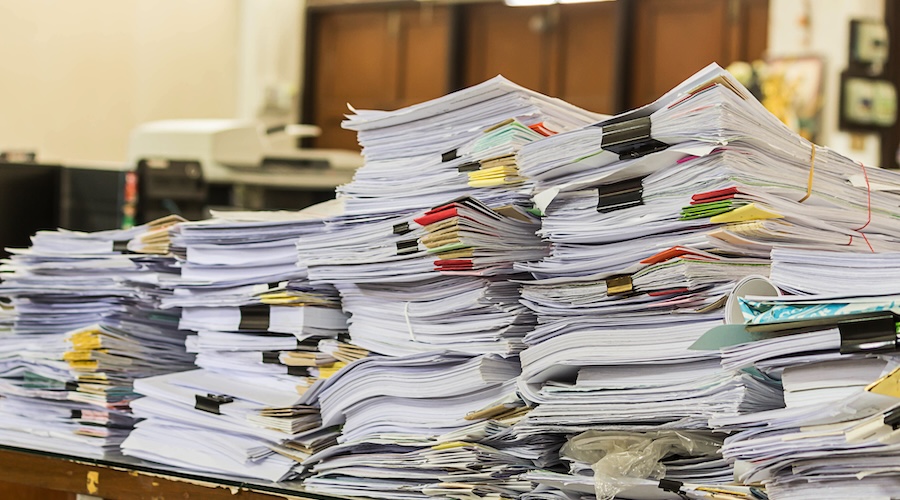
Kazakhstan is sitting on one of the largest geological archives on Earth, a Soviet inheritance that could help feed the West’s growing hunger for critical minerals. To make that archive usable, the country first has to win a quieter race: finding a magnetic needle last manufactured under Brezhnev before the data on the tape disappears for good.
Somewhere in Kazakhstan, on one of perhaps three machines in the entire country still capable of the job, a reel of magnetic tape from the 1960s is being played back one careful pass at a time. The tape holds seismic data, the kind that describes what sits a kilometre or more beneath the vast steppe.
The needle reading the tape has not been manufactured in fifty years, and there are only so many of those needles left. Some reels survive intact. Others, as Yerlan Galiyev, chairman of Kazakhstan’s National Geological Service (NGS), said at the Astana Mining and Metallurgy Congress, are already gone. Demagnetized past recovery, the data on them lost. “It’s impossible to retrieve,” he said. “Which is, of course, very unfortunate.”
The reason Kazakhstan is chasing down Soviet-era tape needles is that it wants to feed rapidly advancing artificial intelligence tools. The NGS is converting its entire historical archive into a machine-readable form so that modern AI and machine-learning tools can read it, model it, and reinterpret it.
The most advanced computing available to the exploration industry, in other words, is being held up at the front door by one of the simplest and oldest tools in the building. The needle is the bottleneck for the algorithm. It is almost comical to think that the discovery and development of the critical minerals needed to drive modern technological advancement are dependent on a needle that would typically be found in a museum.
It is worth saying why anyone outside Astana should care about a national geological archive preservation project in Kazakhstan. The Astana Congress, and the C5+1 critical minerals dialogue that ran alongside it, were not gatherings about diplomatic niceties. They were wall-to-wall critical minerals: where to find them, how to mine them, and how to move them to the markets now competing for them.
Andrew Glass, the senior commercial officer at the US Mission in Kazakhstan, described the current moment to me as a marked shift “from dialogue to action,” and he had the receipts to back the assertion, with more than twenty US companies in Astana there to make deals and over seventeen billion dollars in trade and investment deals signed with Kazakhstan in the final quarter of last year.
A separate memorandum signed with Saudi Arabia during the Astana Congress is also an indicator that the competition for Kazakh critical mineral deposits is no longer a simple US-versus-China story. It is multipolar, and it is loud. The West, and not only the West, is hungry now.
The operative word is now. Appetite is not a permanent condition. Demand windows close. Attention drifts to the next region’s promising prospects. A country that wants to be a critical-minerals supplier to the West, as Kazakhstan is clearly positioning itself, has to make its resource legible and investable while the buyers are still seated at the table, because there is no guarantee the table will be set this way in five years. But the race Kazakhstan is running is not only a geological one. It is a race against the patience of Western capital.
Which is what turns a dusty archive into a strategic asset, once you see what the archive actually is. The thing to understand about a Soviet geological record is that it represents mineral exploration that has already been paid for. The Soviet state spent decades and an enormous sum mapping the entirety of Kazakhstan, the ninth-largest country in the world, from the surface down, gridding the country, shooting the seismic, drilling the holes, and writing it all up. Call it Pre-Paid Exploration. The bill was settled, in both rubles and years, two and three generations ago. This Soviet data is a real inheritance, and it is the reason a mid-tier explorer can take Kazakhstan seriously without having to allocate a major explorer’s budget.
When a reel demagnetizes, the deposit beneath the steppe does not disappear. A high-quality ore body gets found eventually, one way or another. What disappears when the reel demagnetizes is the inherited prepayment. The market has to pay to acquire the same knowledge a second time: re-fly the survey, re-shoot the seismic, re-drill the hole to learn what a Soviet team already knew and wrote down over half a century ago. And it has to fund that with capital from junior exploration markets, which are the tightest, highest risk and most failure-prone pool of capital in the industry.
Every tape that deteriorates on the shelf is a bill the next junior has to pay again, charged against the two things junior explorers have least of: time and money. Even where the data survives, its quiet value is that it allows scarce exploration dollars to be aimed instead of sprayed. It tells you which hole to drill, so you do not fund forty dusters to find one hit.
But saving the data tape is only the first of two challenges facing Kazakhstan. A file that is preserved but cannot be read carries minimal value. This is the distinction the headlines tend to skip. Scanning the archive turns a rotting paper report into a stable PDF, which is genuine progress against the clock, but a PDF is just a picture to a computer. As Galiyev put it, the model sees an image, but an image alone is not something you can query, model, or recombine.
To be useful, a field sheet from 1962 has to become homogenized data. Not merely a scan of a map, but data rendered as polygons, vectors, and points that a machine can actually compute against. That is the larger job facing Galiyev and his team at the NGS, and frankly the harder one. Soviet geological maps are, by Galiyev’s own description, “beautiful objects,” hand-drawn with a precision that looks almost typeset.
They are also dense beyond modern habit, with enormous quantities of information packed onto a single sheet. Worse, for a machine, they are not standardized. The colour or pictogram one Soviet institute used for a Devonian unit might mean something else on a map drawn in another part of the country. Teaching a model to read all of it consistently is the core technical problem for the NGS.
Even when the data is preserved and put into a digital and legible format, there is yet another roadblock Western capital runs into. Most of the archive describes reserves in the old Soviet GKZ classification, and Western regulatory regimes use JORC or NI 43-101. Kazakhstan has even developed its own CRIRSCO-aligned KAZRC standard. There is no magic conversion methodology.
Galiyev was candid about this: “You know in the perfect world we would have a very you know simple coefficient. We just multiply it at 1.3 and you have the new reserves. No, unfortunately it doesn’t look like that.” The geology does not change between the two systems; what is in the ground is what is in the ground. It is the economics associated with the discoveries that need to be redone, deposit by deposit. So far, by Galiyev’s count, something like 143 of roughly 400 to 500 significant deposits have been restated under the new code. This conversion work is being done by the licence holders themselves as they come forward, not by the state on their behalf.
Once all those hurdles are finally cleared, the machine-readable, standardized, code-compliant geoscience becomes the raw feedstock that modern exploration tools are built to consume. An entire national archive converted into that form is an unusually large meal.
Dr. Shawn Hood, who runs the geoanalytics business at ALS and has spent his career applying machine learning to exploration data, frames the value of these historical datasets bluntly. “A Soviet archive nobody can open is worthless. But the moment the data becomes machine-readable, it becomes invaluable training and target data at the same time. The tools we have built can do remarkable things with a century of consistent coverage that was unimaginable barely a decade ago.”
What that unlocks, in practice, is best captured in a story Galiyev told. A prospector, he said, once sat in a hotel room in Bangkok, opened the portal on his laptop, found a block on the map that interested him, and applied for the licence over it, all without ever having set foot in Kazakhstan. The platform, minerals.e-qazyna.kz, lets a geologist in Vancouver or Perth pull the geological data for free, see what sits on a given block (a river, a protected area, ground already closed to mining), and then apply, report as a holder, or relinquish, first-come, first-served.
For a century this archive sat in buildings in Kazakhstan, reachable only by those who could physically get to it; the marginal cost of reaching a continent’s worth of Pre-Paid Exploration has now fallen to the price of a hotel Wi-Fi connection. The state has pulled some ground out of that first-come pool for itself and its national champion, Kazatomprom, but those were deposits already on the radar, and the known ground was never the real prize.
The prize is the prospect a Soviet crew logged decades ago and no one has revisited since, the target buried in a dataset too large for any person to read, that a machine-learning model can now surface for a junior who could never have afforded to find it the old way. That, more than any single known deposit, is what changes who gets to explore here.
So that is the picture from the ground. A country sitting on a century’s worth of Pre-Paid Exploration, racing to save it before it demagnetizes, racing again to make it legible, and doing all of it against a demand window of unknown duration.
The most futuristic kitchen in the mining world is being held up, at this moment, by a search for needles that were last made under a Soviet general secretary. Whether Kazakhstan gets the feast out before its guests lose their appetite is the open question of the next few years, and it is one to keep watching.
* Erik Groves is a contributing analyst for MINING.COM and Corporate Strategy and In-House Counsel at Morgan Companies. He recently attended the 16th International Mining and Metallurgy Congress and Exhibition (AMM) in Astana, Kazakhstan. He will be sharing insights gathered at one of Central Asia’s most important mining events.
{{ commodity.name }}
{{ post.title }}
{{ post.date }}
Comments