US army bases to host critical minerals plants in onshoring push
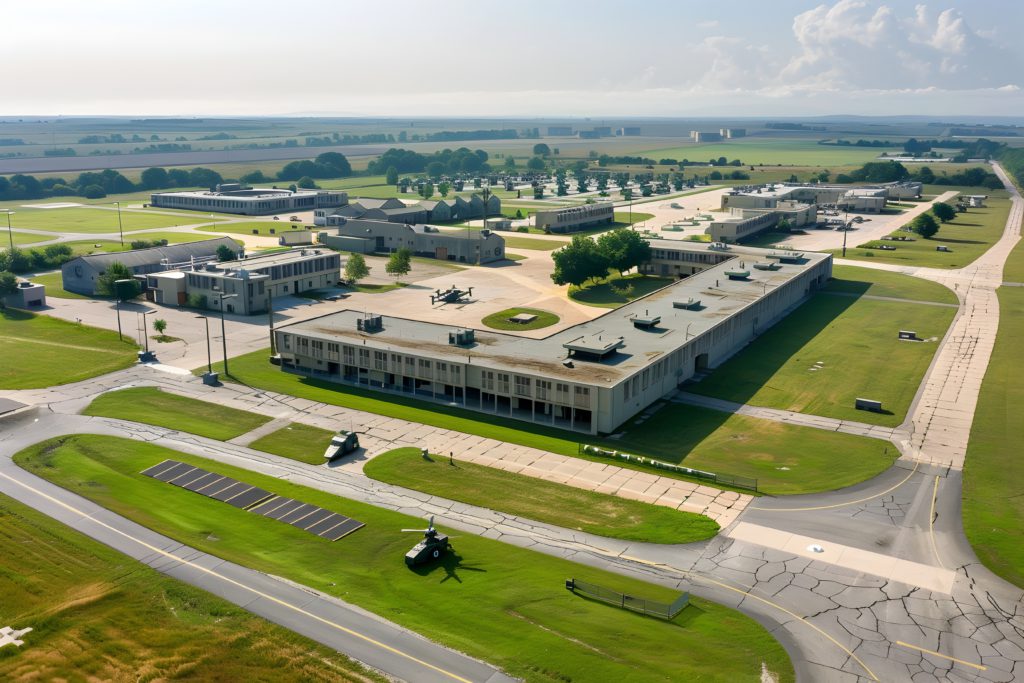
The US Army struck deals with several companies to build critical minerals processing plants on military bases around the country, a first-of-its-kind initiative by the Trump administration to boost domestic production of key materials.
REalloys Inc., Titan Mining Corp., ioneer Ltd. and Energy X have reached agreements with the Pentagon to build facilities for processing rare earth minerals, graphite, lithium and boron, the US Army said in a statement late Thursday.
REalloys will construct a rare earth separation facility at the Tooele Army Depot in Utah, and production will be stockpiled on-site for military use, according to the statement. Titan Mining will build and operate a graphite purification facility at either Pine Bluff Arsenal in Arkansas or Anniston Army Depot in Alabama.
EnergyX and Sydney-based ioneer — the only non-US company of the four involved — will develop a lithium facility and a boron plant, respectively.
The arrangements confirm a series of deals first reported by Bloomberg News.
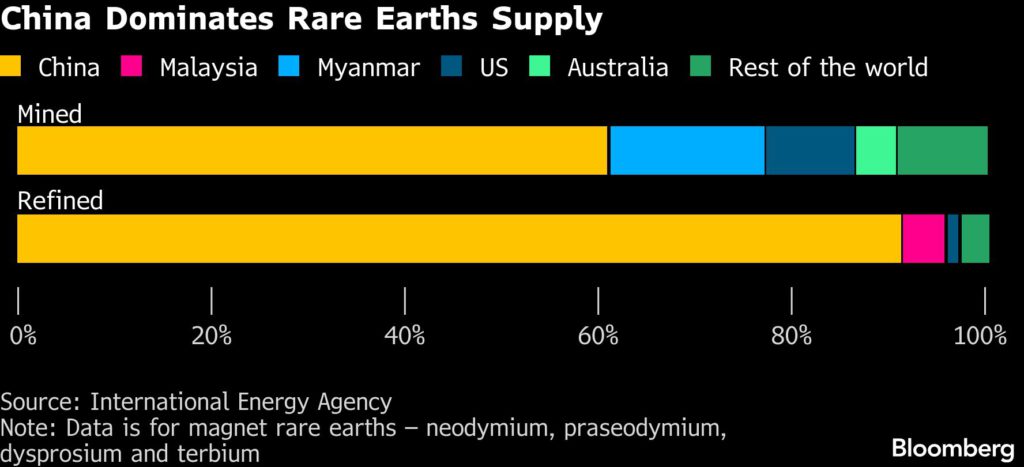
President Donald Trump’s administration is racing to boost production of critical minerals on US soil in an effort to reduce its dependency on imports, especially from China. The minerals are essential to a wide range of applications including consumer electronics, automobiles and defense technologies, though US mines and processing plants have shuttered over the past decades.
Since taking office, the Trump administration has launched a flurry of initiatives to rebuild domestic capacity including government loans and equity stakes in mining companies. The plan to build mineral plants on army bases was foreshadowed in March of last year when President Donald Trump signed an executive order invoking emergency powers to boost critical minerals production capabilities.
The awards are the first time the Army has sited commercial mineral processing facilities on American military installations, it said.
Shares of Titan Mining rose as much as 12% in New York trading on Thursday while ioneer’s depositary receipts climbed as much as 7.1%. REalloys pared some of its earlier losses.
The agreements, which are preliminary, are intended to give the Army direct access to the minerals. In lieu of cash payments, the “lessee directly funds and executes infrastructure improvements on the host installation,” the statement said.
The companies are expected to start building the plants as early as 2027. Mineral production is expected to begin by 2028.
Geopolitical tensions over critical minerals have shown no sign of easing. Last week, China’s Commerce Department placed export controls on US rare earth companies MP Materials Corp. and USA Rare Earth Inc., while the Group of Seven nations set a target to reduce their reliance on Chinese imports.
USA Rare Earth signed an accord in January for $1.6 billion in funding toward plans for new mining, processing and magnet-making capacity. The federal government also unveiled plans in February to build a $12 billion stockpile of critical minerals.
Last week, the Department of War’s Office of Strategic Capital extended a $725 million conditional loan to Energy Fuels Inc. and a $500 million loan to Phoenix Tailings Inc. Days later, Energy Fuels agreed to buy rare earth magnet supplier Vacuumschmelze GmbH & Co. and associated companies for $1.9 billion, which will give it plants in Germany and Finland as well as a newly commissioned facility in South Carolina.
Mines and processing plants are expensive and challenging to build, and frequently get pushback from people living near proposed locations. Meanwhile, the Pentagon under Trump has sought ways in which it can utilize its properties, including for data centers.
REalloys currently produces alloys at a plant in Ohio and works with the Saskatchewan Research Council to produce so-called heavy rare earths like terbium and dysprosium. Its Utah plant will focus on rare earths that are in particular high demand owing to their use in heat-resistant magnets for defense and automobiles. The planned facility doesn’t require taxpayer funding, the people said.
The company raised $100 million in a private placement of common stock on Wednesday.
Titan, a firm backed by Canadian mining billionaire Richard Warke, owns zinc and graphite projects in New York.
(By Jacob Lorinc)
{{ commodity.name }}
{{ post.title }}
{{ post.date }}
Comments