Hertha Metals targets rare earth magnet supply gap with Texas high-purity iron plant
A Texas startup says it is positioning itself to fill a critical gap in the United States’ rare earth magnet supply chain as new domestic sourcing requirements approach and policymakers seek to reduce reliance on China for strategic materials.
Hertha Metals, founded in 2022 and headquartered in Houston, plans to break ground later this summer on a plant that will produce 10,000 tonnes per year of high-purity iron used in permanent magnets, chief executive Laureen Meroueh told MINING.COM.
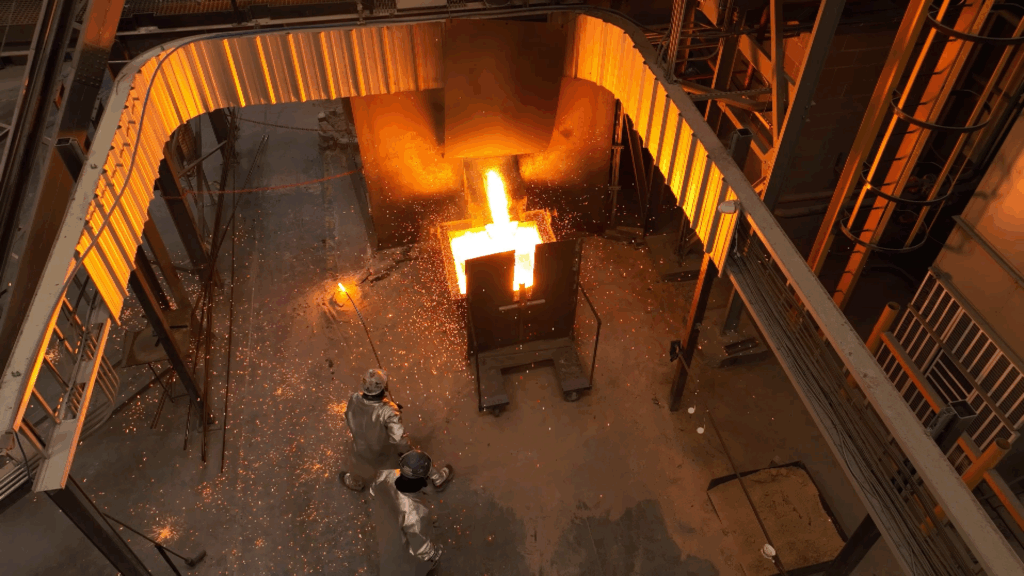
The company is developing what it calls FLEXHERS, short for flexible fuel hydrogen electric reduction smelting, a process that combines electric arc furnace technology with natural gas or hydrogen to produce iron and steel.
“We will be the first and only domestic producer of this material,” Meroueh said in an interview, referring to high-purity iron used in neodymium-iron-boron (NdFeB) permanent magnets.
The announcement comes as Washington tightens sourcing rules for defence-related supply chains.
Updated Defense Federal Acquisition Regulations (DFARS) requirements are set to take effect in January 2027, requiring materials used in certain defence applications to originate from non-covered countries.

Effective January 1, 2027, the Department of Defense (DoD) will enforce a ban on Chinese-origin rare earth magnets and constituent materials in all covered defense systems.
According to Meroueh, the focus of policymakers and industry has largely been on securing domestic supplies of rare earth elements such as neodymium, while a lesser-known vulnerability remains in high-purity iron production.
“Today, that high-purity iron is being made 90% in China,” she said.
The decline in Chinese steel production will impact demand for lower-grade iron ore used in the coal-consuming blast furnaces that currently produce 90% of China’s steel, according to the Institute for Energy Economics.
As some big miners are pointing out, demand for higher-grade iron ore suitable for low-carbon steelmaking is set to rise as steelmakers shift away from blast furnaces towards cleaner technology.
Reviving domestic iron production
Hertha’s broader ambition is to restore domestic ironmaking capacity in the US, which has increasingly relied on imported iron while focusing steel production on scrap-fed electric arc furnaces.
Meroueh said that existing blast furnace technology has changed little over the past century and limits the range of iron ore grades that can be economically processed.
Hertha’s process, she said, can utilize lower-grade ores and iron ore fines that are often difficult to use in conventional steelmaking routes.
The company currently operates what it describes as the largest demonstration-scale single-step steelmaking facility in the United States, a one-tonne-per-day pilot plant in Conroe, Texas.
Ore is sourced domestically from Minnesota, Meroueh said.
The pilot facility is already producing material that meets customer specifications, and Hertha has begun selling limited quantities while preparing for commercial-scale expansion.
The planned high-purity iron facility will also produce trial steel products and is intended as a stepping stone toward larger-scale steelmaking operations. Meroueh said the company aims to reach production capacity of roughly 500,000 tonnes per year within the next four to five years.
Cost competitiveness key
While domestic supply security is a major selling point, Hertha says economics will ultimately determine success.
The company believes it can compete with conventional steelmaking by replacing metallurgical coal with natural gas and electricity while using lower-cost iron ore feedstocks.
“We don’t demand premiums because it’s domestic,” Meroueh said. “We will be profitable as is.”
One challenge, Meroueh acknowledged, is competition from heavily subsidized overseas producers.
“We know we’re cost competitive,” she said. “What we can’t solve is the Chinese government subsidizing and allowing companies to sell their product below cost of production.”
Hertha has not disclosed financing details, future fundraising plans or any potential offtake agreements, citing, confidentiality obligations.
Critical minerals and manufacturing
The startup’s strategy aligns with broader efforts by the US government to rebuild domestic manufacturing capacity for critical minerals, rare earth magnets and steel.
Recent geopolitical tensions and trade disputes have intensified concerns about dependence on foreign suppliers for materials deemed essential to defence systems, electrical infrastructure and clean-energy technologies.
Beyond permanent magnets, Meroueh sees opportunities in electrical steel used in transformers and electric vehicle motors, another sector where high-purity iron is a key input and domestic supply remains limited.
As the January 2027 DFARS deadline approaches, Hertha is betting that policy support, national security priorities and market demand will converge to create a viable domestic industry.
“It’s going to force a supply-chain shift,” Meroueh said. “It’s going to be very interesting to watch what everyone does.”
More News
{{ commodity.name }}
{{ post.title }}
{{ post.date }}
Comments