War? What war? Aluminum’s Gulf disruption premium vanishes
(The opinions expressed here are those of Andy Home, a columnist for Reuters.)
The Iran war is escalating again but you wouldn’t know it from the aluminum price.
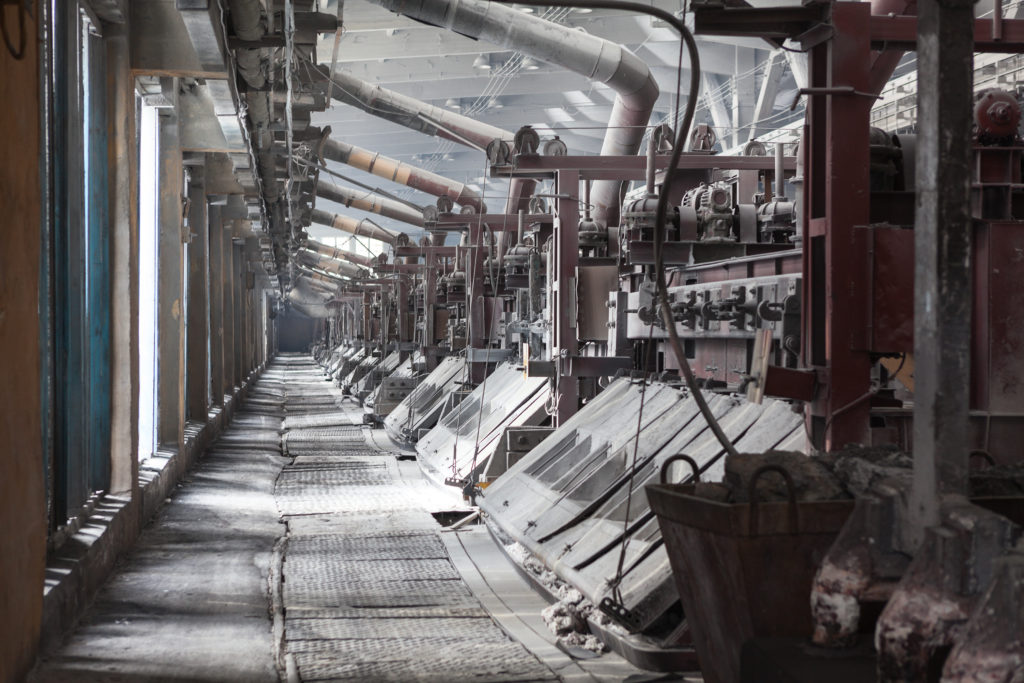
Damage to two Gulf smelters and constrained logistics at others have already blown a 2-million metric ton hole in the global supply chain.
But after surging to a four-year high of $3,787.50 per ton in early June, London Metal Exchange (LME) three-month aluminum is now trading around $3,170 per ton, which is exactly where it was before the United States unleashed its “Operation Epic Fury” — joint strikes with Israel on Iran — on February 28.
So where did the war premium go?
And is the market right to be so relaxed about the unprecedented supply hit to what both Washington and Brussels view as a critical metal?
A speedy recovery?
The market has been encouraged by the progress made by Emirates Global Aluminium in repairing and reactivating its Al Taweelah facility after an Iranian missile strike.
The alumina refinery is expected to return to production this quarter and as of July 2 the company had restarted the first 89 of 1,262 cells in the smelter.
However, the situation at Aluminium Bahrain, also hit by Iranian strikes, remains unclear, while Qatar Aluminum is continuing to operate at 60% capacity.
Gulf production slumped by 20% in the first half of this year, according to the International Aluminium Institute. Smelter run rates have dropped by over 2 million tons annualized since the start of hostilities.
Full recovery could still be many months away, even assuming a return to some sort of normality.
That’s looking increasingly unlikely as the United States resumes its bombing campaign on Iran, Tehran tightens its chokehold on the Strait of Hormuz and the Iranian-aligned Houthis start enforcing their own blockade of the Red Sea.
China cranks up export volumes
The surprising market calm over the last few days rests on a growing confidence that the loss of Gulf metal, even if protracted, can be offset by higher exports from China and Indonesia.
China’s aluminum smelters are enjoying strong profit margins thanks to the combination of low alumina and high metal prices. Capacity utilization is sitting close to 99%, according to consultancy AZ Global.
Exports of semi-manufactured aluminum products such as bars, rods and tubes rose by 10% year-on-year in the first five months of 2026, according to the World Bureau of Metal Statistics (WBMS), which collects official customs data. Shipments of 595,000 tons in May were the highest monthly count since November 2024.
While China’s product exports are not a like-for-like replacement for lost primary and alloy production from the Gulf, they can help rebalance the market by suppressing Western demand.
The downside is that China’s exports compete with similar semi-products capacity in the West, which has already pushed back with multiple trade protection measures.
Indonesia rising
Then there is Indonesia.
The country is rapidly emerging as a major supplier of primary aluminum thanks to a Chinese investment boom in new smelters.
The 480,000-ton-per-year Hua Chin smelter, a joint venture between Tsingshan Holding Group and Huafon Group, ramped up last year and in May applied to register its “HCAI” brand with the LME.
Another new entrant, Alamtri Resources Indonesia, is commissioning a similar-sized plant and shipped its first exports in June.
The project pipeline stretches to as many as 11 new smelters with combined annual production capacity of 13 million tons, according to Greg Wittbecker, president of Wittsend Commodity Advisors.
Indonesia’s exports of primary metal jumped from 155,000 tons in 2024 to 511,000 tons in 2025 and rose by another 58% year-on-year in the first five months of this year, according to the WBMS.
You can start to see why the aluminum market has become a lot more relaxed about the hit to Gulf production.
Stock absorbers
But Indonesia’s trade flows also reveal grounds for caution about the apparent resilience of the aluminum supply chain.
The main destinations for last year’s exports were China, accounting for 40%, followed by South Korea and Vietnam with a 16% and 12% share respectively.
However, there were significant exports to Europe, particularly in the fourth quarter of the year.
Indonesian smelters shipped 15,000 tons to Spain, 14,800 tons to Croatia, 11,000 tons to Bulgaria, 5,000 tons to Italy and 5,500 tons to the United Kingdom. Another 39,000 tons were dispatched to Turkey.
This seems to have been a collective stock-building exercise ahead of the implementation of Europe’s Carbon Border Adjustment Mechanism (CBAM) at the start of this year.
While Inalum, Indonesia’s original producer, uses low-carbon hydropower to supply its smelter, the new generation of plants is powered by coal, meaning higher CBAM import costs.
The inventory build has served a massive secondary function by cushioning the impact of the Gulf disruption.
The big question, though, is how much has been drawn down and when will it need replenishing?
It’s noticeable that while the war premium has disappeared in the LME futures market, it is still very much there in the CME’s physical premium contracts.
The European duty-unpaid premium is up by 65% since the start of the US-Israeli war with Iran. The Japanese premium has more than doubled.
LME traders may be sanguine about the deteriorating situation in the Gulf, but their physical counterparts don’t seem so sure.
(Editing by Emelia Sithole-Matarise)
{{ commodity.name }}
{{ post.title }}
{{ post.date }}
Comments