Laramide sees $741M value for Queensland uranium project
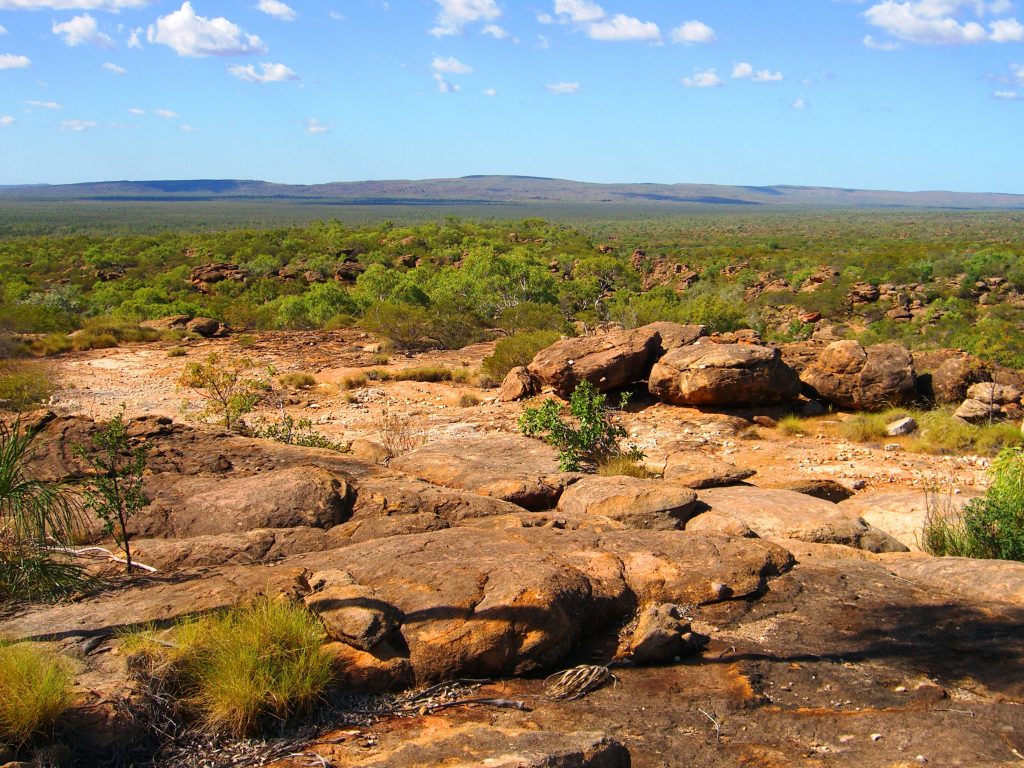
An updated study for Laramide Resources’ (TSX, ASX: LAM)(US-OTC: LMRXF) proposed Westmoreland uranium mine in Australia values the project at about $741 million – almost twice the figure calculated 10 years ago with different assumptions.
Based on a 7.5% discount rate and a long-term uranium price of $90 per lb. U₃O₈, Westmoreland would have a 33% internal rate of return and a payback period of about 2.5 years, Laramide said Wednesday in a statement. Initial capital is pegged at $456 million, plus an $84-million contingency, with sustaining capital of $84 million over the mine life.
Westmoreland is located in Queensland, about 2,000 km northwest of Brisbane.
The new analysis replaces a 2016 preliminary economic assessment (PEA) and incorporates updated engineering, environmental and mine planning, metallurgical design, operating costs and revised uranium market assumptions, Laramide said. That study, which used a 10% discount rate and a uranium price of $65 per lb., valued Westmoreland at $400 million after tax.
“This PEA confirms that Westmoreland remains a compelling development proposition in a sector with limited supply visibility, particularly in the medium and longer term,” Laramide CEO Marc Henderson said in the statement.
“Identifying and supporting new mine development is becoming an increasingly urgent priority, especially given the rapidly increasing demand requirements of a global nuclear energy industry that is once again growing strongly.”
Uranium ban
Although Laramide said it’s prepared to file a mining lease application “as soon as permitted by the Queensland government,” its drive to build Westmoreland must contend with a longstanding ban on uranium mining in the state.
Most Australian states prohibit or effectively prevent uranium mine development. South Australia and the Northern Territory host the country’s operating uranium mines, while nuclear energy is banned nationwide. A bill is currently before the New South Wales Legislative Assembly seeking to overturn the ban on uranium mining.
Laramide’s push may benefit from expanded efforts by India to source uranium. Two weeks ago, Australia signed the final administrative arrangements on a deal to supply the world’s most populous country with uranium for civilian nuclear use. Australia’s uranium reserves could help India meet a target of 100 gigawatts of nuclear energy capacity by 2047.
“While we concur that Australia’s uranium endowment is substantial and applaud the mutual intent that often emerges from these types of high-level political meetings, the reality is that Australia’s relevance as a consequential and reliable uranium supplier is diminishing quickly and will require pro-active actions on the part of national and state political leaders in Australia if the country intends to reverse its shrinking share of what is now an expanding global uranium market,” Henderson added.
Open pit
Westmoreland is now envisioned as an 11-year open-pit operation processing 2.9 million tonnes of ore annually through a conventional mill and leach circuit. Average annual production is estimated at about 4.9 million lb. U₃O₈, with life-of-mine output of 47.9 million lb.
Uranium recovery is projected at 95%, while average cash operating costs are estimated at $32.40 per pound.
Power options assessed include hybrid diesel generation, solar energy and battery storage, Laramide said.
Defined resources
The property holds 27.8 million indicated tonnes grading 770 parts per million (ppm) uranium for 48.1 million contained lb. uranium oxide (U3O8), according to a January 2025 resource. Inferred tonnage totals 11.8 million tonnes at 680 ppm uranium for 17.7 million contained lb. U3O8.
No mineral reserves have yet been declared.
The updated PEA only factors in the defined uranium resources and excludes exploration upside from nearby satellite targets, Laramide said. It also leaves out potential gold or rare earth mineralization identified within the broader district.
Laramide shares dropped 5.7% to 50¢ Thursday morning in Toronto, cutting the company’s market value to about C$142 million ($101 million). The stock has traded between 46¢ and 91¢ in the past year.
More News

{{ commodity.name }}
{{ post.title }}
{{ post.date }}
Comments