Rock-mining bacteria could support human presence in space
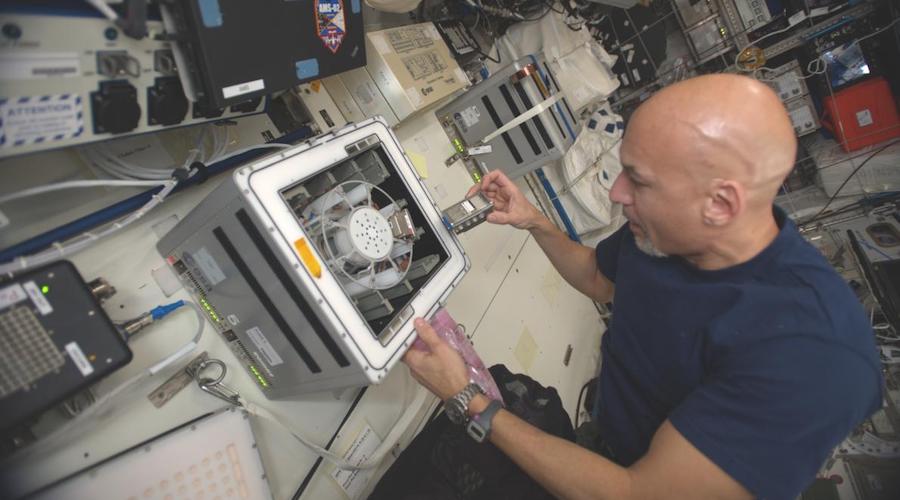
A new paper published in the journal Nature Communications suggests that bacteria can extract useful materials from rocks on Mars and the Moon and pave the way for new technologies to help humans explore and establish settlements on distant worlds.
The study is based on tests performed by astronauts on the International Space Station who received 18 matchbox-sized mining devices – called biomining reactors – sent by researchers from the University of Edinburgh aboard a SpaceX rocket launched from Cape Canaveral in Florida, US, in July 2019.
BACTERIA COULD ENHANCE THE REMOVAL OF RARE EARTH ELEMENTS FROM BASALT IN LUNAR AND MARTIAN LANDSCAPES BY UP TO AROUND 400%
Small pieces of basalt, a rock commonly found on the Earth’s natural satellite and on the red planet, were loaded into each device and submerged in a bacterial solution for three weeks under space gravity conditions.
The team’s findings suggest bacteria could enhance the removal of rare earth elements from basalt in lunar and Martian landscapes by up to around 400%.
“Our experiments lend support to the scientific and technical feasibility of biologically enhanced elemental mining across the Solar System,” Charles Cockell, lead author of the paper, said in a media statement.
“While it is not economically viable to mine these elements in space and bring them to Earth, space biomining could potentially support a self-sustaining human presence in space.”
According to Cockell, the experiment shows that it may be possible to build robotic and human-tended mines in the Oceanus Procellarum region of the Moon, which has rocks with enriched concentrations of rare earth elements.
“[This] could be one fruitful direction of human scientific and economic development beyond Earth,” the scientist said.
More News
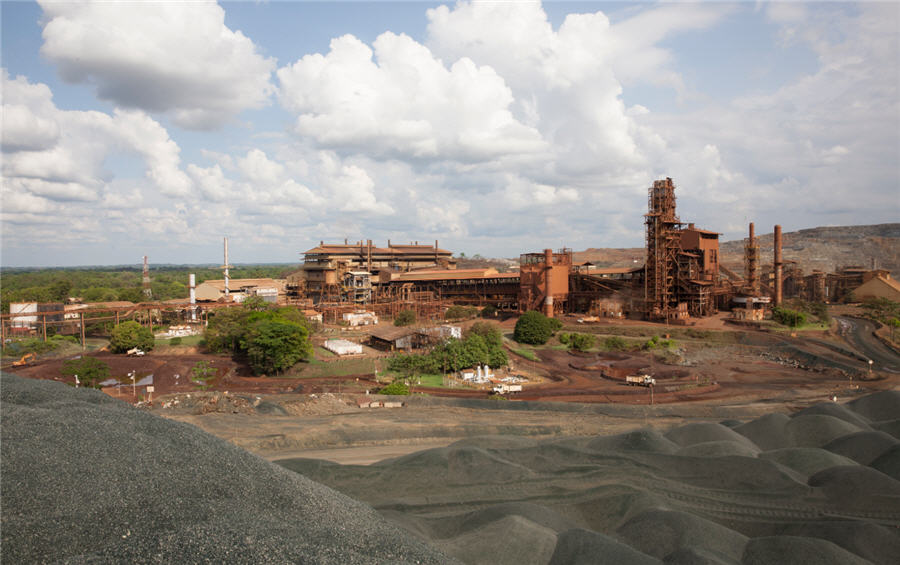
Canacol gas curbs force Colombia’s Cerro Matoso ferronickel mine to cut output
Cerro Matoso said it was cutting operations by 25%.
July 01, 2026 | 10:01 am

GreenMet plans $150M rare earth processing hub in West Virginia
July 01, 2026 | 09:36 am
{{ commodity.name }}
{{ post.title }}
{{ post.date }}
Comments