Switzerland loses its shine as central bank gold vault

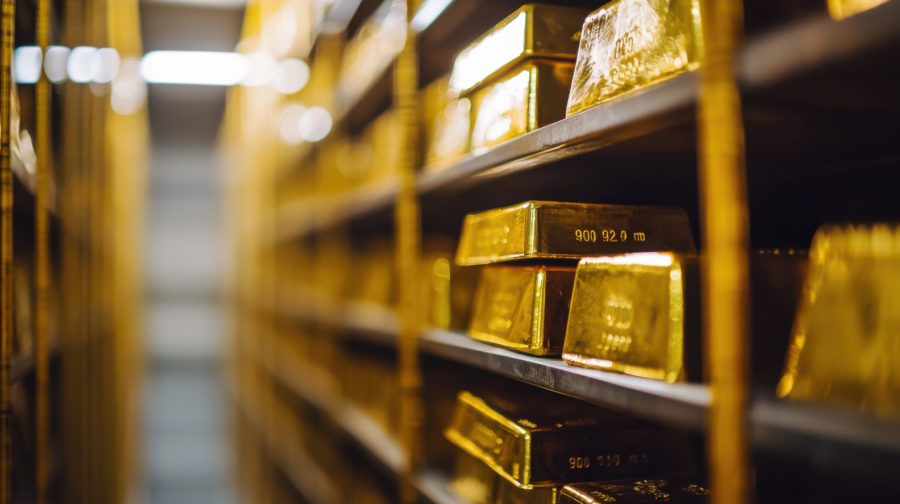
While central banks worldwide continue to buy more gold, they’re increasingly not selling dollars to do it while cutting the amount they store in once-favoured Switzerland.
After banks were net sellers in March, they added a net 17 tonnes of gold in April, led mainly by Poland and China, the council said in an annual report Tuesday. Nearly 90% of central banks expect gold reserves to increase over the next 12 months, while holdings in the Swiss National Bank fell to 6% from 12% last year, the survey showed.
Switzerland built its reputation on neutrality and security, and central banks are quietly moving away from it. The survey doesn’t say why, but the timing and the Iran war context are suggestive.
Another surprise is who is saying the US dollar is in decline. A 74% figure expecting lower dollar reserves in five years isn’t new in tone, but it used to be mostly an emerging market view. This year advanced economy and emerging market respondents are aligned on it. When European and other G10 central banks are explicitly saying they expect to hold fewer dollars, that’s a different statement than when developing countries say it.
Local currency
Half of respondents plan to fund new gold purchases through domestic programs in local currency, meaning they’re not selling dollars to buy gold, they’re going around the dollar system entirely. That’s structurally significant for gold miners, as it’s a demand channel that doesn’t depend on dollar liquidity conditions.
There’s also a new finding on tariffs: 54% of respondents flagged trade conflicts and tariffs as relevant to their reserve management decisions, a category that likely didn’t even exist in prior surveys. Emerging market banks were almost twice as concerned about it as advanced economies. That reflects the greater reliance on commodity exports among emerging economies and sensitivity to trade swings.
The continued buying seen earlier this year helped support gold prices, which fell in mid-May amid turmoil in the Middle East but then began to recover on Friday and Monday following reports of a US-Iran deal. Bullion traded for $4,318 per oz. on Tuesday.
In Tuesday’s survey, about half of respondents cited the yellow metal’s value as a hedge against inflation and geopolitical risk as well as a portfolio diversifier as their main motivations for holding gold.
Bigger reserve slice
Central banks have accumulated about 1,000 tonnes of gold over the past four years, up from the 500-tonne average over the previous decade, WGC said. The rising buying pace occurred in an increasingly uncertain geopolitical and economic environment, dimming the outlook for reserve managers.
The WGC’s survey was conducted between Feb. 5 and May 19 and incorporated 76 responses, the highest participation rate since the council started the survey in 2017. Most responses came in after the US-Iran war started.
{{ commodity.name }}
{{ post.title }}
{{ post.date }}
Comments