The new king of The Ring of Fire? Robert Cudney’s big bet
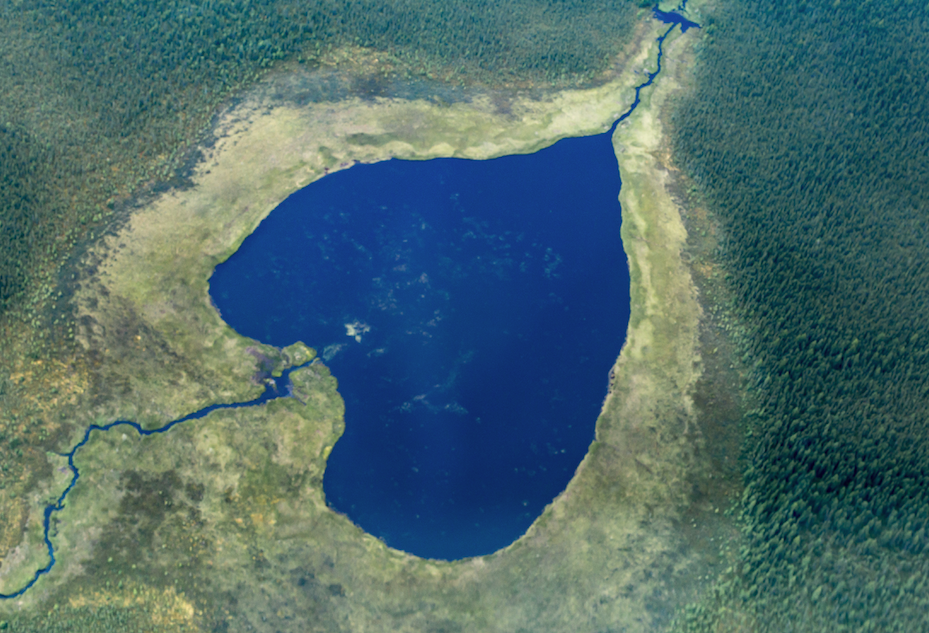
Everything is firing on all cylinders for Robert Cudney, founder and CEO of exploration miner Juno Corp. The company is starting the largest exploration program in over a decade in the well-known Ring of Fire mining camp.
He is changing the name of his holding company from Northfield Capital to Juno International to highlight and easily allow investors a way of participating in the enormous mineral potential of that camp – the other major player is Wyloo Metals, a privately owned Australian company.
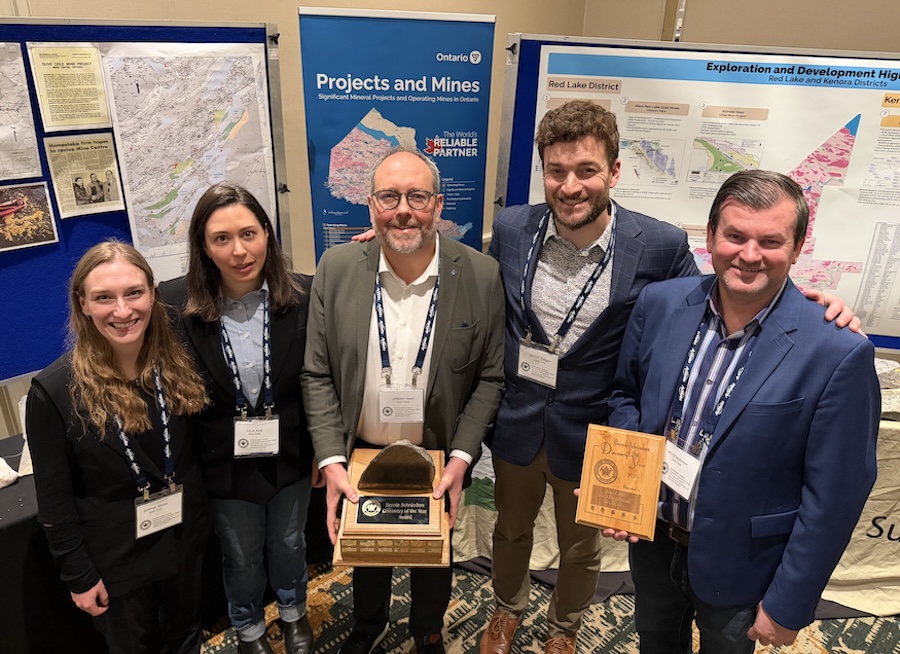
And in April, the Northwestern Ontario Prospectors Association awarded Juno the Bernie Schnieders Discovery of the Year Award for its Big Thunder grassroot gold discoveries.
Except for one annoying issue! The mix up in the media, between him and former Noront CEO Richard Nemis who passed away in 2019, over who named the Ring of Fire.
Back in the spring of 2006, as fate would have it, on a flight from Vancouver to Toronto, Cudney sat right next to Nemis.“I had known Richard for quite some time and the conversation quickly focussed on mining exploration,” recalls Cudney. “He had mentioned that I might be interested in a project he was working on in the James Bay Lowlands. He was always a terrific promoter and had me hooked. I believe I was one of the first investors.”
Fast forward a year later, and under Noront’s geologist John Harvey’s direction, discovery hole Not-07-1 intersected rich massive sulphides and the rush for the not-yet-named camp began.
Shortly afterwords, Cudney, Harvey and Nemis were at a well-known mining bar – Cyrano – discussing the recent discovery.“We were looking at a new map of the James Bay Lowlands trying to think of a ‘catchy name’ to excite investors,” says Cudney. “I noticed all the magnetic highs were prominent and in a half crescent shape wrapping around the central geology. To me the obvious name was Ring of Fire! Nemis loved it and since he was a Johnny Cash fan just ran with the name and song!”
Last fall and early this year, the provincial government spent millions advertising the Ring of Fire during the Blue Jays playoffs as well as in provincial newspapers under the slogan “Protect Ontario”. That burst of publicity ensured that the Ring of Fire was on everyone’s radar!
During a lengthy speech at the annual Prospectors and Developers Association of Canada convention last March the Premier highlighted that the Ring of Fire’s critical minerals are a strategic global asset for the province and one of his top economic priorities. He also announced new initiatives to fast-forward the road and power infrastructure to open-up the camp and mentioned the progress he is making with Aroland, Marten Falls, and Webequie First Nations – the road will provide a much-wanted link to the highway network for these communities – including significant funding for priority local initiatives.
But the current political momentum is only a recent phenomenon, coinciding with President Trump’s economically punishing tariffs and his interest in mineral security of supply for American industry and military due to China’s stranglehold of many key strategic and critical metals.
During the Ring of Fire’s original rush after Noront’s discovery hole, there were around 54 companies exploring in the region. American-owned Cleveland Cliffs spent over $500 million trying to develop the extensive chromite deposits. However, after years of unsupportive provincial and federal Liberal governments, not committing to build vital road infrastructure, Cliffs walked away selling their project to Noront Resources for about $25 million.
As the glacial pace of development continued along with little progress on FNs agreements, many explorers let their mining claims lapse and deserted the Ring, while Noront was eventually bought by Wyloo in 2022.
Throughout this “lean period” Cudney’s Northfield Capital held on to the Jupiter discovery, a high-grade copper, zinc and silver VMS deposit. John Harvey, who was a former president of Noranda Exploration – a legendary mining company that originally opened-up the rich copper/gold deposits of the famed Rouyn camp – was working with Cudney at the time and still believed in the Ring.
“The true potential of the Ring of Fire has yet been realized, and I feel it will be much larger than the Sudbury Basin and even the famed Bushveld Complex in South Africa which is the source of most of the world’s chromite, platinum and vanadium,” says Harvey. “In addition, from our airborne and ground geophysics, there are at least three inner concentric “Rings” in the camp that could hold potential deposits.”He was proven correct!
South Africa’s Bushveld Complex was originally discovered around 1897, but significant mining did not start until the 1920s. Along with gold and diamond mining, the Bushveld supported smelting and refining industries, modern infrastructure, equipment manufacturing and chemical and metallurgical sectors. It has created tens of thousands of direct and indirect jobs and made the country a base-metal mining powerhouse. In a previous column, many years ago, after consulting with many geologists, I listed the top ten mining regions of the world and the Bushveld was number one!
Many feel that Ontario will be able to leverage numerous smelters and refineries from the long list of strategic minerals found in the Ring of Fire – titanium, scandium, vanadium, chromite, nickel, copper, gallium, platinum, zinc, lead and even gold and silver, a geological treasure chest – that will provide regional and provincial multi-generational jobs and enormous global geopolitical clout, especially with the country’s trade dealings with the US.
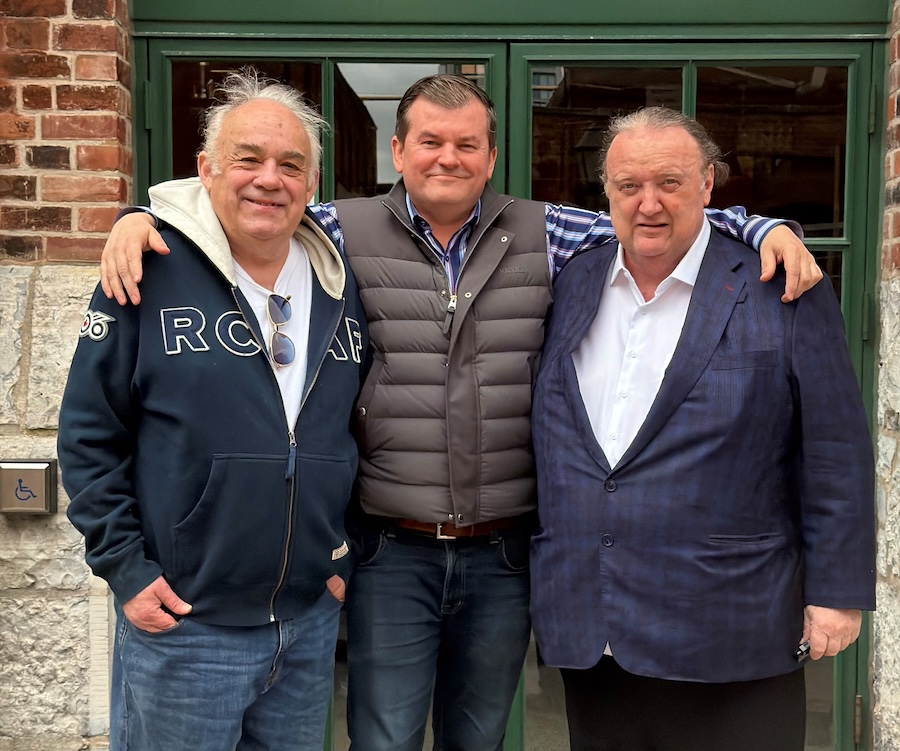
Harvey was the key advocate for encouraging Cudney to go back into the ring. “I can’t tell you how many of my friends and colleagues – some very well known mine explorers and builders – who though I was crazy to go back into the Ring of Fire,” says Cudney. “But I have a lot of faith in John. During his 12 years at Noranda, he oversaw one of the biggest exploration programs in North America and was heavily involved in the development of the Hemlo camp, the fourth richest in Ontario after Timmins, Kirkland Lake and Red Lake.”
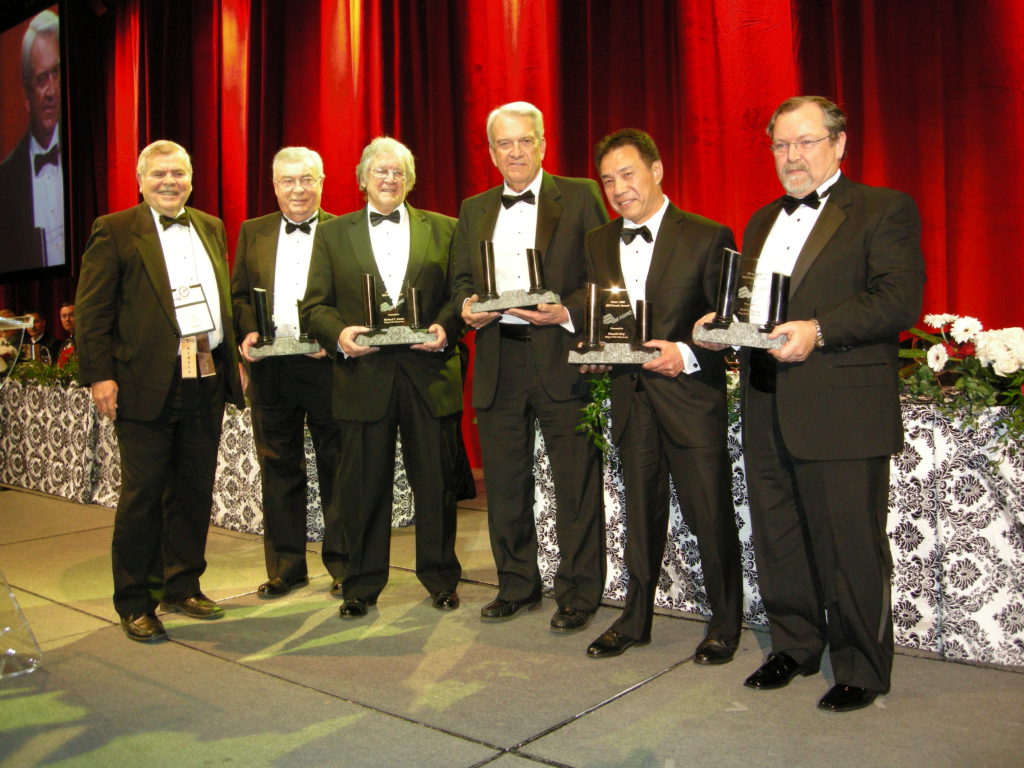
John Harvey, Richard Nemis, Mac Watson, Neil D. Novak and Donald Hoy were credited with the discovery of the Ring of Fire at the prestigious PDAC Prospectors of the Year Award in 2010.
Juno Corp. name in honour of Canada’s proud military tradition
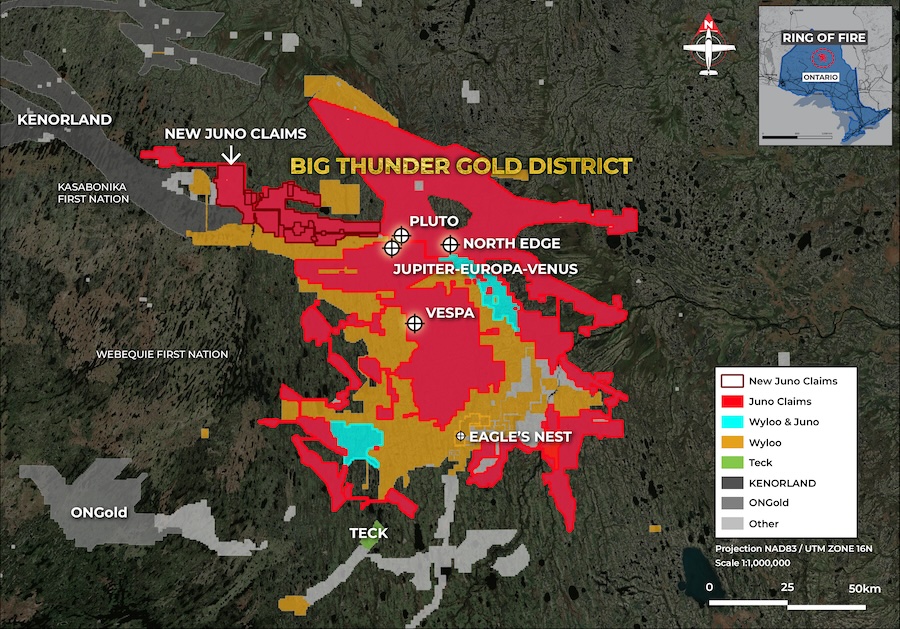
In 2019, on the 75th anniversary of the Canadians storming Juno Beach during the allied invasion of Normandy during World War Two, Cudney founded Juno Corp. with the Jupiter deposit as their core asset. He also started buying up many of the land positions held by juniors who were doing little or no work as well as claim-staking additional ground. Juno’s land position now totals 29,956 claims covering about 5,796 km2 – the size of greater Toronto – or slightly over 50 per cent of the camp. Given the extraordinary geological potential, it would be like controlling half of the Sudbury Basin back in the early 1900s. This allows the company enormous flexibility to follow geological trends without the issue of dealing with another junior explorer.
Northfield Capital Corporation was founded by Cudney in 1981 as a publicly traded investment and operating company primarily focused, but not exclusively, on junior mining assets. Shortly after founding Juno Corp., Cudney bought Sudbury-based True North Airways to ensure the explorer had complete control over its transportation and logistical needs in the Ring of Fire. Cudney says, “Transportation costs are a significant part of mineral exploration and the old Noranda mines also had their own fleet of planes to help control costs.”
True North Airways, a wholly owned subsidiary of Northfield Capital, currently operates a fleet of 14 aircraft serving charter, cargo and exploration logistics across northern Ontario. The airline has recently expanded into El Salvador, seeing all of Central America as a significant growth opportunity.
Through Northfield Capital, Cudney has had some high-profile successes. As well as being one of the original financiers of Noront Resources and their Eagle’s Nest nickel/copper discovery in the Ring of Fire, he was also a founder and financier, along with Patrick Sheridan Jr. of Guyana Goldfields, whose Aurora gold property was acquired by Zijin Mining in 2020 for about C$323 million. Currently, that deposit holds slightly more than five million ounces of gold.
He was a co-Founder and inaugural Director of FNX Mining andasked Terry MacGibbon to join as the company’s CEO. FNX Mining was eventually sold to KGHM Polska for $3.5 billion in 2012. MacGibbon, who has decades of experience in mineral exploration and development serves as Non-Executive Chairman of Juno Corp.
In 2016, Cudney and his team, that included Stephen G. Roman and John Whitton, at Gold Eagle Mines won the PDAC Bill Denis Award for the Bruce Channel gold discovery in the Red Lake Camp, which was bought by Goldcorp for US 1.5 billion in 2008.
Northfield Capital becomes Juno International
“Northfield’s team has delivered over $5 billion in realized shareholder value over the past few decades, and Juno represents some of the most significant discoveries in the Ring to date,” says Cudney. “However, the retail public is largely unaware of our successes, so we are changing the company name to Juno International to highlight the only current opportunity to directly invest in the Ring of Fire’s enormous exploration potential.”
Juno Corporation’s largest shareholders are Northfield Capital and Robert Cudney, who together own 35%. The name change should be finalized by early June. Soon to be renamed Juno International also holds strategic interests in a diversified portfolio of publicly traded exploration and royalty companies advancing high quality programs across multiple jurisdictions.
These include Evolve Royalties which is building a base and critical metals royalty portfolio. Gold Hart Copper Corp. is drilling a large-scale gold-copper porphyry target in Chile’s Vicuña district, adjacent to the Lundin Filo-BHP complex which is very promising.
And Rocky Shore Gold Ltd is drilling in central Newfoundland on one of the province’s largest land packages while Boreal Gold Inc. high-grade gold assets near Snow Lake, Manitoba with exploration work starting in 2026.
$20M for Ring of Fire exploration
In early March, Juno started the largest drilling campaign in the Ring of Fire in over a decade, allocating roughly $10 million to each of the company’s flagship district scale discoveries: Big Thunder (high-grade gold) and Vespa (high-grade critical minerals). One hundred drill holes are planned across 28,000 metres about 50 holes at Vespa (13,000 metres) and 50 at Big Thunder (15,000 metres).
Big Thunder, previously referred to as the north Arm gold district, is a 250 km long brand-new Archean gold belt that was discovered in 2024 and the first hole at Pluto hit visible gold. The Pluto discovery hole indicated 78.9 g/t Au over 3.9 metres starting at the 104 m depth, while a secondary hole intersected 16 metres grading 3.9 g/t starting at the 297m depth. Juno immediately staked an additional 1,500 square kilometres to control the entire belt. A drill hole at the North Edge discovery also showed visible gold and graded 2.3 metres at 25.9 g/t starting at 19.5m depth.
The company’s 2024-2025 drilling confirmed the emergence of a robust, multi-structure gold system across the Big Thunder district with numerous high-grade drill intercepts at both Pluto and North Edge. Of the 39 holes drilled so far, 38 – 95% drilling hit – have intersecting gold, ranging from multiple ounces to anomalous levels.
There are multiple gold structures, currently with 20kms of trend defined and wide open to grow. Over 2025, the company completed 11,000 line km airborne EM+Mag survey, a pluto 3DIP survey, an airborn MT survey and regional soils Phase 1. All results have been interpreted using Juno’s AI-based reinterpretation techniques to define a robust suite of high-priority targets.
Big Thunder was the grassroots gold discovery that garnered theNorthwestern Ontario Prospectors Association Bernie Schnieders Discovery of the Year Award last April in Thunder Bay.
The Vespa Complex, also discovered in 2024, is a newly identified intrusive complex hosting aerospace and energy critical minerals such as titanium, vanadium, scandium, gallium and high-purity iron. The overlooked centre of the Ring seems to have geological similarities to South Africa’s Bushveld Complex.
The Vespa Polymetallic Zone includes high grade titanium, 65% – 70% Tio2, with scandium +75 gpt, along with high grade vanadium, 65% high purity iron and vanadium 2%. A maiden Vespa resource – H2 2026 targeting – estimates between 250 million to one billion tonnes of exploration potential.
Titanium is vital for aerospace and defense sectors, vanadium is essential for battery storage, scandium is needed for AI alloys and fuel cells, and gallium is required for semiconductors and 5G networks – a strategic minerals wonderland and a Canadian answer to European and American critical mineral supply chain security!
Phase-one metallurgical testing completed in 2024 confirmed the ability to produce high-grade iron-vandium and titanium-scandium concentrates from Vespa drill core. Test work on both massive and non-massive mineralization produced concentrates grading 64–67% Fe with approximately 1.8% V₂O₅, as well as a near-70% TiO₂ concentrate.
“The company has the rare opportunity to advance two district-scale mineral systems simultaneously, one gold and the other critical base-metals, each with potential to anchor long-life, high-value” says Cudney. “Juno believes the Ring of Fire is one of the most exciting mineral districts globally and we remain in the early stages of its discovery cycle.”
And the geological “cherry-on-the-cake”, Juno has recently discovered four key magnet metals – neodymium, praseodymium, dysprosium and terbium, as well as yttrium and other rare earths – in the Vespa Zone, that are essential to defence systems, aerospace, electric vehicles, wind turbines and robotics. Initial rush assays returned a continuous 87-metre interval within a 200+ metre mineralized corridor, with 27% of total rare earths comprised of high-value heavy rare earths.
Many feel that heavy rare earths are among the most strategically important and hardest to find and Bloomberg Economics recently stated that all rare earths are critical to as much as $1.2 trillion in value-added production. China mines roughly 70% of global rare earth production and is responsible for approximately 90% of processing.
First Nations relations are paramount
Jacob McKinnon is the President and Chief Operating Officer and is no stranger to the Ring of Fire, working in the region since 2003, executing large scale exploration projects. In one other instance, working in northwestern Quebec during winter, he and his team was dropped off in an isolated exploration spot and had a rudimentary camp set up by the end of the day! One of his primary jobs is working with the Indigenous communities.
“I am really proud that Juno has been able to sign Memorandums of Understanding with Webequie and Marten Falls First Nations, the two closed communities to the Ring of Fire as well as Kasabonika FN which is further out,” says McKinnon. “These agreements aim to boost economic participation, support cultural and commercial activities and mitigate impacts on their traditional territories.”
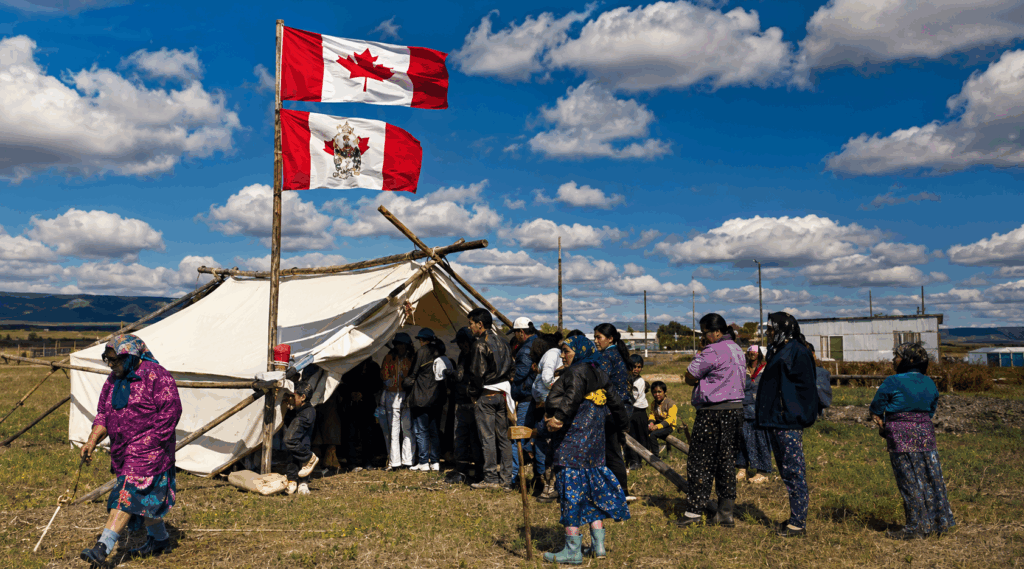
Since Webequie is the closest, Juno routinely employs community members. Last summer when many in the community were evacuated to Barrie due to forest fires, McKinnon stepped up and arranged for Canada Wonderland trips for the bored kids and some adults, as well as hosting an annual Christmas party and summer barbecue.
McKinnon added, “Juno looks forward to the upcoming EA approval and commencement of road and related infrastructure developments and the continued support of our First Nations partners that strengthens the advancement of this world class mineral district.”
Near half-century in exploration sector
After 45 years of mineral exploration, funding, building and selling – largely in the gold-rich greenstone belts of Ontario and Quebec as well as the Sudbury Basin, Cudney has developed an enviable rolodex of mining sector leaders.
From legendary mine financiers Murray Pezim and Ned Goodman – both are deceased – to celebrated discoverers like Chris Verbiski and Chuck Fipke, just to name a few, all are probably watching his latest project in the Ring of Fire – his largest endeavor to date – with keen interest. Will he hit another home run and make it into the history books, only time will tell.
As part of the legendary team – that included John Burzynski and Robert Wares – who built one of the country’s biggest open-pit gold mine in Malartic, Quebec, Sean Roosen is no stranger to geological, financial and infrastructure challenges. He and his team had to move 200 homes and finance the Malartic project during the 2008 financial crisis. Roosen is currently building the Cariboo Gold mine in British Columbia.
“With the Russian invasion of Ukraine and China’s stranglehold on many critical metals, securing supply of the minerals we’ve discovered so far in the Ring of Fire is vital to the health of both the Canadian and American economies — and their military industrial complexes,” says Roosen. “I believe this camp will be larger and more metallurgically diverse than the Sudbury Basin, giving the country enormous geopolitical clout — not just with the U.S., but with our European and Asian allies as well. This is a once-in-a-100-year blind discovery made right here in Ontario, Canada, and will create a true legacy of jobs and opportunity for generations to come.”
Patrick Sheridan Jr, whose father was practically “mining royalty” in Toronto’s tight knit mining exploration and financing community, has been working with Cudney for decades. His junior gold explorer in Guyana, G2 Goldfields is currently being acquired by G Mining Ventures in an approximate C$3 billion all-share deal.
“Our enormous land package in the Ring of Fire, allows Juno the ability to strategically envision how we want to tackle the underlying gold-rich greenstone belts throughout the camp,” says Patrick Sheridan Jr. “Without a doubt, with my extensive experience in gold exploration, I feel the Ring of Fire’s multiple gold structures throughout Big Thunder, has the potential to rival Ontario’s other legendary gold camps at Timmins and Kirkland Lake.”
Canadian to the core
To the generation of mine explorers and builders like Robert Cudney, Sean Rosen, Patrick Sheridan, John Harvey and Terry McGibbon, the foreign takeover of Inco, Falconbridge/Noranda, Alcan, Dofasco, Stelco, and Algoma Steel in 2006/2007 and the recent buyout of Teck left a bitter taste. The Ring of Fire enormous geological potential is a chance to reclaim and build a Canadian-owned mining sector.
“The gold discoveries at Big Thunder, along with Vespa’s base metals demonstrate the potential of the Ring of Fire to anchor secure, made-in-Canada supply chains for iron, titanium, vanadium, scandium and gallium” says Cudney. “All should be processed in the province providing the very materials that will drive innovation, strengthen our industrial competitiveness, provide high paying jobs – especially to the region’s FNs – and power the Ontario economy for at least the next hundred years.”
Stan Sudol is a Toronto-based communication consultant, owner/editor of RepublicOfMining.com, written for various national publications and has appeared many times on TVO’s The Agenda and other YouTube and Radio programs discussing Northern Ontario/mining issues.
More News
Bomb attack damages Ecuador mining agency probing illegal gold
It’s the second blast in recent weeks affecting Arcom offices.
June 29, 2026 | 12:28 pm
{{ commodity.name }}
{{ post.title }}
{{ post.date }}
Comments