Aluminum price jumps to four-year high on Trump’s blockade of Hormuz
Aluminum jumped to a four-year high in London, as US President Donald Trump’s blockade of Iranian ports threatened more disruptions to shipments from the Persian Gulf.
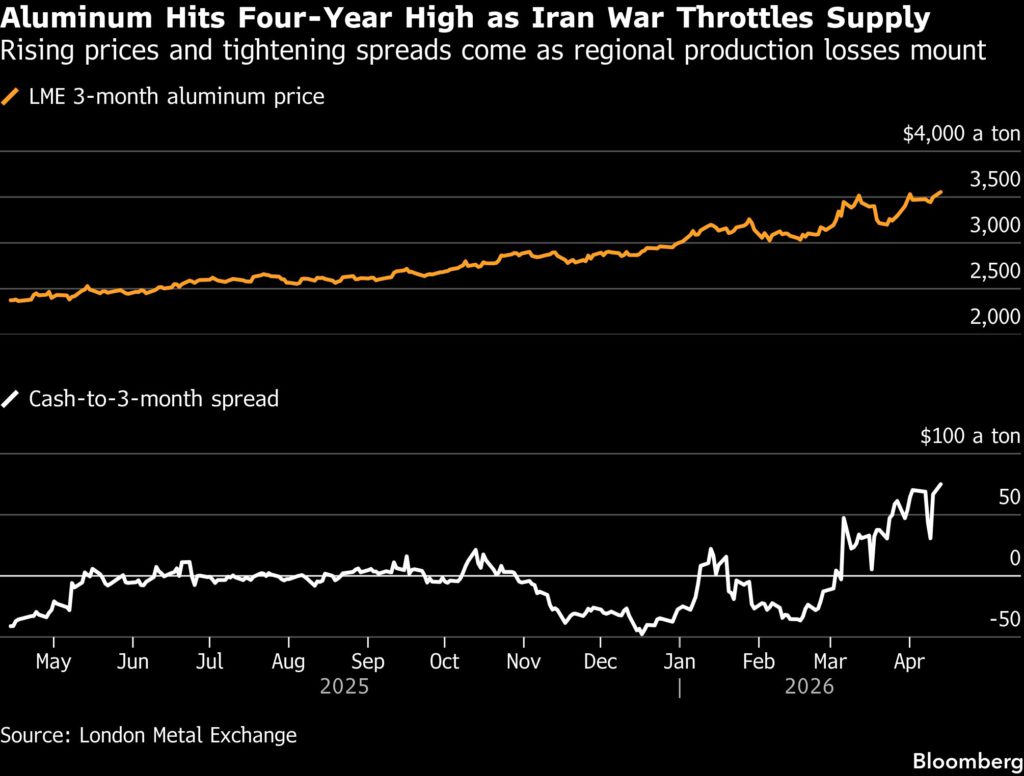
The lightweight metal rose 3.1% to settle at $3,607.50 a metric ton on the London Metal Exchange, reigniting a rally driven by supply shortages due to the Middle East war. Trump ordered a blockade of the Strait of Hormuz following the weekend’s deadlock in US-Iran peace talks.
Spot aluminum contracts also rallied further above futures, with the spread on cash contracts over those for delivery in three months increasing as much as 43% from Friday to reach $95.50 a ton — the highest since 2007. A premium for spot contracts is known as backwardation, and it signals a growing call on immediate deliveries as buyers hunt for alternative sources of the metal.
The Middle East accounts for about 9% of global aluminum output. Emirates Global Aluminium PJSC, the region’s top producer, has invoked force majeure clauses on at least some deliveries after one of its smelters was put out of action by an Iranian attack earlier this month. So far this year, futures have surged by 20%.
Other base metals were mostly higher on Monday, as the failure of US-Iran negotiations in Pakistan over the weekend unraveled a brief bout of market optimism. Metals are broadly at risk from weaker demand as soaring energy prices hurt the global economy, although aluminum has gained due to the supply crunch arising from the war.
Still, elevated prices are curbing demand in China as inventories in the top metal consuming country have risen to the highest since 2020.
“Shanghai aluminum will likely start to price in the reality of weak Chinese demand going forward,” said Chen Jingmin, an analyst at Zijin Tianfeng Futures Co. Weak China fundamentals will cap the upside in London aluminum, she said.
Copper settled 1.6% higher while zinc fell 0.5% on the LME.
Read More: China’s aluminum industry draws raw material diverted by war
{{ commodity.name }}
{{ post.title }}
{{ post.date }}
Comments