China chips away at iron ore miners’ power
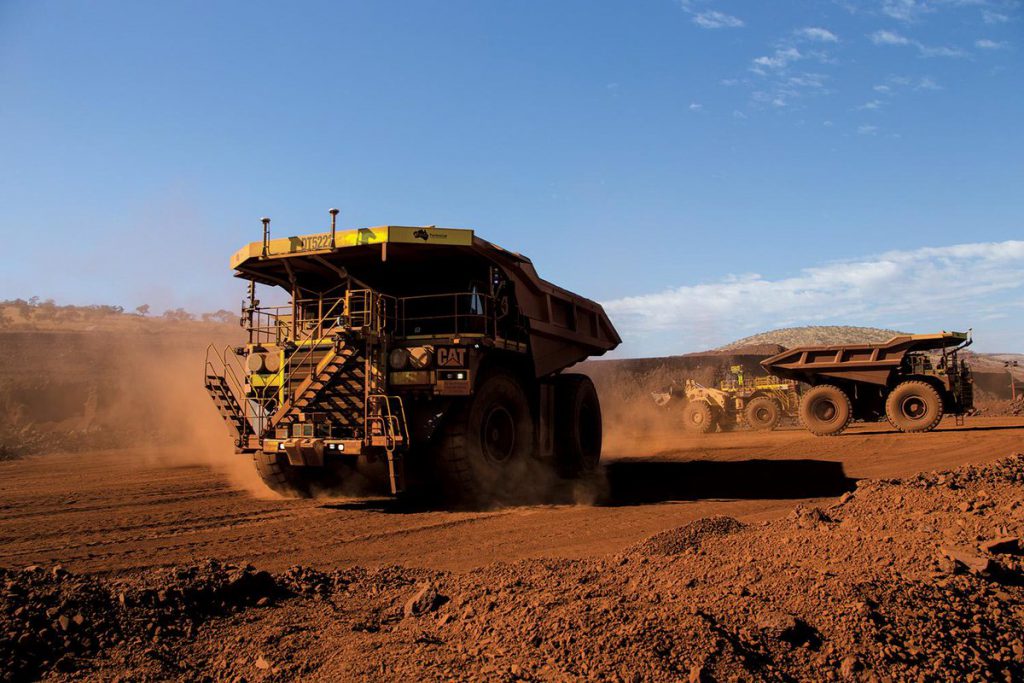
Misery loves company. So BHP’s (ASX: BHP) new CEO, Brandon Craig, and his team will feel less isolated now that China has taken to also pausing purchases of some of Fortescue’s (ASX: FMG) iron ore shipments as a bargaining chip during contract talks. The development, reported by Reuters citing sources, also has the government of Australia – home to both miners – worried about how falling prices will impact its top export. That’s just the start of the strategic advantage shifting to buyers.
At present, the People’s Republic scoops up around 70% of the world’s seaborne iron ore. Most comes from Down Under, which in 2025 shipped A$121 billion-worth, or $84 billion abroad, of its total exports. BHP supplies around 40% of China’s imports of the steel ingredient.
So it’s hardly surprising that the $213 billion miner last year became the first to feel the growing power of the China Mineral Resources Group, created in 2022 to centrally handle purchases of the metal for the vast majority of the country’s steel mills.
Andrew Forrest, Fortescue’s founder and executive chair, had argued that a broader relationship between Australia’s miners and the People’s Republic than just selling metal would help, like buying Chinese mining trucks, and borrowing and accepting payments in yuan.
That Fortescue is now on the rack shows that tackling the huge financial disparity between buyer and seller trumps that suggestion. Overcapacity made as few as 5% of China’s mills profitable a couple of years back. That has improved somewhat, but pales next to BHP’s 62% iron ore EBITDA margin in the six months to the end of December. Fortescue’s was 53%, similar to what Rio Tinto (ASX: RIO) cranked out for the full 12 months of 2025.
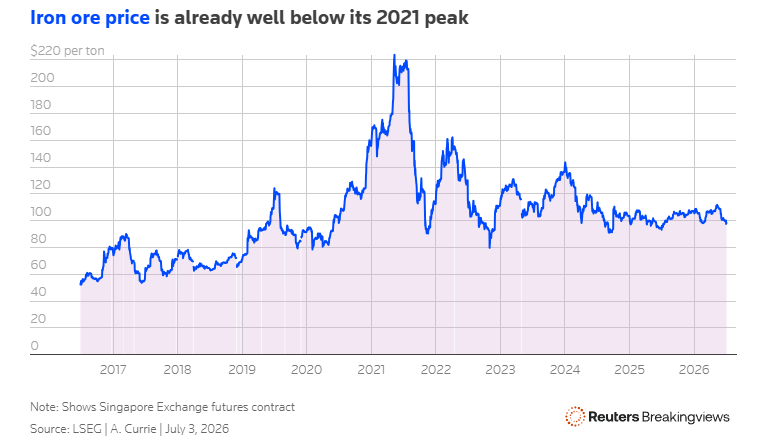
Charging less, though painful, won’t be disastrous. But it’ll leave Canberra with less revenue to tackle the budget deficit, and helps explain why the government of the roughly $2 trillion economy on Friday flagged that CMRG “may drive the benchmark price down in medium term”.
By then, other factors could further erode Australia’s position at the top of the iron ore food chain. The mostly China-owned Simandou mine in the Republic of Guinea will be fully operational, yielding lower-cost higher-grade metal more suited to making green steel.
Meanwhile, hopes that India’s growing steel needs will provide a new market will be dashed if the world’s most populous country taps into its own vast iron ore reserves. Such ructions could make today’s price battles look like a luxury problem.
(By Antony Currie, Editing by Una Galani; Production by Aditya Srivastav)
{{ commodity.name }}
{{ post.title }}
{{ post.date }}
Comments