Ferrari and BMW join Tesla, China in switch from copper to cheaper aluminum
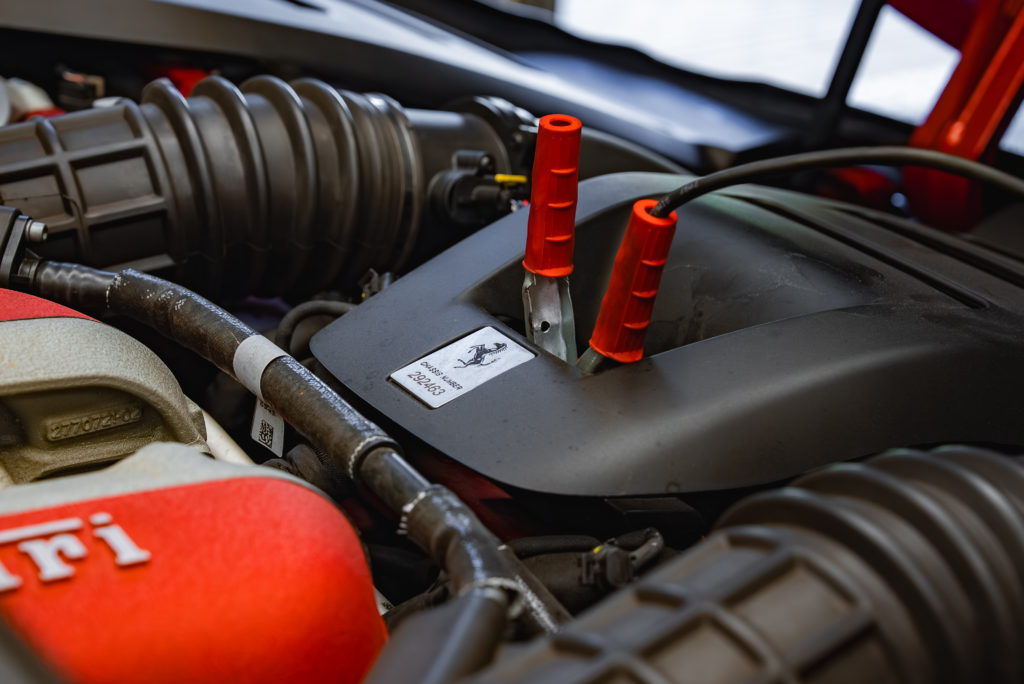
Ferrari and BMW are rolling out new models featuring lightweight, cost-effective aluminum wiring, accelerating a shift away from copper, the dominant material in electric wiring since the invention of the electric battery two centuries ago.
The decisions follow similar moves by Tesla and Chinese EV makers and reflect a broader industry trend forecast to affect around 2% of global copper demand this year, according to JPMorgan.
Even more copper could be switched to aluminum in the coming years because of a structural rise in copper prices, driven by shortages of the metal and with increased demand from the green-energy sector and data centres.
Companies across several sectors are migrating to aluminum because of far lower prices and comparable performance, according to Reuters interviews with 18 carmakers, cable and air conditioning companies, metals producers and consultants. Ferrari and BMW said they chose aluminum in part because of its lighter weight.
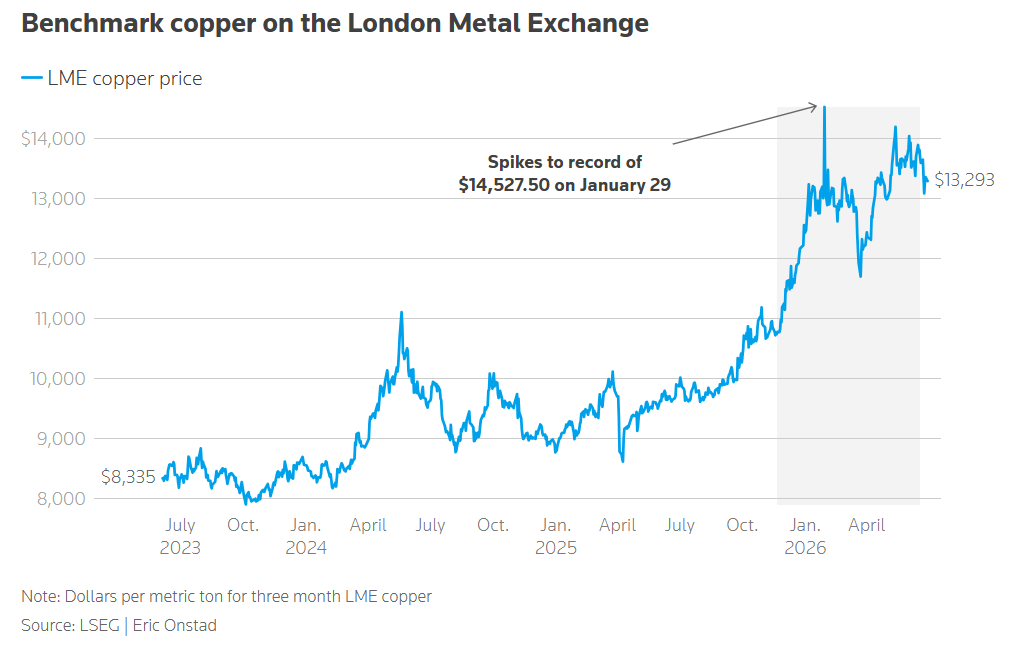
Substitution of aluminum for copper has come in waves over two decades, but record copper prices in late January, peaking close to $15,000 per metric ton, added weight to the case for switching to aluminum. Forecasts for global supply fall short of those for demand for more than the next decade.
Lighter and faster
Ferrari, which already uses aluminum for its bodies, engines and chassis, told Reuters it started using the lightweight metal for power cables on its 296 hybrid sports car last year. Ferrari has since introduced aluminum wiring into other models, including the Luce, its first ever EV launched last month.
The move saves up to 20% of the total wiring weight, said Ferrari communications executive Dario Esposito.
“We are not choosing aluminum because it’s cheaper, we choose the material that has better performance,” he said.
But the metal is, in fact, much cheaper — currently about $3,100 a ton, or about a quarter the price of copper.
Germany’s BMW said it first used aluminum conductors in 2011 in its subcompact 1 series and progressively expanded substitution in hybrids and EVs. Currently, it uses a large number of aluminum cables in both high and low-voltage systems in its latest eDrive EV technology, launched last year.
The world’s fourth-biggest automaker, Stellantis, also recently started swapping copper wiring for aluminum, according to an industry source familiar with the matter. Stellantis declined to comment.
Price versus performance
Chinese EV parts supplier JONVER has seen sales of aluminum wiring products jump this year to about 30% of its sales from about 20% in 2023, said sales director Feng Lu.
Norwegian aluminum producer Hydro said sales of aluminum heating-and-air tubing as a copper substitute have steadily grown in recent years. Hydro CFO Trond Olaf Christophersen said the company expects to gain market share as aluminum rapidly replaces copper in the sector in future years.
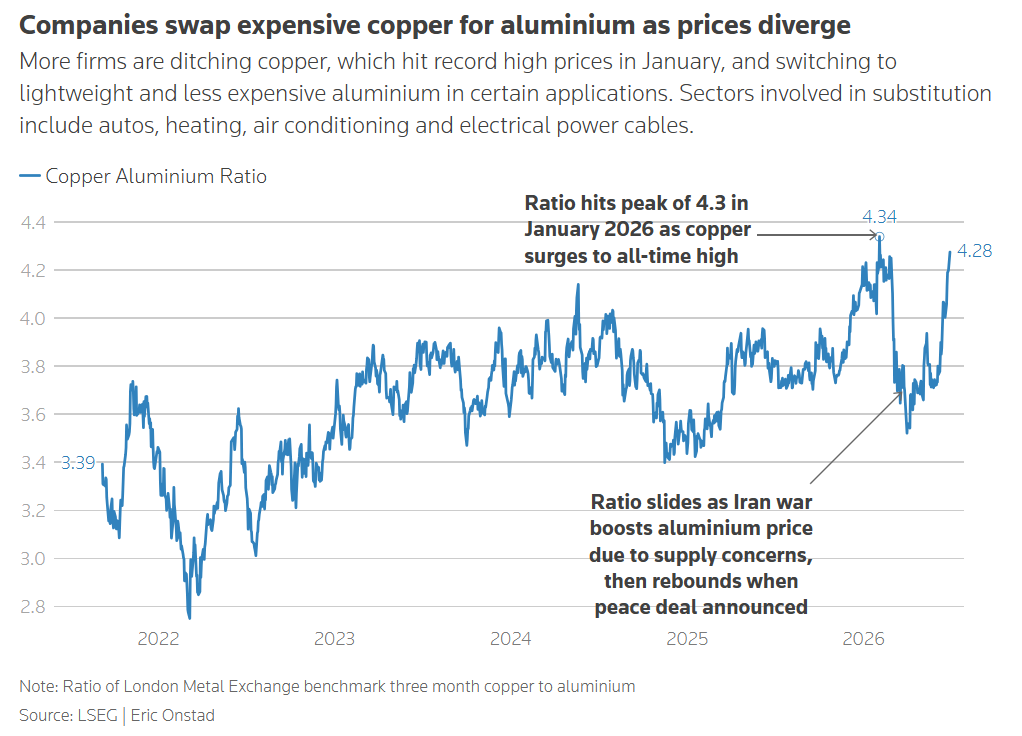
Xavier Mathieu at France-based Nexans, the world’s second-biggest cable manufacturer, said manufacturers will still buy copper at higher prices because it performs better in certain applications — but they start buying aluminum when copper prices reach about 3.5 times higher.
Copper prices currently stand at more than 4.2 times the price of aluminum.
Several issues complicate firms’ decisions to swap, including US tariffs and the huge amount of energy needed to produce aluminum , which means more greenhouse gas emissions. In addition, aluminum is cheap but less efficient: It requires more aluminum to conduct the same amount of electricity.
Still, JPMorgan outlined a scenario in which about 6% of annual demand for copper might be replaced by aluminum by 2030, compared to 2% this year.
China EV makers take the lead
The government in the world’s biggest metals consumer, China, encouraged companies to make the switch to aluminum in a March 2025 policy paper seen by Reuters, and many have heeded the call.
Analysts at consultancy Zhuochuang forecast that about 25% to 30% of components currently made from copper, by metal volume, could be switched to aluminum in the power, automotive and home-appliance sectors by 2030.
Chinese EV makers that have switched to aluminum wiring include AVATR, XPeng and Xiaomi, said Terry Woychowski, president at engineering consultancy Caresoft Global, which takes apart vehicles and examines their components.
The three Chinese EV makers and Tesla did not respond to requests for comment.
Lightweight aluminum is especially attractive to EV makers because cutting weight allows for longer driving ranges. And saving money is crucial for EV firms in China, where a price war has left margins razor-thin. And aluminum has ample room to gain ground in autos, where about 85% of electrical wiring busbars, which connect an EV’s battery to its systems, are still copper, according to Hydro.
The Chinese auto industry has benchmarked Tesla, a pioneer in using aluminum for wiring when it introduced its Model Y in 2019, and more recently in its Cybertruck, Woychowski added.
(By Eric Onstad, Amy Lv, Ju-min Park and Kalea Hall; Editing by Veronica Brown and Claudia Parsons)
More News



{{ commodity.name }}
{{ post.title }}
{{ post.date }}
Comments