Fertilizer maker Mosaic cuts output after Iran war raises costs
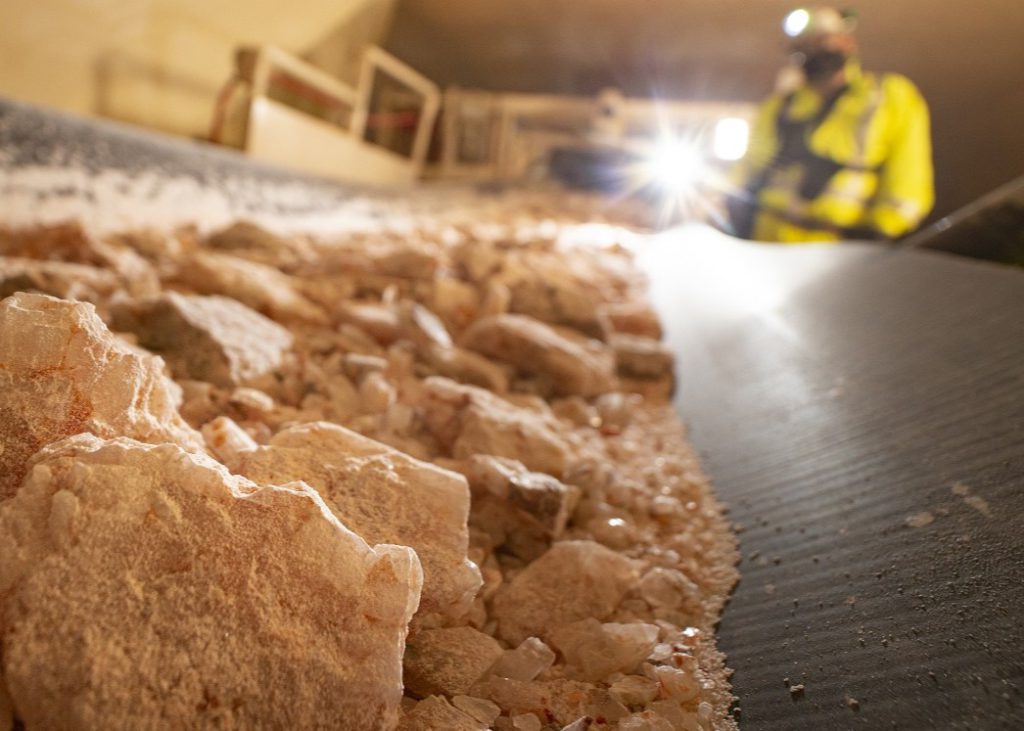
Fertilizer producer Mosaic Co. is temporarily taking nearly two million tons of US phosphate production off the market, underscoring the severity of the Iran conflict’s disruptions to a key agricultural and mining input.
The US’s biggest phosphate fertilizer producer is reducing production rates at its plants in Bartow, Florida, and in Louisiana to about half of capacity because of higher prices for sulfur, which the company uses for processing, chief executive officer Bruce Bodine said on an earnings call. The temporary move “allows us to limit the need for incremental sulfur at today’s prices and wait until the market normalizes,” he said.
The amount comes to almost a 10th of the US’s total phosphate production.
The decision comes after Mosaic said last month that it would idle two Brazilian facilities, taking about a million tons of phosphate production offline. If the conflict in the Middle East continues, the company has more options for production curtailments, Bodine said Monday.
The moves can be quickly reversed if raw-material availability and prices improve, the company said.
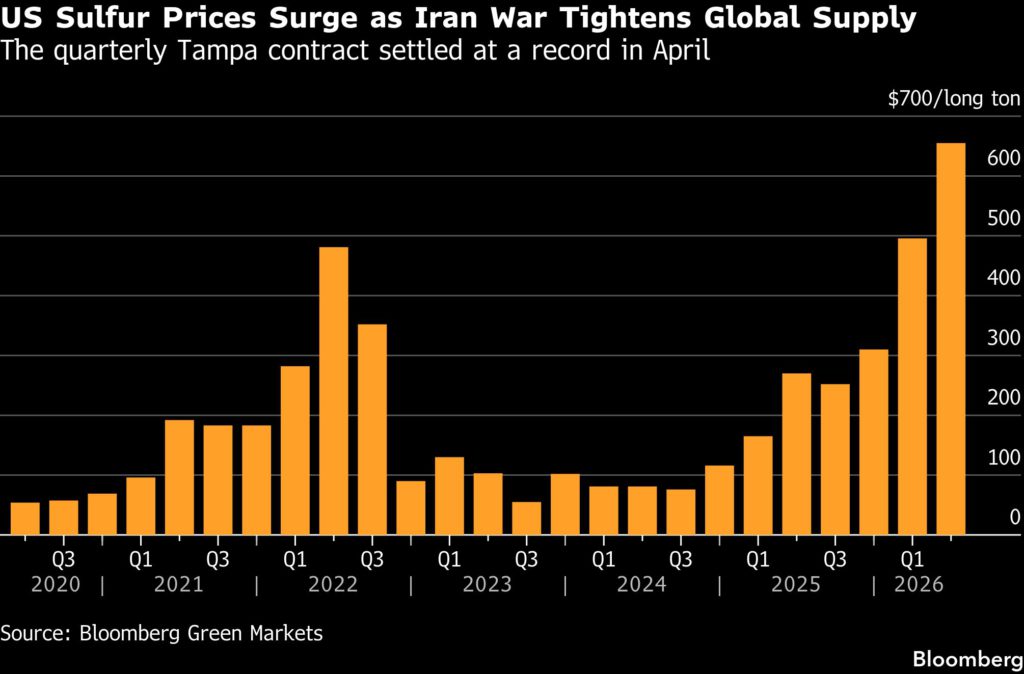
The company also withdrew its phosphate production guidance for 2026, as it is “closely monitoring raw material markets, particularly sulfur, which recently hit record prices because of limited availability.”
The blockage of the Strait of Hormuz has disrupted global flows of the sulfur needed to produce phosphate fertilizers. About a fifth of the global phosphate trade and nearly half of the world’s sulfur trade depends on the route.
The market was already tight before the conflict, due to higher demand from the mining industry. Mosaic buys most of its sulfur from North American oil and natural gas refiners to make sulfuric acid for phosphate production, according to a company filing. The acid is also a key input for the extraction of metals like copper.
Prices for diammonium phosphate, the most common form of the fertilizer, were at the highest price since last October, while spot sulfur prices in Tampa were at a record high, according to Bloomberg Green Markets. Prices for ammonia have also risen.
Tampa-based Mosaic reported a $373 million operating loss for the first quarter. Adjusted earnings per share of 5 cents missed analyst estimates of 23 cents. The company’s shares fell as much as 4.6% on Monday.
Mosaic said sulfur in its cost of goods sold averaged $379 per long ton, up more than 20% from last quarter. The company anticipates second-quarter realized sulfur and ammonia costs of roughly $540 a ton and $610 a ton, respectively, chief financial officer Luciano Siani Pires said on the call.
Simultaneously, weak demand amid stressed farmer affordability has “boxed in” margins, Bodine said. “This is an unsustainable situation that we’re in.”
The results are in contrasts to those from CF Industries Holdings Inc. and Nutrien Ltd., which last week each reported nearly 20% jumps in sales for the latest quarter as they benefited from higher prices for nitrogen fertilizers.
(By Ilena Peng)
More News
Bomb attack damages Ecuador mining agency probing illegal gold
It’s the second blast in recent weeks affecting Arcom offices.
June 29, 2026 | 12:28 pm

{{ commodity.name }}
{{ post.title }}
{{ post.date }}
Comments