Leftist candidate in copper giant Peru wants new mining rules
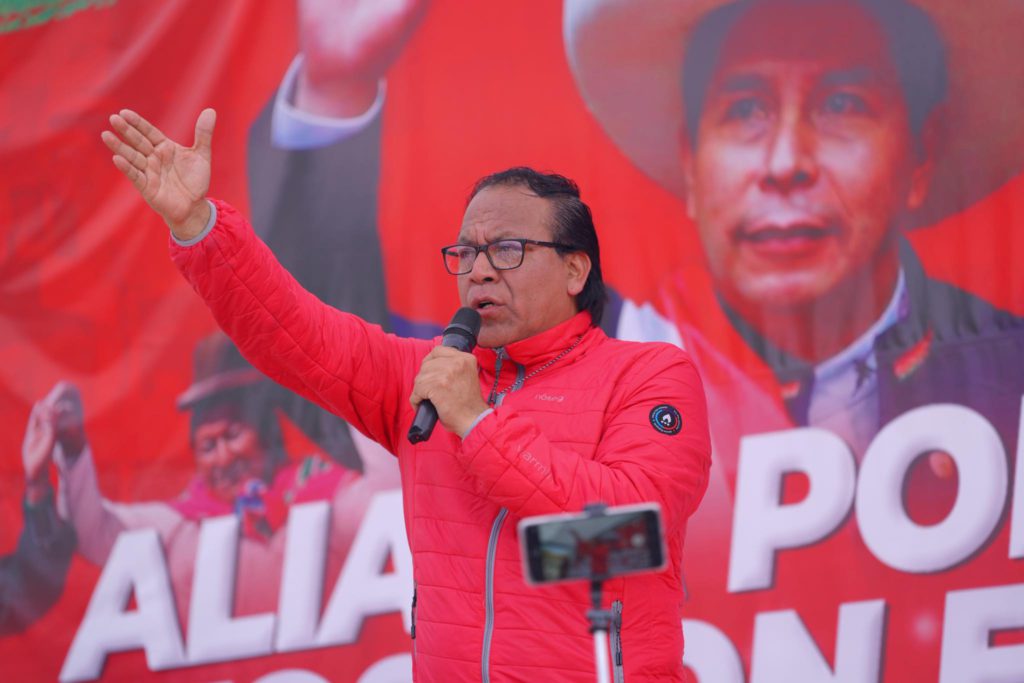
A leftist presidential candidate on the verge of reaching Peru’s runoff election is pledging to overhaul mining rules in one of the world’s leading copper-exporting countries.
Vowing to redistribute wealth to Peru’s rural communities, Roberto Sánchez, 57, plans to review tax contracts with major mining companies, redraft the country’s market-friendly constitution and hike taxes to levy windfall profits at a time of buoyant metals prices. He also wants to phase out open-pit mining — the way virtually all of Peru’s big mines operate — blaming the practice for harming the environment.
“We don’t want to expropriate a single dollar or an inch of land from anyone, we want to broaden the benefits by democratizing access to wealth,” Sánchez said in an interview. “Neocolonial Peru is over.”
Sánchez currently holds a razor-thin margin of only around 17,000 votes over right-wing populist Rafael López Aliaga for the chance to take on conservative Keiko Fujimori in a June 7 runoff. An electoral court is reviewing tally sheets that represent as many as a million votes. Whoever wins will become Peru’s 10th president in a tumultuous era and will not have a congressional majority, which could hinder any efforts to revamp existing policies.
The Andean country is the world’s third-largest copper producer and a key supplier of gold, silver and zinc, with mining accounting for 60% of its exports. It is a significant base of operations for global mining companies including Glencore Plc, Anglo American Plc, Freeport McMoRan Inc. and MMG Ltd.
Sánchez also said he wants to review free trade agreements and a host of contracts involving the Camisea natural gas fields which supply a major liquefaction terminal, known as Peru LNG, on the Pacific coast. Major players in Camisea include Pluspetrol SA and Shell.
“Standards must be set in a way that benefits the people,” Sánchez said in the interview at his party headquarters in the capital Lima. He declined to say who are serving as his top economic advisers.
Tapping international reserves
Sánchez has been critical of Peru’s veteran central bank chief Julio Velarde, considered the steady hand that has largely insulated the resource-based economy from the country’s chronic political turmoil.
He declined to say whether he’d nominate Velarde for a fifth term, stressing he would meet with him with the caveat that “no one is indispensable.”
But in a sign of pragmatism, he stressed the importance of preserving the institution’s autonomy and the country’s macroeconomic stability.
Sánchez added he is considering using Peru’s almost $100 billion in international reserves — which are vast by any measure, at about a third of gross domestic product – to fund spending on health, infrastructure and education.
“We need a strong fiscal chest for the major transformations we want to carry out,” he said.
Sánchez said the country’s needs would prevent him from prioritizing a controversial plan to buy new fighter jets, a decision that current Interim President José María Balcázar has said will fall onto the next administration.
A signing ceremony for an up to $3.5 deal with Lockheed Martin Corp. was abruptly postponed last week, drawing US backlash. In the wake of the controversy on Wednesday, Peru’s defense and foreign ministers resigned.
Currently a lawmaker, Sánchez served as foreign trade minister under the administration of ousted former President Pedro Castillo, while Fujimori will face her fourth consecutive runoff vote, having lost the last three.
Overall, Sánchez’s platform mimics the key promises that swept Castillo into the presidency in 2021, spooking investors at the time while drawing support in Peru’s impoverished Andean regions. Castillo was eventually ousted and arrested in late 2022 after attempting to shut down congress and the judiciary.
Sánchez has campaigned as Castillo’s heir, donning the same traditional hat from Peru’s Cajamarca region and promising to pardon him on Day 1 of a future administration.
Since Peru’s April 12 election, the country’s sol currency has been the worst performer in Latin America, with analysts pointing to Sánchez’s unexpected rise as the key factor. Government bonds handed investors less than 0.3% return, underperforming most emerging-market sovereign peers.
Still, if elected, Sánchez’s ambitious reforms are bound to hit roadblocks, including a new bicameral congress where left-wing forces will be outnumbered by conservative ones. To redraft Peru’s constitution, for example, Sánchez is proposing to repeal a law that prohibits convening a constituent assembly through a referendum. But to do that he would need conservative support in congress.
Similarly, while Castillo offered big reforms during his presidential campaign, once in office he failed to deliver them, a fate that could also beset a Sánchez presidency.
The leader of the Juntos por el Perú party is now in second place in the official vote count with just over 94% of votes tallied. But with as many as one million challenged ballots, Sánchez’s spot in the second round still isn’t secured. Electoral authorities say final results may take until mid-May.
The first round got off to a rough start when ballots arrived late to some polling stations mainly around Lima, which prompted authorities to allow some voters to cast ballots the next day.
López Aliaga, who has the most support in Lima, seized on the logistical problems to allege fraud. Sánchez has said he will respect the final results.
Since election day, López Aliaga has called for a redo of the entire election, later softening his demands to propose adding more voting days to accommodate the large share of Lima voters who were impacted by the logistical snags.
Sánchez said the delays had not tainted the election and criticized the resignation of electoral agency head Piero Corvetto amid the controversy. The candidate claimed the pressure that led to Corvetto’s departure was part of an alleged right-wing plot to “take control of the country’s institutions.”
“This is a serious damage because they intend to boycott and disregard the will of the people,” he said.
(By Carla Samon Ros and Marcelo Rochabrun)
More News

{{ commodity.name }}
{{ post.title }}
{{ post.date }}
Comments