The dead asset wakes up as crypto magic makes gold pay interest

Jewelers have long used a simple mechanism to protect themselves against volatile gold prices — borrow the precious metal rather than buy it outright.
It’s a trick with origins in antiquity and used from the gold souks of Dubai to the bullion desks of India, allowing artisans to produce and sell their wares before settling the tab to align costs with revenue.
If gold prices rise, the value of the rings and necklaces in the display case climbs with the debt. If they fall, both shrink together. The trade-off is interest on the loan.
Now, a jeweler, an asset manager and a fintech firm are wrapping this age-old wisdom in a crypto token, offering investors gold that actually pays a yield.
It’s an example of how digital technology is disrupting traditional finance. Gold has always been a “dead” asset, a store of value that, unlike stocks and bonds, pays no dividends or interest to its owner.
“For centuries, jewelers didn’t borrow paper money to buy gold, they borrowed the gold itself,” said Ivan Hoo, executive director at Singapore jeweler Mustafa Gold. “We are giving that ancient logic a sleek, synthetic upgrade.”
Mustafa has teamed up with FundBridge Capital which, in collaboration with tokenization platform Libeara, is offering investors digital tokens that track the price of gold.
The money FundBridge gets for selling its “MG999” tokens is lent to Mustafa, who pays 2.5% interest on the loan. Mustafa uses the money to buy physical gold and make jewelry.
Crucially, the loan is denominated in gold rather than cash. If Mustafa borrows $1 million, the debt is expressed as the amount of gold that sum could buy at prevailing market prices.
This means if gold prices rise, Mustafa’s repayment obligation increases — but so too does the value of its jewelry. If prices fall, the debt shrinks along with inventory value. The matching of costs and revenue helps to stabilize margins.
It’s a synthetic version of borrowing physical gold to avoid price risk.
Giving gold a yield
There’s an upside for investors too. They get exposure to gold but with the added bonus of yield derived from the interest Mustafa pays on the loan. After deducting management fees, FundBridge pays a 1% yield to token holders.
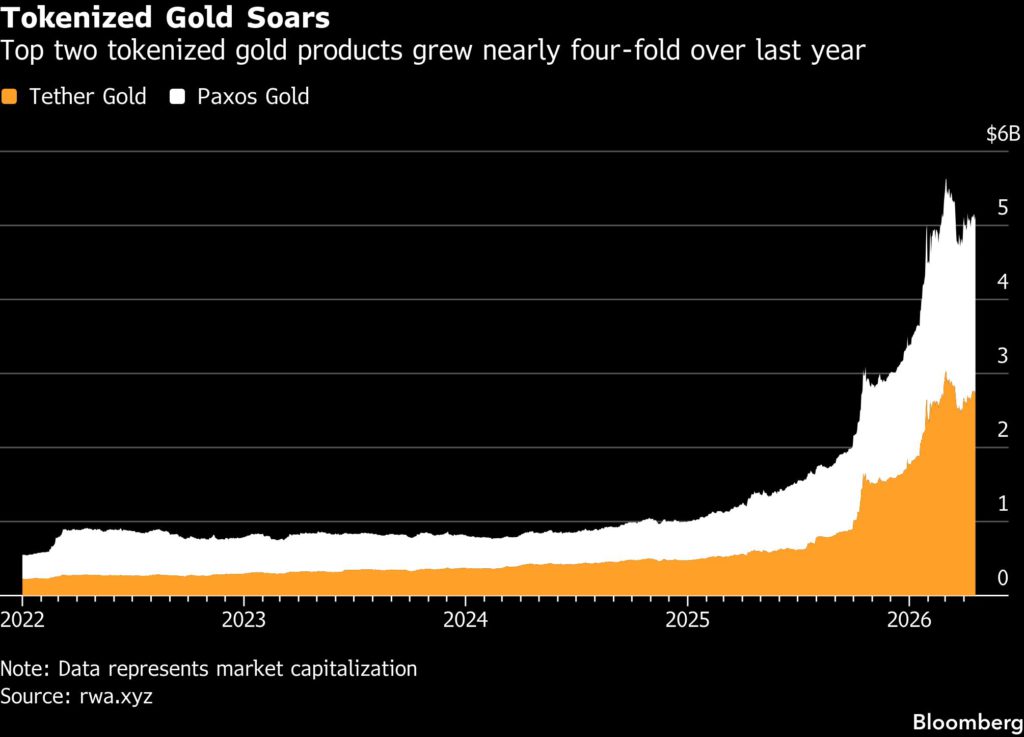
There are numerous ways to gain exposure to gold without holding the metal physically, from exchange-traded funds to futures, options and mutual funds. In the digital world, Tether Holdings SA and Paxos Trust Company offer tokens backed by gold.
But none of these directly offer investors a yield and some, such as ETFs, carry costs in the form of management fees, said John Bao Vu, chief portfolio manager at FundBridge.
“Typically, even though you get gold exposure, you get it in a negative carry sense,” he said. “We thought about doing something one step further to reduce that negative carry. This is how we came up with the idea with Mustafa.”
Gold lending, or leasing, has become more institutional and complex. Jewelers can manage risk with a mix of tools including gold loans, forward contracts and hedging programs, but smaller retailers are more likely to rely on ordinary bank financing.
For Mustafa, FundBridge is offering an alternative source of capital.
“Our biggest source of borrowing is from banks,” said Hoo. “But those loans are in US dollars, not denominated in gold terms. So this diversity of funding is good for us. It unlocks a fresh vault of capital from investors and meaningful diversification to how we fund the business.”
The price of gold has roughly tripled over the last four years as investors have sought safe havens amid heightened geopolitical uncertainty. Crypto firms have responded to that demand with more tokenized gold products.
FundBridge doesn’t need to hold any gold to maintain the value of its token. Instead, it is backed by the contractual claim against Mustafa — the right to receive back cash equal to a specific amount of gold at whatever the market price is at maturity.
To ensure the token is tied to the price of gold, the number on issue must maintain a prescribed ratio with the amount of outstanding loans.
“The price risk gets transferred to the investor in the fund,” said Vu. “They get the return (yield) as an upside while they take the exposure to gold-price risk. And the investors want to get exposure to gold.”
FundBridge has raised $15 million so far and hopes to reach $100 million initially. Working with a retailer like Mustafa, which requires a ton of gold a year, ensures quick deployment of the money.
“We are simply bringing this practice of borrowing on gold terms into the digital age,” said Mustafa’s Hoo. “What’s old is new again.”
(By Suvashree Ghosh and Yihui Xie)
More News
{{ commodity.name }}
{{ post.title }}
{{ post.date }}
Comments