Zambia bets on pan-Africa metals exchange to boost mining wealth
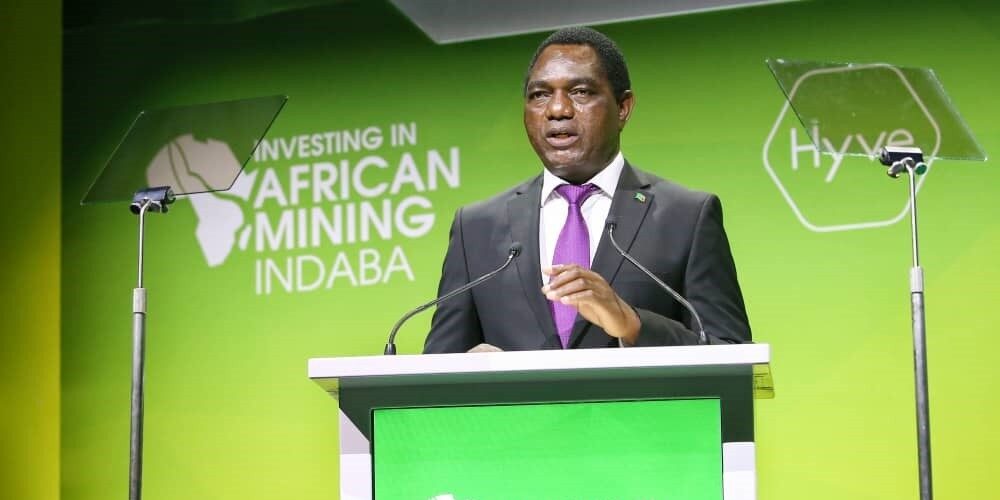
Zambian President Hakainde Hichilema plans to spearhead the creation of a pan-African minerals and metals exchange to help the continent capture greater benefits from its natural resources.
The idea will help countries like Africa’s second-biggest copper producer ensure that more output is available for local value addition, a growing demand by citizens, said Jito Kayumba, an adviser to Hichilema on finance and investment.
“The desire of many young Zambians as well as a lot of Africans across the continent is to be greater participants in the minerals that come from their soils,” Kayumba said by phone Monday. “There’s been growing discontent.”
The proposal is the latest sign of a broader push by African governments to exert greater control over their natural resources. States including the Democratic Republic of Congo, Guinea, Ghana and Zimbabwe have been designing and implementing a variety of reforms to boost domestic refining, increase local ownership and restrict exports of certain mineral products.
Hichilema is seeking reelection next month, and the metals-exchange plan is mentioned in his party’s manifesto. Should he win, the new cabinet will consider the matter as a priority, Kayumba said.
“The actual process to start to engage in this program would essentially commence immediately,” he said.
The exchange would build on Zambia’s metals-trading joint venture with trading house Mercuria Energy Group Ltd.
A separate agreement that Hichilema’s administration reached with neighboring Congo in 2022 to set up a shared electric-vehicle battery value chain, using their raw materials like copper and cobalt, has made little progress. That’s because neither nation had direct access to the minerals that private companies produce, said Kayumba.
The establishment of Zambia’s metals-trading business should help in securing product to be traded on a pan-African exchange, he said. Congo too has secured offtake deals from large mines in which the state is a minority shareholder, and struck a similar trading arrangement with Mercuria.
Zambia has already discussed the metals-exchange plan with Congo, said Kayumba, as well as two other nations he declined to identify.
Africa captures less than 1% of the global value from clean-energy technology manufacturing, despite supplying large shares the unprocessed critical minerals that go into making them, according to the International Energy Agency. Regional cooperation would enhance the prospects for value addition, the Natural Resource Governance Institute said in an October report.
Failure to secure greater local benefits from local mineral resources in a way that creates more jobs for Africa’s young and rapidly expanding population would pose an existential threat to democracies on the continent, he said. The continent has the world’s fastest-growing youth population and is expected to account for a rising share of the global workforce in the coming decades.
“Africa will be will be increasingly unstable if the population of young people continues to rise at the rate that it’s rising, and the economy does not follow suit,” Kayumba said.
“Democracy is at risk in Africa because if it does not deliver the dividend that meets the needs of the young people, then people start cheering on what happens in the Sahel,” he said, referring a region in northern Africa blighted by military coups, Islamist insurrections, and state seizures of mining assets.
(By Matthew Hill)
More News

{{ commodity.name }}
{{ post.title }}
{{ post.date }}
Comments