Quaise moves closer to building world’s first superhot geothermal power plant
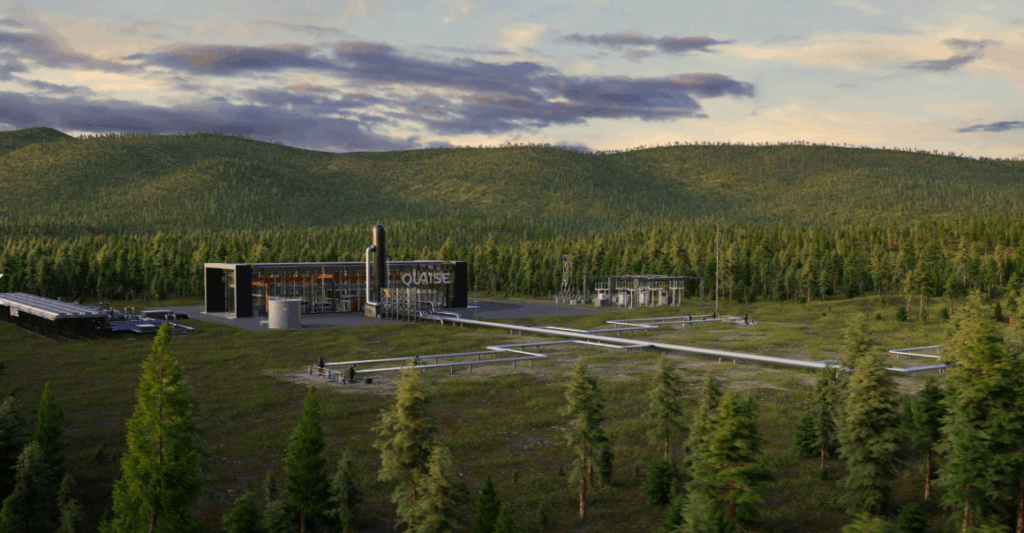
Quaise Energy, a startup out of MIT, said it is on track to build the world’s first power plant using superhot geothermal energy: that obtained by tapping into rock with temperatures greater than 300°C (572°F).
The first phase of the company’s complex, Project Obsidian, is currently under construction in Oregon.
A study presented at the 2026 Stanford Geothermal Workshop has validated the company’s belief that its first plant could produce at least 50 megawatts (MW) of clean, renewable electricity, Quaise said. That energy, produced from only a handful of wells, would be available 24/7, it added.
Subsequent expansions at the same location are expected to bring even more energy, and the second phase targets 250 MW.
“Our goal is to build out to a gigawatt in the area,” Quaise CEO Carlos Araque said in a news release.
“We believe our breakthrough drilling technology could ultimately make gigawatt-scale geothermal plants viable across the globe, including in regions where geothermal has never been possible before,” Araque said.
Because Project Obsidian is the first of its kind, there are many unknowns, such as the geochemistry of the rock it will tap into. Daniel Dichter, a senior mechanical engineer at Quaise, is first author of a paper exploring these unknowns that he presented at Stanford earlier this year.
“Most of our analysis, which is based on several models, was dedicated to trying to understand some of these uncertainties,” Dichter said.
Quaise also supports research at Oregon State University aimed at doing the same thing by recreating extreme underground conditions in the lab.
“This analysis validates our long-held hypothesis that higher subsurface temperatures entail substantial improvements in power production,” Dichter said. “It shows us that we can get to a capacity of 50 megawatts of power with this system.”
“If these first wells work the way we think they will, they will be on par with exceptionally productive oil and gas wells in terms of equivalent power output,” he said.
The confirmation well is expected to be in operation later this year, and the first phase of the complex is expected to be operational by 2030.
More News

{{ commodity.name }}
{{ post.title }}
{{ post.date }}
Comments