Revival Gold extends Joss depth in Idaho high-grade push
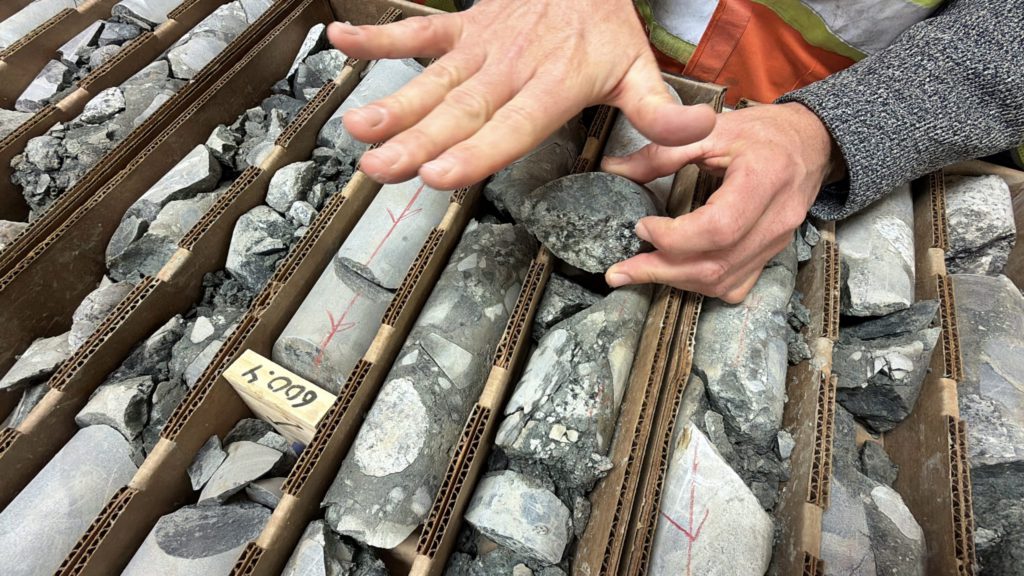
Revival Gold’s (TSXV: RVG) high-grade Joss zone in Idaho could move ahead of the Beartrack-Arnett heap leach restart in the development sequence after drilling added 240 metres of depth.
The best new hole, BT26-254D released late Wednesday, assayed 147.2 metres grading 2.37 grams gold per tonne from 808 metres downhole, including 5.9 metres at 14.89 grams from 860.9 metres and 4.7 metres at 9.31 grams from 948.9 metres.
The intercept runs about 350 gram-metres, which “speaks to the growing scale of the mineralized zone as we go deeper,” CEO Hugh Agro said in a release. Beartrack-Arnett is about 340 km northeast of state capital Boise.
“This drilling clearly shows Joss is continuing to grow,” Paradigm analyst Don Blyth said in a Thursday note. “The deeper mineralization could make it preferable for Revival to start Joss before the Beartrack-Arnett heap leach restart.”
Joss sits outside Beartrack-Arnett’s first-stage heap leach mine plan and could give Revival a higher-grade underground growth route as it advances two past-producing US gold assets toward possible production. The Toronto-based developer has studies for heap leach restarts at Beartrack-Arnett and Mercur in Utah, but Joss could reshape the timing, scale and order of development if drilling keeps adding tonnes.
Joss hosts an underground inferred sulphide resource of 6.75 million tonnes grading 4.05 grams gold for 877,000 oz. of contained gold.
Revival’s Toronto-listed shares closed 1.6% higher at C$0.64 apiece Thursday. It has a market capitalization of C$203.6 million ($143.4 million).
Joss high-grades
Revival drilled about 5,500 metres this year at Joss in five main holes and three wedge holes. All eight pierce points hit the Panther Creek shear zone, the north-south structure that hosts Beartrack-Arnett’s gold mineralization.
Hole BT26-252D, first reported in April and now complete, returned 62.2 metres grading 3.12 grams gold from 538 metres downhole, including 19.1 metres at 6.37 grams gold from 572.9 metres. Hole BT26-253D cut 6.8 metres at 4.02 grams gold from 539.5 metres, while hole BT26-251DA returned 4.1 metres grading 4.47 grams gold from 718.9 metres.
The company is awaiting assays from one main hole and three wedge holes. The current program aims to expand the underground sulphide resource, update Beartrack-Arnett’s resource estimate and support a possible underground mine study.
“Today’s results highlight the impressive strength of sulphide mineralization at Beartrack-Arnett and extend the depth potential of the drilled underground deposit at Joss to 850 metres, increasing the deposit’s vertical dimension by 240 metres or about 70%,” Agro said. “The deposit displays true widths of 2-20 metres in the high-grade mineralized zone and remains open at depth and beyond its existing 1.2 km of known mineralized strike.”
Beartrack-Arnett’s 2023 prefeasibility study outlined average production of 65,300 oz. gold a year over eight years from the heap leach restart, with $109 million in initial capital spending. All-in sustaining costs are pegged at $1,248 per oz., with a post-tax net present value (NPV) of $484 million and an after-tax internal rate of return of 80%, using a $3,000 per oz. gold price.
Mercur first
Revival’s nearer-term focus remains Mercur in Utah, a past-producing Carlin-type gold project 57 km from Salt Lake City. An early-stage study last year outlined average production of 95,600 oz. gold a year over 10 years from an open pit heap leach mine.
The 2025 preliminary economic assessment for Mercur outlined an open-pit heap leach mine producing about 100,000 oz. gold a year over 10 years, with an after-tax net present value of $295 million and a 27% internal rate of return at $2,175 gold, rising to $1.3 billion at $4,000 gold. The Mercur plan requires $208 million in initial capital spending. Revival expects a prefeasibility study early next year, then a feasibility study and permitting by early 2028.
Revival had about $37 million in cash at the end of May, enough to fund work to a construction decision expected in early 2028. Its two projects contain about 3.2 million measured and indicated oz. gold and 2.8 million inferred ounces.

{{ commodity.name }}
{{ post.title }}
{{ post.date }}
Comments