Kazakhstan ground view: What you can’t see from the spreadsheet
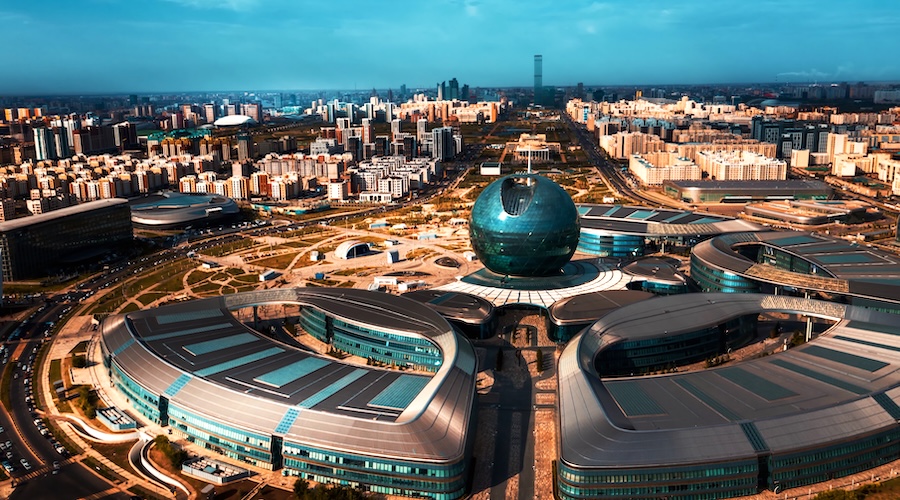
To get from Frankfurt to Astana, my flight first headed southeast over the southern shore of the Black Sea, crossed Georgia and Azerbaijan, traversed the Caspian Sea, and only then turned north and east toward the Kazakh capital because the direct route through Russian and Ukrainian airspace is effectively closed to commercial traffic.
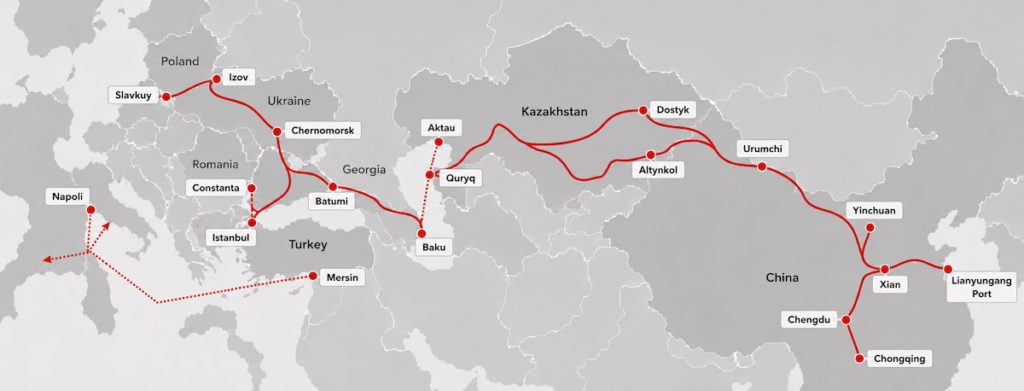
That narrow band of accessible territory also follows a crucial trade artery: the Trans-Caspian International Transport Route, known throughout the region as the Middle Corridor. Just as the Silk Road once connected Europe to distant markets through this landscape, renewed attention is now focused on these same routes. Watching the unusual flight path trace its way across the seat-back display made the importance of these corridors tangible before I had even landed in Astana.
Most mining coverage, including much of my own, happens from a distance. We read press releases and technical reports. We scrutinize satellite imagery and assemble a picture of a place from documents prepared by people who often want us to reach a particular conclusion. That approach is efficient, inexpensive, and often sufficient.
But it comes at a cost that is easy to overlook because we rarely see what is missing. A spreadsheet can estimate the value of a deposit. Analysts can debate regulations and reforms in theory. Yet nothing replaces sitting across from a ministry official and seeing firsthand their enthusiasm for advancing mining projects. MINING.COM created the Ground View series to close that gap: go to the place, speak with the people involved, see the project with your own eyes, and report what distance-based analysis leaves out.
So why Kazakhstan, and why now?
The simple answer is that I was invited, and I jumped at the opportunity. My hosts are covering my travel and accommodation in Astana and helping arrange access to the officials, industry representatives, and other key participants who can provide the context Ground View seeks to uncover. Beyond that logistical support, editorial control remains entirely with me and MINING.COM.
The deeper answer is that few places sit at the intersection of as many critical-minerals stories as Kazakhstan does today. The balancing act among the West, Russia, and China may feel relatively new to Western observers, but Kazakhstan has spent much of the past three decades navigating precisely that reality. Add rising global energy demand and intensifying competition for secure supply chains, and Kazakhstan becomes a place where many of the answers can be found, not only because of its geological wealth but because it has extensive experience grappling with these questions.
By the afternoon, I had already found evidence that the trip was worthwhile. Before leaving home, I wrote about the C5+1 Critical Minerals Dialogue as a diplomatic framework on paper. On my first day in Astana, I was sitting in the room where it convened. I heard remarks from Sergio Gor, the US Special Envoy for South and Central Asia and co-chair of the session. Being present for the formal statements and the informal conversations that follow reveals something no communiqué can: who needs whom.
Several things stood out. Gor repeatedly returned to the phrase “win-win,” the language of an administration promoting business partnerships rather than aid. The host minister focused much of his opening remarks on Kazakhstan’s efforts to further expand a mining industry built on international best practices, highlighting regulatory reforms and reporting standards that already place the country ahead of many of its Central Asian peers. American financial and commercial institutions were visibly present, not as observers but as participants, including the US International Development Finance Corporation and the Commerce Department’s Commercial Service. Running beneath nearly every discussion was the question of transportation.
Much of the conversation centred on the Trump Route for International Peace and Prosperity (TRIPP), the US-backed transit corridor intended to provide Central Asian minerals with an alternative route west. In other words, the same narrow geography that diverted my flight around much of the Caucasus is the geography these governments are now working to expand. I flew over that trade route in the early morning and watched policymakers discuss its future later that same day.
There are several threads worth exploring during my time in Astana, and the Middle Corridor is one of them. But the value of seeing these developments from the ground has already become clear, even before the Astana Mining and Metallurgy Congress that brought me here has officially begun.
Over the coming days, I will try to provide coverage from Kazakhstan built not from filings and forwarded slide decks but from what can be seen, heard, and understood inside the room itself. Some observations will confirm what distance-based analysis already suggests. Others will not. I do not yet know which will be which, and resolving that uncertainty is what I find most compelling. The first day delivered more than I expected, and there are several more to come.
More soon, from the ground.
Erick Groves is a contributing analyst for MINING.COM and Corporate Strategy and In-House Counsel at Morgan Companies. He is currently in Astana, Kazakhstan.
{{ commodity.name }}
{{ post.title }}
{{ post.date }}
Comments