Crushing and screening, mining’s dynamic duo
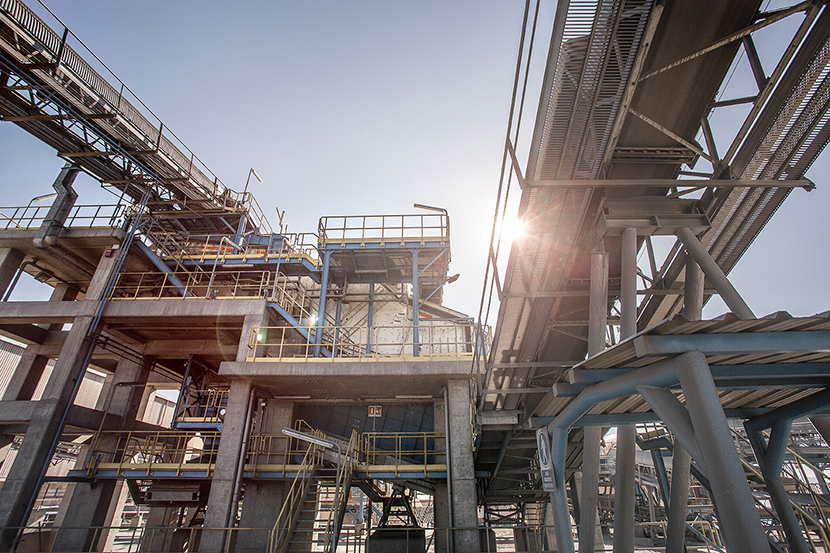
In mining operations, crushing and screening are often discussed as individual machines, along with the spare and wear parts needed to keep them running. This perspective is understandable from an operational or maintenance standpoint. However, it overlooks how closely these stages are connected. Crushing and screening do not operate independently. Perhaps the key issue is not only recognizing this connection, but working accordingly and also managing it as conditions change.
When this system works well, material moves more consistently through the plant. Energy use becomes more predictable. Downstream processes also experience fewer disruptions. When the system is not well aligned, problems rarely stay limited to one machine. A limitation in one area, whether related to equipment, wear parts, or operating conditions, often appears elsewhere in the circuit. This can create bottlenecks and reduce production.
Mining plants also operate under constant change. Ore properties vary, targets shift and equipment wears over time. In this environment, decisions made in the crushing and screening stages can either support stable operation or make control more difficult as conditions change.
Start with the ore, not the equipment
Effective crushing and screening design starts with understanding the ore. Hardness, abrasiveness, moisture, density and variability all influence how material behaves during size reduction and classification. Ore property definition is a major focus during a new plant development phase, but it is important to frequently revisit the feed properties as the mine develops and production needs evolve.
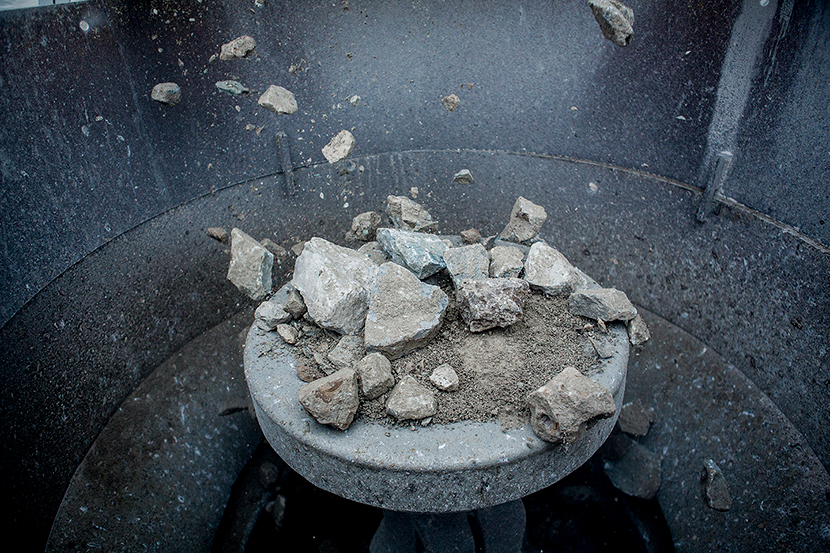
An obvious tie-in of ore properties to plant production is the load on grinding equipment, where the crushers/screens can often be optimized to reduce the transfer size to grinding and limit the increase in specific energy that results in reduced throughputs. Less obvious is deterioration of efficiency in the crushing and screening plant as ore properties deviate from the initial design phase.
Rising ore hardness will shift the optimal crusher gap settings in relation to the screen cut points, both of which can be tuned for maximum efficiency. Higher moisture content of the incoming feed significantly affects the screening efficiency and the propensity for packing in the chamber of compression crushers, necessitating a review of screen media, crusher gap settings, and crusher liner profiles; what is important is that all of these need to be reviewed as a collective, not simply trying to “fix” a problem at a single piece of equipment when the problem could be partially or completely related to the full process.
Finally, as ore becomes more abrasive, optimizing the screen media and liners as well as the crusher liners will allow for the plant to maintain its uptime.
Matching crushers and screens for balance
Crushers and screens are integral parts of the same circuit, but they perform unique duties in the plant. Crushers reduce particle size, while screens classify and separate the material stream into specific size fractions. Depending on the circuit configuration, crushers provide size reduction that often defines the size distribution to the screens. Screens then classify the material, affecting what meets the target product size and what might be sent for further crushing (aka recirculating load).
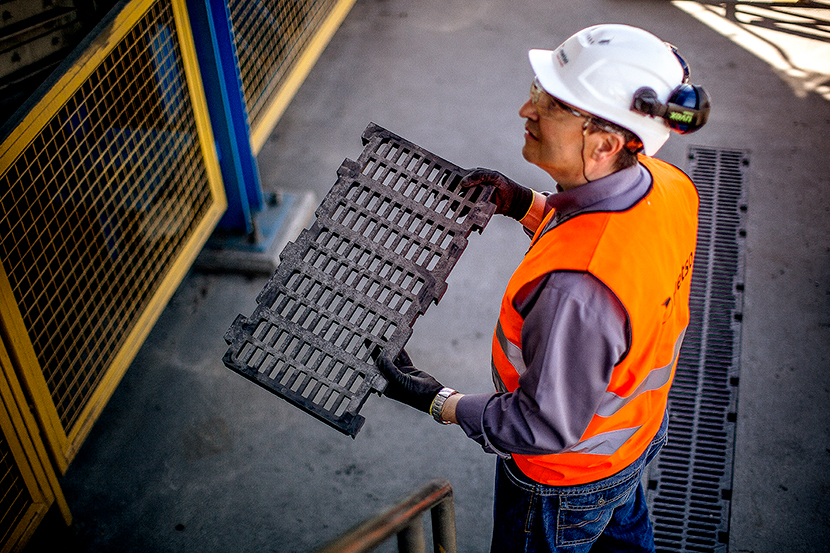
Optimal plant production requires a correct balance of crushing and screening based on the full production targets. A common mistake is focusing attention on a single piece of equipment or single stage, instead of taking a macro view of the balance of the entire crushing/screening circuit.
When this balance is lost, the symptoms are usually clear. Excessive fines in the crusher feed, increasing circulating loads, higher energy consumption, and unstable production become common. These issues are rarely caused by a single piece of equipment. More often, they indicate a mismatch between crushing output and screening capacity.
When screens are correctly sized and configured to match crusher performance, crushers can operate with a steadier load and closer to their intended operating range. This leads to more consistent production while reducing unnecessary power use and liner wear. For this reason, screening should be seen as a core part of the circuit rather than a secondary step after crushing
Liners and wear parts as part of the process
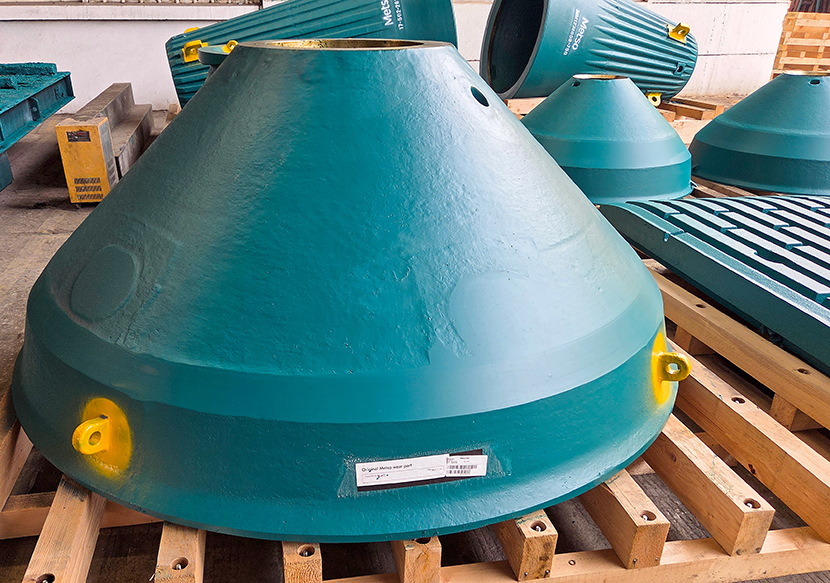
Crushing chambers, screening media and other liners are often treated mainly as consumables. In practice, they have an integral role in the processing performance. Crusher power and force loads, crusher discharge size, screening cut point and efficiency, and ultimately the peak capacity of the equipment and circuit are all influenced by these critical consumables.
Crusher chamber geometry affects both the flow rate and the applied forces of a compression crusher. This changes the relationship between closed side setting, cavity level, power draw, force loads and discharge size of the crusher. For that reason, it impacts peak circuit performance and also utilization rates (nominal throughput over time).
What complicates matters is that the optimal chamber profile can be different as ore and production targets evolve. Further to this, even the same liner part can have a consistent wear profile for months or years and then start to encounter different wear patterns as the ore and operation changes.
This is why approaches such as chamber optimization are important. Rather than treating the chamber as a fixed choice made at installation, it can be optimized over time to better match actual ore conditions and production needs. High‑performing wear parts that deliver more consistent behavior over their wear life help support this approach. The aim is not only long wear life, but predictable crushing performance that keeps the rest of the circuit in balance.
Screening media is another important consideration. Selecting the right media ensures high screening efficiency, by reducing pegging and blinding giving low recirculating loads. In addition, the right media and media material has a big impact and contributes to lower operational costs through longer lasting panels and less downtime.
Remembering the whole system
Crushing, screening, and wear parts must be managed as one adaptive system that responds to ore changes, production goals and wear progression over time. Consistency is key in applying the systematic view.
The clear takeaway is this: stable, efficient comminution depends on coordinated system-level decisions. Plants that align ore understanding, equipment balance, and wear solutions are better positioned to control variability, sustain throughput, and operate predictably as conditions change.
Explore Metso crushers, parts, upgrades and related services – Crushing – Metso
The preceding article is sponsored content provided by Metso and was not produced by MINING.COM’s editorial team.
More News
{{ commodity.name }}
{{ post.title }}
{{ post.date }}
Comments