How Innovation, Data & Strategy Are Redefining Mining Tire Performance
AI-powered mining tire management technologies are emerging as a valuable data source for guiding maintenance strategies, achieving maximum productivity and driving operational excellence.
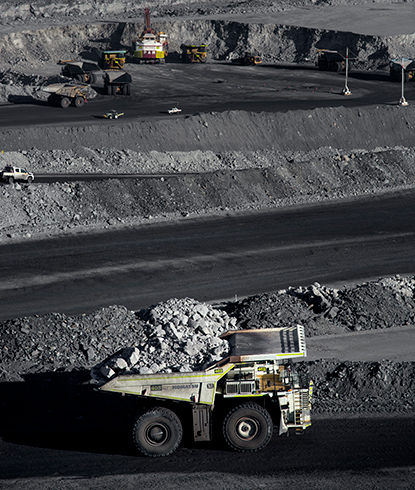
When commodity prices are rising, no mine wants to stop a haul truck unnecessarily for tire inspections or maintenance. Yet, tires are often managed as consumables, prompting a reactive versus proactive approach, which can increase downtime and limit productivity.
Innovative mining tire management technologies are bringing operations a strategic approach to increasing both tire performance and efficiency. This shift provides operations deeper insights, enhanced maintenance strategies, and ultimately, greater productivity. By leveraging real-time analytics and predictive tools, mine operations can move from responding to issues, to actively preventing them, while supporting safer, more efficient fleet performance.
It can be a familiar scene at a mine: A radio signals a sudden alert, perhaps a tire temperature spike or an unexpected drop in pressure, and tire technicians mobilize quickly to assess and resolve the issue. “For many operations, unplanned downtime due to tire events has long been considered an unavoidable cost of doing business – but that’s changing,” says Miles Rigney, senior vice president, Kal Tire’s Mining Tire Group.
Mines no longer have to rely on lagging indicators like tire failures and excessive wear to determine when tires should be changed. Likewise, tire service teams no longer have to rely on only one technology, such as TPMS (Tire Pressure Monitoring Systems), which only provides insight into the internal conditions of a tire.
Instead of the traditional cycle of supply, install, repair, remove, and repeat, industry leaders are now exploring innovative solutions that harness advanced analytics and AI technology. “By leveraging real-time data and predictive insights, mines are making smarter decisions and shaping strategies that drive safer, more productive outcomes – and now these sites are setting new benchmarks for operational excellence,” says Rigney.
An Advanced Ecosystem of Technology
Advanced mining tire management technologies are giving mines more planning capability, deeper operational insight, and a more strategic approach to tire life and fleet performance.
Real-time inspection solutions that combine AI-driven technology, prioritized tire work and the oversight of 24/7 condition monitoring analysts are helping mines to ensure equipment is moving as safely and productively as possible.
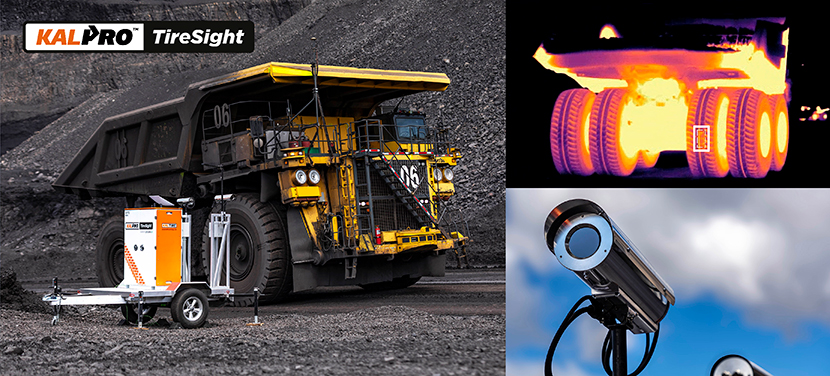
For example, Kal Tire’s KalPROä TireSight autonomous tire inspections use thermal imaging cameras to detect issues not seen by the naked eye. They improve both the frequency and quality of tire inspections, identifying issues that could otherwise go unnoticed and enabling priority service when needed. Powered by Pitcrew AI, TireSight detects early signs of potential damage such as hot tires, tread damage and belt separation, without trucks even needing to stop.
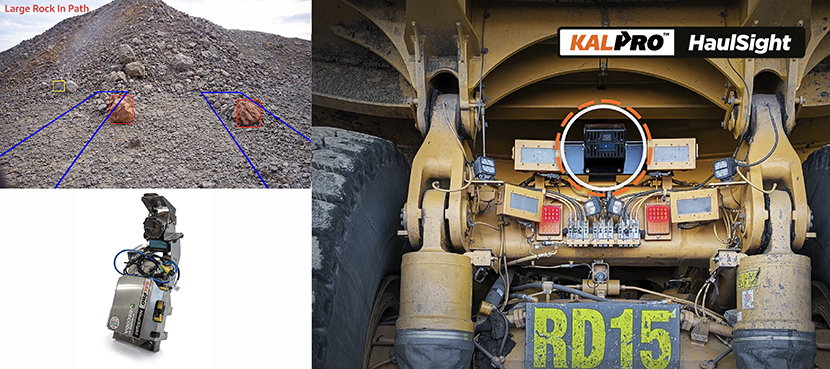
KalPRO HaulSight autonomous haul road hazard detection gives mine fleet teams greater visibility and responsiveness, enabling faster circuits, less downtime, longer tire life and improved fuel efficiency. With truck-mounted Decoda sensors, HaulSight delivers real-time alerts and insights on hazards such as non-compliant berm heights, spillage and road undulations.
Both TireSight and HaulSight follow a process that ensures nothing is left to chance. Issues are flagged in TireSight, validated by 24/7 condition monitoring analysts, and Kal Tire’s TOMS (Tire & Operations Management System) automates work orders that help to plan, prioritize and aggregate tire work based on a customer’s defined parameters.
AI tools now extend TOMS’ planning forecast and aggregating capabilities. “Using AI modelling and rules aligned to each site’s strategy, whether that’s focused on tire life or productivity, the system identifies what work needs to be done, when, and where work can be grouped to help minimize downtime while maintaining tire inventory,” says Rigney.
One Australia mine site embracing the AI-enhanced planning capabilities of TOMS, saved 233 hours of downtime in a 12-month period.
Turning Data into Strategy
Mining tires are one of the top expenses for surface mines, so it’s common for service teams to focus on extending tire life and reducing replacement spend.
“What we can see when TOMS shares performance data from across sites and fleets, however, is that in some conditions, prioritizing productivity may deliver greater overall value, especially when commodity prices are high,” says Rigney.
This is when the power of data becomes a strategic decision-making tool. It helps operations move from reacting to tire failure – to planning proactive tire changes.
With tire performance data drawn from more than 12,000 pieces of equipment across commodities, tire sizes, site conditions and operating objectives, mines can make more informed decisions about fitment, maintenance timing and fleet strategy.
“That broader view gives operations greater confidence that the tires in service are aligned with the realities of the site.”
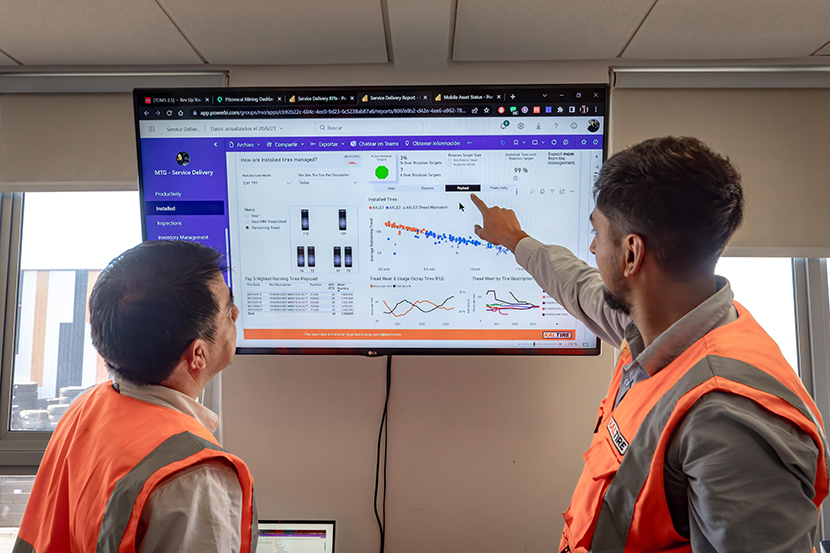
When new generation tire management software such as TOMS is linked to the mine, fleet planning teams can quantify the productivity impact of tire service events, including how maintenance affects truck availability. This is how a tire strategy becomes more than a maintenance function – it becomes part of how mines plan for performance.
Real Outcomes
When proactive tire management software is used to support a site strategy, the results can look very different depending on operational priorities. Consider two mine sites, both running 57-inch haul truck tires. Site A is focused on reducing tire-related downtime, while Site B has prioritized tire life.
At Site A, tire work was planned and aggregated more effectively to support fleet availability. At Site B, the emphasis remained on extending tire life.
The outcomes reflect those different strategies:
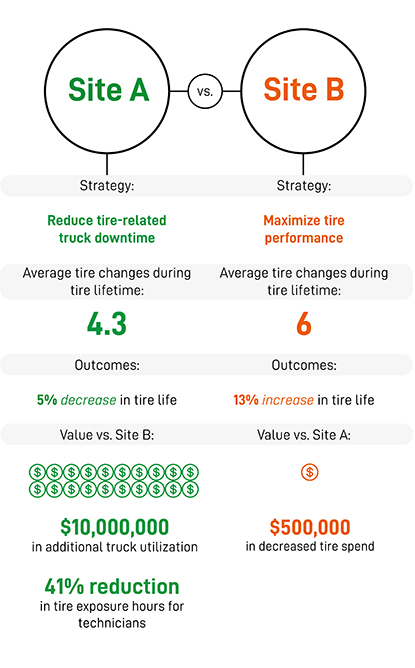
- Site B’s tires averaged 6 changes over the life of a tire, contributing to a 13% increase in tire life that represented $500,000 in reduced tire spend.
- Site A averaged 4.3 tire changes and saw a 5% decrease in tire life but gained $10 million in additional truck use. This site also reduced tire technician’s exposure to trucks by 41%.
Increasing the quality and frequency of inspections is also changing how fleets perform. “Frequent inspections identify tire issues early, which also supports more proactive maintenance to promote tire life and uptime,” says Rigney.
With automated work orders ensuring critical issues are addressed early, some sites have reduced truck isolation time for hot tire events to zero hours.
The Strategic Future for Tire Management
Autonomous systems, hydrogen fuel cells, electric and battery technologies are just some of the ways mining trucks are evolving. As that continues, Rigney says innovation in mining tire management will need to keep pace and play a role in supporting safe productivity targets, adapting to more complex operating environments, and helping mines make better use of increasingly connected fleet data.
In that context, tire management is becoming more closely tied to broader operational strategy. AI-driven decision-making can influence both fleet availability and safety, helping reduce downtime, limit technicians’ exposure to trucks, and support confidence that only tires fit for operation remain in service.
“As mines place greater emphasis on efficiency, predictability and performance, the ability to turn tire data into timely action will become increasingly valuable,” says Rigney.
This shift also changes how tires are valued. Rather than being viewed only as a consumable cost, tires can be understood as a source of operational intelligence that informs maintenance planning, risk management and productivity decisions across the fleet.
“That broader perspective matters because the pressures on mine performance are not easing,” says Rigney.
As operations look for more uptime, tighter planning and stronger returns from every asset, tire strategy is becoming part of a larger effort to build more resilient, data-informed mining operations. The innovation available in mining tire management points to a safer, smarter and more sustainable operation.
More News
{{ commodity.name }}
{{ post.title }}
{{ post.date }}
Comments