Troilus drills shallow gold, boosts Quebec satellite case
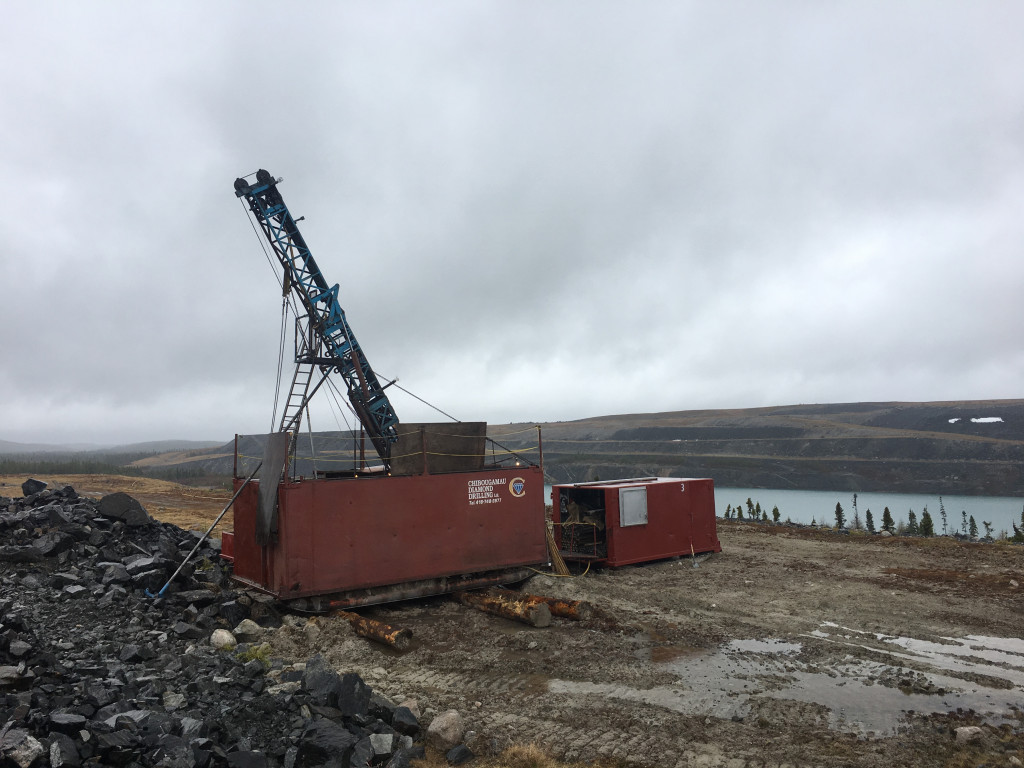
Troilus Mining (TSX: TLG) has cut shallow high-grade gold at West Rim, strengthening a potential source of mine feed as it works toward a construction decision at its past-producing Quebec copper-gold project.
Hole WR-26-013 returned 18.5 metres grading 6.91 grams gold per tonne and 0.97 gram silver from 11.5 metres downhole, including 6.4 metres at 19.03 grams gold and 1.76 grams silver. About 100 metres along strike, WR-26-014 cut 23.85 metres at 1.75 grams gold, 2.64 grams silver and 0.01% copper from 19.25 metres, including 5 metres at 6.71 grams gold, 7.73 grams silver and 0.01% copper.
“West Rim continues to deliver some of the strongest near-surface drill results encountered to date at Troilus, immediately adjacent to our planned reserve pits and entirely outside the current resource estimate,” CEO Justin Reid said in a Thursday release. “The consistency of high-grade mineralization we are seeing across the trend is particularly encouraging.”
West Rim is an emerging zone within 200 metres of the reserve pit outlined in last year’s feasibility study, giving Troilus a gold-rich target close to planned mining and infrastructure before permits, financing and a construction decision.
The zone has “the makings of a higher-grade satellite” near the planned mine, Red Cloud Securities analyst Ron Stewart wrote last month. He kept Troilus as a high-probability takeover candidate for established gold producers.
Troilus shares trading in Toronto gained 8% to C$1.76 apiece on Thursday, taking their increase over the past 12 months to 161%. The company has a market capitalization of C$970 million ($693 million).
Satellite feed
The West Rim zone, discovered in 2024 west of the North Reserve Pit, remains outside the current resource. Troilus said the latest holes help define a continuous near-surface corridor that remains open along strike and at depth. Grades were uncut and true widths are estimated at 75% to 90% of core lengths.
The main trend extends 170 metres farther north to hole WR-26-016, which returned 19 metres grading 2.69 grams gold per tonne, 3.24 grams silver and 0.03% copper from 99 metres depth in results released last month. That hole included 5 metres at 7.76 grams gold, 3.66 grams silver and 0.01% copper.
Troilus plans to fold the new assays into its geological model before an expanded second round of drilling. With results released for about half of the 3,000 metres budgeted for West Rim this year, the company plans more drilling along the known trend and the broader 5 km West Rim corridor.
Brownfields
Located about 600 km north of Montreal, the project sits in the Frôtet-Evans Greenstone Belt, where the former Inmet Mining operation produced more than 2 million oz. gold and nearly 70,000 tonnes copper from 1996 to 2010.
The 2024 feasibility study outlined a 50,000-tonne-per-day open pit running for 22 years. Probable reserves total 380 million tonnes grading 0.49 gram gold per tonne, 0.058% copper and 1 gram silver for about 6 million oz. gold, 484 million lb. copper and 12.1 million oz. silver.
The mine plan forecasts average annual output of 244,600 oz. gold, 17.3 million lb. copper and 446,700 oz. silver. The feasibility study pegged initial construction costs at $1.08 billion, the after-tax net present value at $885 million (at a 5% discount) and the after-tax internal rate of return at 14%.
Development focus
Troilus has lined up $1.3 billion in letters of interest from export credit agencies and lenders mandated for up to $1.2 billion in senior debt. It expects the financing package to close by the fourth quarter.
It also has a 70-MW power allocation and concentrate offtake arrangements with German copper smelter and metals recycler Aurubis (FRA: NDA) and Swedish miner and smelter Boliden (Nasdaq Stockholm: BOL).
The company filed its environmental and social impact assessment last year and expects provincial and federal permitting decisions by late this year or early next. It aims to start construction in 2027 and reach first production in 2029 or 2030.
{{ commodity.name }}
{{ post.title }}
{{ post.date }}
Comments