Column: LME metals whipsawed by war and peace in first half of 2026
(The opinions expressed here are those of Andy Home, a columnist for Reuters.)
The early-year euphoria that propelled both copper and tin to record highs was doused by the launch of Operation Epic Fury at the end of February.
The Iran war has dominated the headlines ever since, which has been challenging for traders because the headlines have been so confusing.
The Strait of Hormuz seems to have entered a quantum universe in which it can be simultaneously open and closed, depending on which protagonist is talking at any given point in time.
Schrödinger’s Strait “continues to reopen but it’s patchy, unpredictable, and not fully transparent,” according to Vandana Hari, founder of oil market analysis provider Vanda Insights.
That is an equally good description of the current peace talks, which are taking place in Doha.
Amid the fog of war and peace, the LME Index, a basket of the six base metals traded on the London market, has swung from exuberance to dejection to resilience over the first half, ending the period somewhere in between.

Individual performances have diverged widely, depending on each metal’s sensitivity to the ebb and flow of the Gulf news.

Aluminum hit
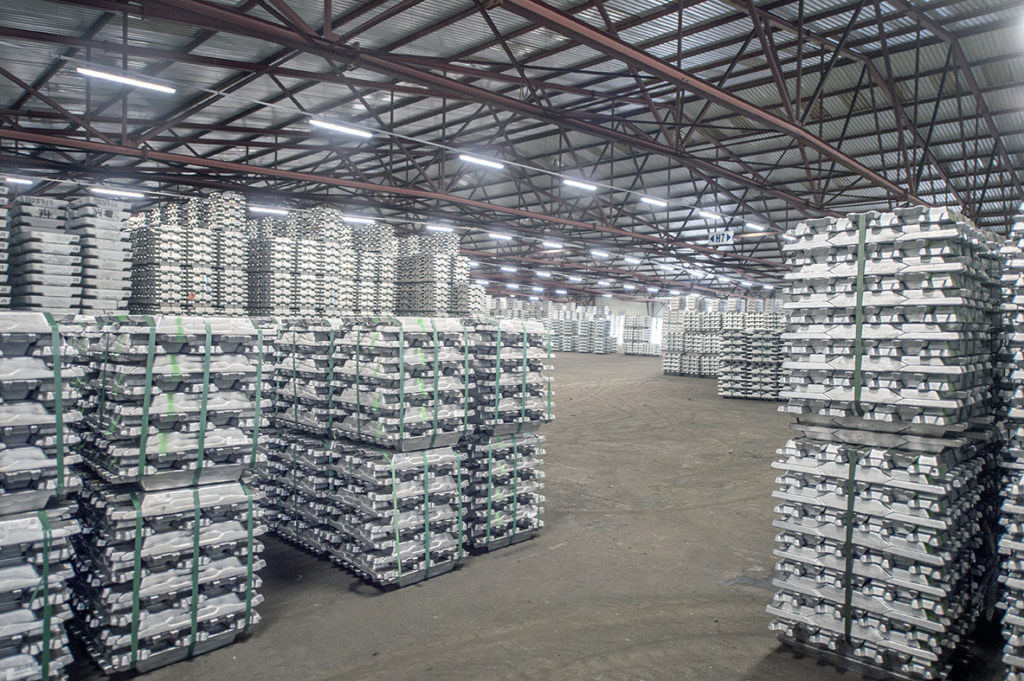
Aluminum has been a direct casualty of the war in the form of missile strikes on two Gulf smelters and constrained logistics at others.
Regional production dropped by an annualized 2 million metric tons between February and May, according to the International Aluminium Institute.
The unprecedented supply shock sent LME three-month aluminum to a four-year high of $3,787.50 per ton at the start of June.
The war premium has since almost completely unwound as the market prices in a return to some sort of normality.

Part of the new normal, however, is low LME inventory. Combined on- and off-warrant stocks have shrunk to just over 400,000 tons, most of it Russian metal.
Copper confusion
The war has injected another level of confusion into an already confused copper market.
At a macro level, the potential impact on global growth is negative for copper. But on a micro level, the closure of the Strait has created a sulphuric acid shortage, squeezing copper producers using leach technology.
The copper concentrates market, meanwhile, is dysfunctional, with smelter treatment terms collapsing to the point that processors are now relying on everything but copper to make money.
The refined metal market is still on tenterhooks, awaiting a decision on whether US President Donald Trump will impose tariffs. A decision is due any day.
The premium for US delivery continues to suck in metal from the rest of the world.

Caught between conflicting signals, LME three-month copper has been treading water between $13,000 and $14,000 per ton since the middle of May.
Investors still like copper’s story of structural supply deficit, and there are plenty of super-bulls biding their time in the LME options market.
Zinc surprise
Zinc, which has little direct exposure to the war, has been the surprise performer among the LME pack so far this year.
LME three-month zinc hit a near four-year high of $3,658 per ton in early June and closed the month up 14% from the start of the year, the second-strongest price performance after tin.
The global zinc market was supposed to be in a big supply surplus this year, but the latest assessment from the International Lead and Zinc Study Group is for a small deficit.
The shortfall is concentrated in the world outside China, where smelter production continues to under-perform. China itself is steadily lifting production and is on course to reach a state of self-sufficiency in the near future.
Nickel plays the Indonesian numbers game
Nickel trading has been all about Indonesia and the government’s attempt to rein in its runaway production sector.
Sharp reductions in this year’s mining quotas boosted the LME three-month nickel price to a two-year high of $20,000 per ton in May.
The sulphur squeeze emanating from the Gulf has piled more pressure on Indonesian producers using acid in leaching operations.
However, growing speculation that Indonesia is set to loosen its mining quotas has sent the price crashing back towards the $16,000-per-ton level.
While Jakarta weighs its options, surplus metal continues to accumulate. LME stocks have topped out, but Shanghai Futures Exchange inventory has just surpassed 100,000 tons for the first time since 2016.
Turbulent tin and oversupplied lead
Tin and lead have been wholly unaffected by events in the Gulf, allowing each to follow its own narrative path.
In the case of tin, this is a bull promise of structural supply deficit in the face of rising demand for the electronic soldering metal.
Tin has been pricing scarcity for many months and was the outperformer of the LME complex in the first half of 2026, with year-to-date gains of 27%.

Lead , by contrast, is a market weighed down by surplus metal and closed the first half with year-to-date losses of 7%.
Combined LME on- and off-warrant inventory has been hovering around the 500,000-ton mark since the start of the year.
Lead has assumed aluminum’s mantle as the market of choice for inventory financiers, with LME trading characterized by warehouse arbitrage and inventory rotation between on-warrant and off-warrant storage.
That, of course, also speaks volumes about how much aluminum dynamics have changed since the start of the Iran war.
(Editing by Marguerita Choy)
More News
Column: LME metals whipsawed by war and peace in first half of 2026
July 02, 2026 | 09:07 am
Almonty kicks off processing operations at Sangdong tungsten mine in South Korea
July 02, 2026 | 08:59 am
{{ commodity.name }}
{{ post.title }}
{{ post.date }}
Comments