Column: LME wanted more lead stocks. It certainly got them
(The opinions expressed here are those of Andy Home, a columnist for Reuters.)
There really is a lot of lead around.
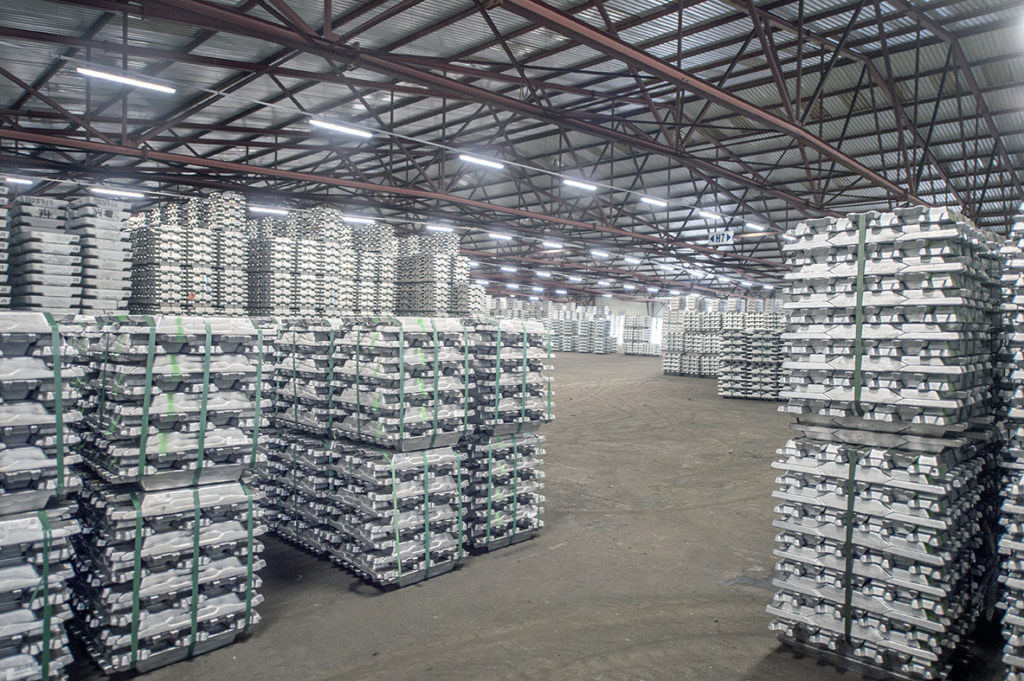
London Metal Exchange (LME) stocks of the battery metal jumped by 58% in the space of two days earlier this week, thanks to the warranting of 171,175 metric tons at warehouses in Singapore.
The exchange should be pleased. It reduced listing fees for smaller lead producers between April 2024 and December 2025 to “enhance liquidity” on its lead contract.
It’s evidently worked.
LME lead stocks have grown to almost 500,000 tons in recent months, including large tonnages sitting in off-warrant storage.
The unloved metal has become the metallic financing tool of choice, with inventory, just about all of it, located in Singapore, rotating between warehouses in search of better rental deals.
This week’s burst of warranting activity is just the latest, albeit largest, such rotation.
But where has all this metal come from? And how much more is there to come?

Warehouse roulette
LME lead stocks have featured large, concentrated bursts of warranting action for many months.
The underlying trade is more about warehousing arbitrage than lead market fundamentals.
A trader, in this case reportedly Trafigura, places a large amount of metal onto LME warrant, agreeing with the warehouse operator to split future rental fees paid by the new owner.
The new owner will likely waste little time cancelling the warrants to escape the rental deal and moving the metal to another warehousing company.
The resulting stock churn was once a defining feature of the LME aluminum market, but inventory of the light metal has dwindled to under 400,000 tons, including off-warrant stocks.
The game has shifted to lead.
Some of what “arrived” this week was simply transferred from off-warrant stocks. Those in Singapore fell by 34,256 tons on Monday, when the first 83,225-ton tranche of metal was put on warrant. That still left 142,598 tons of potentially warrantable metal ahead of Tuesday’s second round of deliveries.

Indian export surge
Indian brands of lead accounted for 76% of total on-warrant LME inventory at the end of June. As recently as January 2023 there was zero Indian metal in the system.
Indian exports have in the intervening years increased from 151,000 tons in 2022 to 482,000 tons last year, according to the World Bureau of Metal Statistics (WBMS), which collects trade data from official customs figures.
Singapore has been a prominent destination, even though the country is hardly a hub for manufacturing lead-acid batteries, the metal’s primary application.
Shipments to Singapore have exceeded 400,000 tons since the start of 2023. They peaked at 31,000 tons in November 2025, when they accounted for almost half of all India’s refined lead exports.
Until last year, there were only three brands of lead registered with the LME, two produced by Hindustan Zinc, a massive mine-to-refinery primary producer, and one by secondary producer Jain Resource Recycling.
Another five brands representing a combined annual production capacity of 195,000 tons were added last year as part of the LME’s drive to entice smaller secondary lead producers to list.
Gravita India, with annual production capacity of 48,000 tons, has just become the ninth Indian lead brand to qualify for LME good-delivery status. Indian exports of refined lead to Singapore and other countries
Change of flow
The growing number of Indian producers registered with the exchange raises the prospect of yet more lead flowing to LME warehouses in Singapore.
But India’s trade patterns have changed tack this year.
Exports to Singapore were just 1,555 tons in April, the lowest monthly tally in a year, according to the WBMS.
China was the primary destination that month, with shipments of 8,685 tons accounting for 34% of total April exports.
This is very much a new market for Indian metal. China didn’t import much refined lead at all last year and took only 500 tons from India.
But imports from India mushroomed to 57,000 tons in the first five months of this year, lifting total inflows to 132,000 tons, already the highest annual count since 2009, according to WBMS data.
Quite why China suddenly needs so much lead is not clear but while it does, it means less Indian metal is heading to LME warehouses in Singapore.
That, of course, still leaves a lot of metal churning through warehouse deals in Singapore.
The sudden appearance of so much lead has sent LME three-month metal tumbling to a 15-month low of $1,840 per ton this week.
Chances of a sustained recovery depend on how long China continues to divert Indian metal flows away from LME warehouses in Singapore.
(Editing by Marguerita Choy)

{{ commodity.name }}
{{ post.title }}
{{ post.date }}
Comments