World’s No. 6 uranium miner starts new output in Uzbekistan
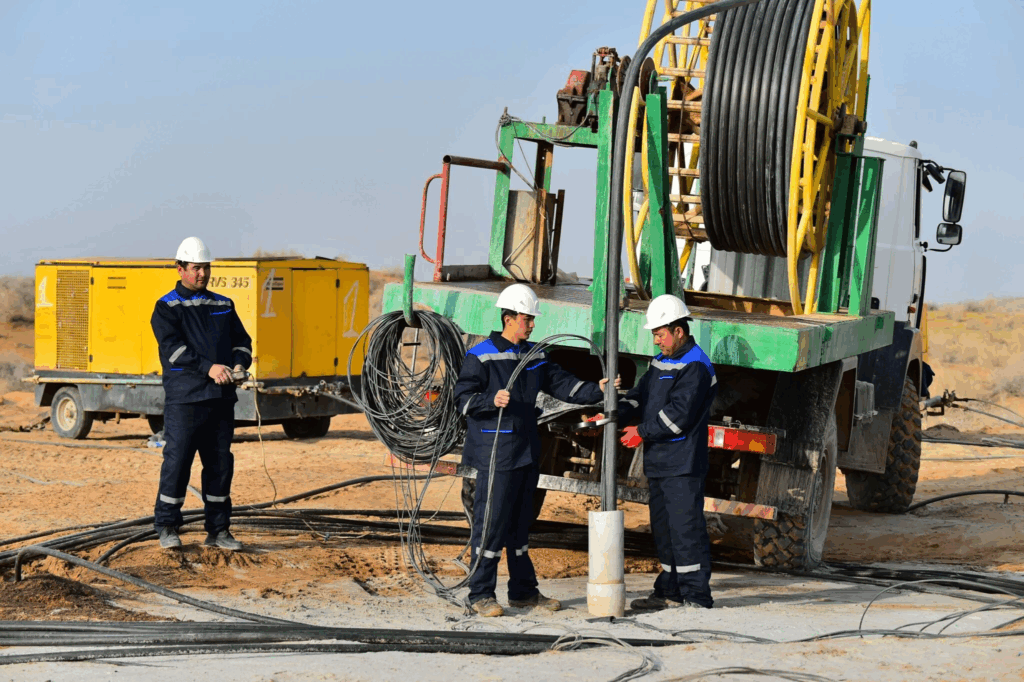
Uzbekistan’s little known but globally significant state uranium miner Navoiyuran has started commercial production at its Qizilkok project in the country’s central Navoi region.
Qizilkok hosts 9,400 tonnes of uranium reserves and has a mine life of 15 years, Navoiyuran reported Wednesday. Located about 600 km northwest of the capital Tashkent, Qizilkok is the company’s third-largest producing mine behind its core operations of Sugrali and Uchkuduk.
“Pilot industrial operations at the deposit began in December 2024, and over two years of active work, the company has reached the stage of commercial production,” Navoiyuran general director Djamal Sabakhonovich Fayzullayev said in a release.
“The start of ore mining at the deposit marks another step in the implementation of the company’s strategy, focused on increasing uranium production and strengthening its mineral resource base, in line with Uzbekistan’s state program to expand uranium mining and processing volumes through 2030.”
World’s sixth largest
The production milestone helps solidify Navoiyuran’s place among uranium miners’ global top tier, where the company says it ranks sixth based on its output of 7,000 tonnes of natural uranium in 2025, a 35% increase from its output in 2024. That ranking is also backed by Navoiyuran’s ore reserve base of 96,600 tonnes across 43 deposits.
Neighbouring Kazakhstan’s state miner Kazatomprom (LSE: KAP) is the world’s top producer with about 21,000 tonnes of output annually.
Like those of Kazatomprom, Navoiyuran’s uranium operations all use in-situ recovery (ISR) methods, where a solution is injected underground to dissolve uranium from ore, which is then pumped to the surface for processing. The low-cost ISR technique uses less infrastructure than open pit or underground mining.
Cleaner oxygen recovery
At Qizilkok, the company has turned to a low-reagent in-situ leaching technology that uses more oxygen than chemicals to dissolve the uranium underground. This raises recovery rates and can triple cost reductions, Navoiyuran said.
Djengeldi, another company project, is part of the Nurlikum Mining joint venture with France’s Orano and Japan’s Itochu.
Like its fellow state gold miner Navoi, Navoiyuran has long flown under the radar. The uranium producer only emerged as a standalone company in 2022, when it was spun out from the Soviet-era state conglomerate Navoi Mining and Metallurgical Combine.
Unlike its gold mining cousin, Navoiyuran hasn’t indicated plans to go public. And with a lower international profile, Uzbekistan remains outside the conventional uranium mining narrative, which focuses more on Kazakhstan, Canada and Namibia.
The Central Asian nation has been looking to tap into its vast endowment of resources, including many of the critical minerals that Western countries seek. Uzbekistan launched a $2.6 billion initiative last year to help develop 76 mining projects covering 28 different elements.
More News
{{ commodity.name }}
{{ post.title }}
{{ post.date }}
Comments