Vale CEO says metals demand is robust despite Iran conflict
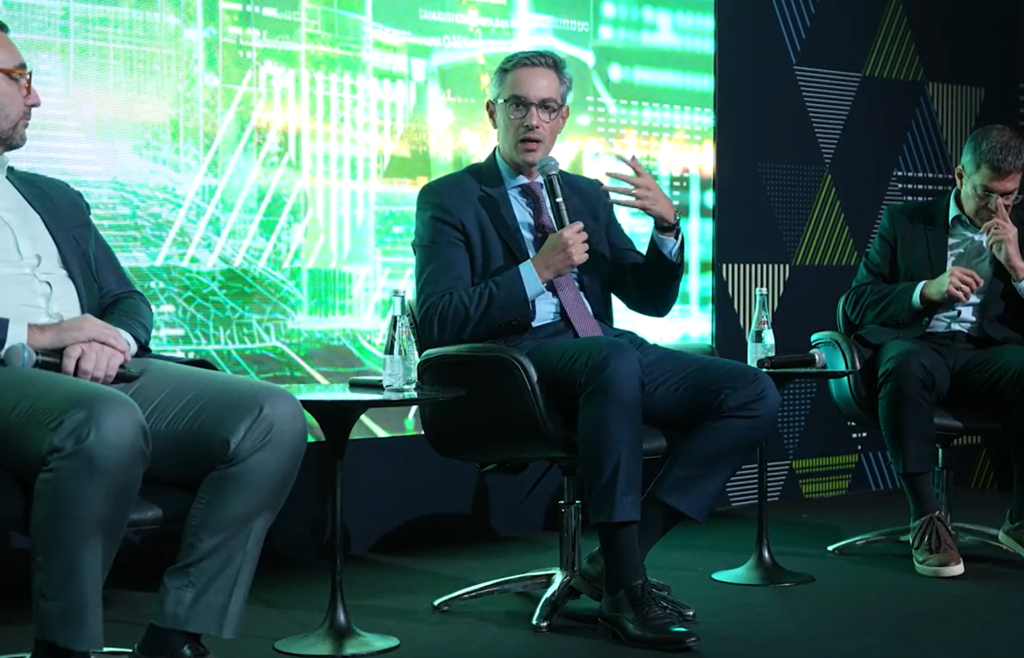
Vale SA, the world’s top iron ore producer, sees no evidence of war-related demand destruction in global metals markets and has experienced swelling margins as the Iran conflict disrupts raw-material flows, said chief executive officer Gustavo Pimenta.
The Brazilian miner is focusing on harvesting its own assets rather than seeking acquisitions, Pimenta said in a Bloomberg Television interview in Rio de Janeiro on Monday. Worldwide demand for critical minerals has been “super-constructive” for the Brazilian miner, he added.
Disruptions in the Strait of Hormuz have increased fuel prices and freight rates for miners such as Vale, which saw cost pressures offset price and volume gains during the first quarter.
Vale raised its full-year free cash flow forecast for its core iron business by $1.5 billion to reflect the rally in ore prices since the outbreak of the Iran war. The company now expects iron ore to average $112 a ton this year, up from $102 in its pre-conflict scenario.
Pimenta said in the interview that he’s “very optimistic” about the full-year outlook. While China has likely peaked in steel production, Vale sees demand growth increasingly being driven by other regions such as Southeast Asia, Europe and the US.
Indian steel
India will be a major growth engine as it doubles crude steel production over the next decade, the CEO said.
Vale previously delayed the restart of a pellet complex in Oman until the third quarter, citing war-related logistical constraints. Vale’s Oman operations have an annual production capacity of 9 million tons of iron ore pellets, or roughly 29% of the company’s overall output.
On Monday, Pimenta said the reopening will have to wait until the conflict winds down. Despite the Middle East conflict, Vale considers Oman an strategic hub to supply clients within the region, he said.
Rare earths
Vale has been studying whether a foray into rare earths makes strategic sense for the company, including assessing opportunities in Brazil. The South American nation holds the world’s largest reserves outside of China of the 17 elements key for the energy transition.
However, Pimenta said questions remain, particularly around scale and whether Vale can compete effectively with established international rare earths producers. For now, Vale’s priority is to focus on areas where Vale has expertise and scale such as copper and nickel, he noted.
(By Mariana Durao and Lisa Abramowicz)
{{ commodity.name }}
{{ post.title }}
{{ post.date }}
Comments