Aluminum’s US comeback hinges on power, not tariffs, industry advocates say
The United States’ push to revive domestic aluminum production could stall unless smelters secure long-term access to industrial-scale electricity, according to policy advocates tracking the sector’s rapid transformation amid tariffs, reshoring efforts and rising global demand.
The global aluminum market is facing increased shortages as the closure of the Strait of Hormuz throttles supply, with spot prices for the metal spiking while exchange inventories slump. Aluminum prices climbed to a four-year high this week, driven by supply concerns and continued geopolitical instability affecting global shipping routes.
US-based NGO Industrious Labs, dedicated to decarbonizing heavy industries, has released a new report with data that shows that since tariffs on primary aluminum were raised to 50%, imports — especially from Canada — dropped significantly.
Canada is the biggest foreign supplier of aluminum to the US, accounting for 44% of imports to its southern neighbor last year.
According to the Aluminum Import Monitor in the “unwrought” category as the proxy for primary aluminum In 2024, the US imported 2,745 kt of primary aluminum from Canada. In 2025, it was only 1,950 kt, a 29% decrease since Sec. 232 tariffs on aluminum were increased to 25% in February 2025 and then 50% in June 2025.
“Usual caveat that we believe the tariffs to have been the driving factor, but aren’t the only macroeconomic factors in play, Annie Sartor, senior campaigns director at Industrious Labs told MINING.COM.
Reshoring supply
But while the price surge and trade tensions have reignited interest in expanding US primary aluminum capacity, Sartor warned that electricity — not tariffs — remains the industry’s biggest bottleneck.
“There’s a really unpredictable commodity market right now around aluminum,” Sartor said in an interview this week.
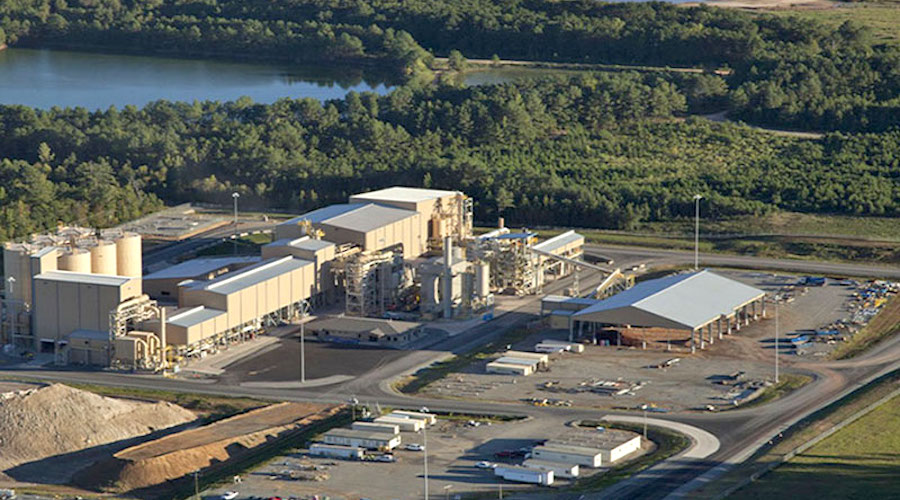
While there are 10 primary aluminum smelters operating in Canada, there are only four operating primary aluminum smelters in the United States, down from over 30 plants in 1980. Alcoa operates smelters in Massena, New York and Warrick, Indiana, while Century Aluminum operates plants in Sebree, Kentucky and in Mt Holly, South Carolina.
Last year, Century said it will invest about $50 million to restart over 50,000 metric tons of idled production a Mt. Holly smelter in South Carolina. This year, Emirates Global Aluminium and Century entered into a joint development agreement to build the first new primary aluminum production plant in the United States since 1980 in Oklahoma, an emerging refinery hub.
But Sartor points out that building an aluminum smelter and bringing it online takes about five years.
“It would be great if you could just turn on an aluminum smelter in 30 days and start making metal. But the industry operates on much longer timelines,” she said.
Both the Biden and Trump administrations have pursued policies aimed at rebuilding US aluminum production after decades of decline.
While the Biden administration relied heavily on grants, loans and Inflation Reduction Act incentives, US president Donald Trump has instead emphasized tariffs as the preferred mechanism for protecting domestic producers.
Industrious Labs asserts that neither approach fully addresses the sector’s central challenge: access to reliable and affordable electricity.
Grid capacity
“Access to industrial-scale electricity — and increasingly industrial-scale clean electricity — is the pain point,” Sartor said.
Primary aluminum smelting is among the world’s most energy-intensive industrial processes. New facilities can require more than 500 megawatts of dedicated power supply a year, equivalent to the electricity consumption of a mid-sized city — once financing and power contracts are secured.
That challenge is becoming more acute as data centres and other large industrial users compete for grid access across North America.
“Aluminum producers are being scooped by data centers and hyperscalers,” Sartor said. “They can simply pay more for the power.”
The issue is already shaping the timeline for new projects, while US import tariffs haven’t been enough to stop the US losing another aluminum smelter.
Century Aluminum’s proposed smelter in Oklahoma — backed by a US Department of Energy grant and developed alongside Emirates Global Aluminium — remains dependent on securing a long-term electricity agreement before construction can begin.
The evolving trade relationship between Canada and the United States is also reshaping aluminum flows.
On Friday, the same day mining giant Rio Tinto (ASX: RIO) began a $1.5 billion expansion of its AP60 low-carbon aluminum smelter in Quebec, it also announced shipments of the metal to the US have now bounced back to levels from before President Trump’s tariff offensive.
Canada has historically supplied large volumes of low-carbon primary aluminum to the US market, leveraging extensive hydropower infrastructure in Quebec and British Columbia.
However, some Canadian producers are now increasingly redirecting shipments toward Europe, where demand for lower-carbon metals has strengthened under the European Union’s Carbon Border Adjustment Mechanism (CBAM).
“The aluminum industry sees itself as a North American market,” Sartor said. “Canada makes a lot of primary aluminum. The United States makes a lot of secondary or recycled aluminum. Together, when we’re working as a single market, that works great.”
The group warned that prolonged trade disruptions could permanently shift supply chains away from the United States.
“As time goes on, the stickiness of these new trade relationships starts to get stickier,” she said, noting that Canadian producers may become increasingly tied to European customers.
Despite the uncertainty, the firm believes 2026 could become a pivotal year for the North American aluminum industry, with additional smelter announcements possible if market conditions remain favorable.
“It’s an old, slow-moving industry operating in a really unpredictable market and political landscape right now,” Sartor said. “But I think this will be a big year for aluminum.”
{{ commodity.name }}
{{ post.title }}
{{ post.date }}
Comments